Skip to content

Washing Of Feet At Vatican Highlights Holy Thursday Call To Reject World That ‘Betrays’ For Profit

At the Holy Thursday Mass of the Lord’s Supper, Cardinal Mauro Gambetti reflected on Jesus washing His disciples’ feet, urging the Church to be a Eucharistic people who serve with love, not for power or profit.

During the Mass of the Lord’s Supper on Holy Thursday, Cardinal Mauro Gambetti reflected on Jesus’ humble act of washing His disciples’ feet, calling the Church to become a Eucharistic people who serve with love rather than seeking power or profit.

Cardinal Mauro Gambetti, Archpriest of St. Peter’s Basilica, urged Catholics to reject a world that “betrays” people for economic gain and power, instead embracing the “power of service” exemplified by Christ washing the disciples’ feet at the Last Supper.
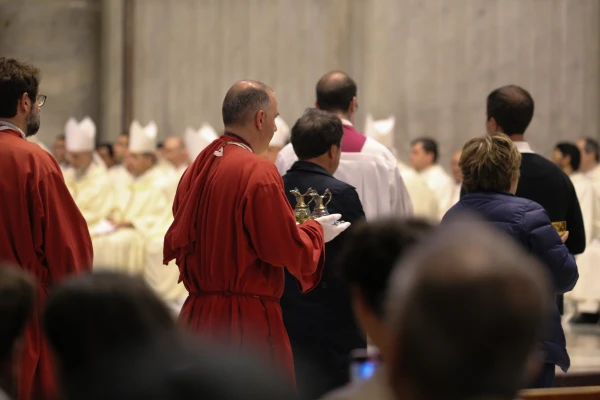
Clergy carry vessels with water and towels for the foot washing ritual during Holy Thursday Mass at St. Peter's Basilica in Vatican City, April 17, 2025. Zofia Czubak / EWTN News
Clergy carry vessels with water and towels for the foot washing ritual during Holy Thursday Mass at St. Peter’s Basilica in Vatican City, April 17, 2025. Zofia Czubak / EWTN News

The prelate presided over the Mass in Coena Domini on April 17 at St. Peter’s Basilica, which included the traditional washing of feet ceremony with laypeople who work in or frequent the basilica.

“The world too often betrays us, hands us over, for some profit, economic or power-based,” Cardinal Gambetti said in his homily. “Against this logic — which fuels the conflicts of our time — stands a new kind of power, rooted in service and embodied by Jesus, the concrete expression of the ‘dynamism of proximity.’”

The cardinal began his reflection with the origins of Passover in Egypt, noting that the Jewish celebration arose not in triumph but “amid slavery, oppression, and suffering.” He explained the Hebrew term “Pesach” means “to leap, to protect,” illustrating how “God dances before homes to protect the humble and poor who trust in him, while death passes by.”

Drawing parallels between the first Passover and Christ’s own Passover, Gambetti emphasized that Jesus celebrated with His disciples amid hardship, “injustices, harassment, slander, illness, violence, fear, and solitude.” Yet Jesus “ardently desired intimacy and familiarity” with His followers despite knowing betrayal was imminent.

“The group around Him is human,” the cardinal said, “imperfect, diverse. Some impulsive, some proud, some fearful. But all of them are loved.”
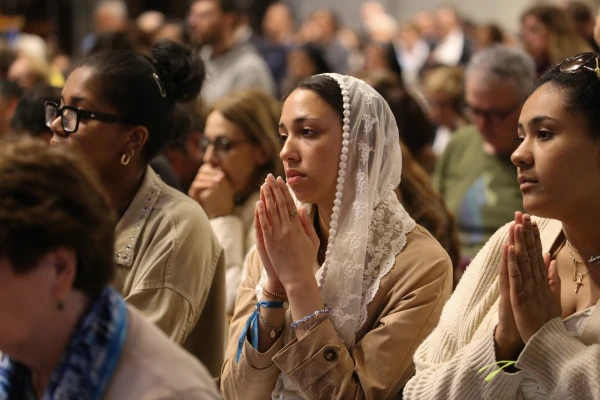
Faithful pray during the Holy Thursday liturgy at St. Peter's Basilica, Vatican City, April 17, 2025. Zofia Czubak / EWTN News
Faithful pray during the Holy Thursday liturgy at St. Peter’s Basilica, Vatican City, April 17, 2025. Zofia Czubak / EWTN News

Cardinal Gambetti noted that contemporary society mirrors the ancient pattern of betrayal, where everything is commodified “on the basis of a cost-benefit relationship, for some profit, economic or power-based.” He lamented that compassion is lacking for “the marginalized, migrants, the environment,” while wars reflect “the decline, the concretion of conflicts and evil in the world.”

The cardinal pointed to Jesus as the antidote to both ancient and modern corruption. “The only thing that interests Him is love,” Gambetti said. “This is the only priesthood. He washes feet, even Judas’s feet. He washes my feet. He washes your feet.”
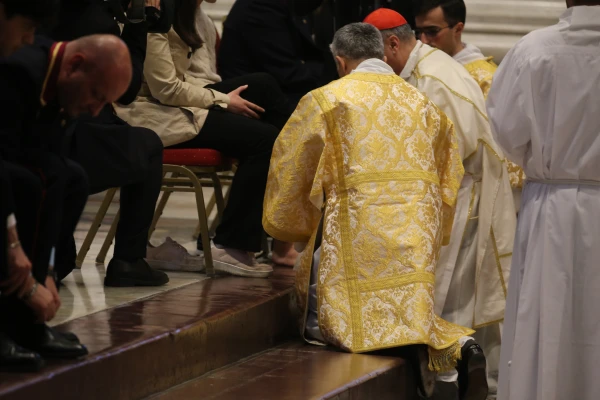
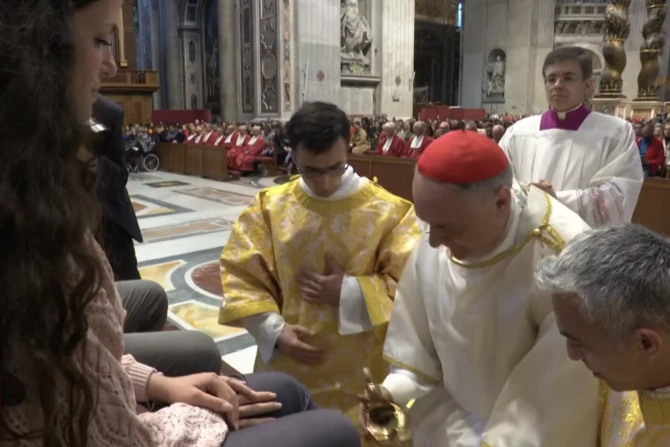
Cardinal Mauro Gambetti kneels to wash the feet of laypeople during the traditional Holy Thursday ritual at St. Peter's Basilica, Vatican City, April 17, 2025. Zofia Czubak / EWTN News
Cardinal Mauro Gambetti kneels to wash the feet of laypeople during the traditional Holy Thursday ritual at St. Peter’s Basilica, Vatican City, April 17, 2025. Zofia Czubak / EWTN News

Following the final prayer, a procession led by Cardinal Gambetti accompanied the Blessed Sacrament to a chapel prepared for adoration, with the Cappella Giulia, the historic choir of St. Peter’s, singing “Pange Lingua.”

Vatican media noted that this musical tradition dates back to 1513, when Pope Julius II reorganized the ensemble that continues to preserve “note by note, the beauty of the liturgy.”
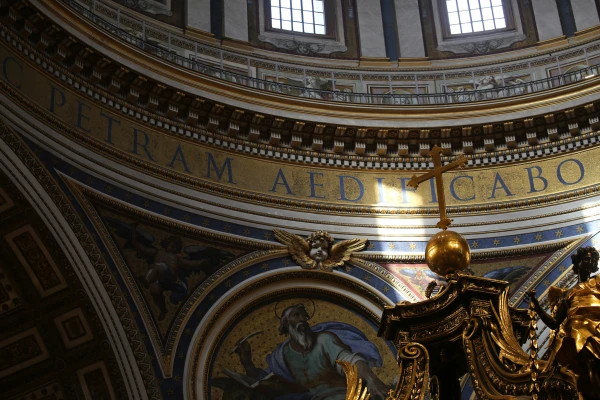
The interior dome of St. Peter's Basilica during Holy Thursday liturgy, April 17, 2025. Zofia Czubak / EWTN News
The interior dome of St. Peter’s Basilica during Holy Thursday liturgy, April 17, 2025. Zofia Czubak / EWTN News

This article was originally published on Catholic News Agency.

SIGN UP FOR OUR NEWSLETTER HERE

Receive the most important news from EWTN Vatican via WhatsApp. It has become increasingly difficult to see Catholic news on social media. Subscribe to our free channel today

Share

Would you like to receive the latest updates on the Pope and the Vatican

Receive articles and updates from our EWTN Newsletter.

More news related to this article

Credit: EWTN Vatican screenshot.

Seminarians Take to the Soccer Field for Rome’s St. Paul’s Cup

As Pope Leo XIV continues to highlight the values of sport as a path to fraternity, encounter, and

‘Hope Never Disappoints’ is Holy Father’s new book for 2025 Jubilee Year

The author of a new book based on interviews with Pope Francis discussed the Holy Father’s views on Christian hope, migration, and the Israel-Hamas conflict

Pope Francis Says He Has Experienced ‘Christian Joy’ Amid Ongoing Illness, Recovery

Pope Francis shared on Monday that he has experienced the gift of Christian joy during the challenges of his current illness, as the Vatican says the pope’s condition has continued to improve after his monthlong stay in the hospital.

Pope Francis to Charismatics: Progress as an Ecclesial Movement, Not as a “Samba School”

Pope Francis encouraged charismatics to continue as an ecclesial movement and not as a “samba school”, highlighting three

Paradisus: Baroque Lightscapes in Sacred Spaces

The blank nave of Santissima Trinità dei Pellegrini lights up with the baroque light project of Paradisus during the Catholic Church's Jubilee Year.

Council of Nicaea: 1,700 years of Christian unity amid division

In the summer of A.D. 325, more than 300 bishops gathered in Nicaea — located in modern-day northern Turkey — to promulgate a common Christian creed, settle Christological disputes that arose from the Arian heresy, and promote unity in the Church.

LIVE
FROM THE VATICAN

Be present live on EWTNVatican.com