The second Vatican assembly for the global Synod on Synodality will kick off on Oct. 2, bringing together clerics and laity alike for nearly one month of discussions. Here is what you need to know:
What is the Synod on Synodality?
The Synod on Synodality, initiated by Pope Francis in October 2021, is a multiyear, worldwide undertaking during which Catholics were asked to submit feedback to their local dioceses on the question “What steps does the Spirit invite us to take in order to grow in our ‘journeying together?’”
The Catholic Church’s massive synodal process has already undergone diocesan, national, and continental stages as well as the first global assembly at the Vatican in October 2023. The upcoming October 2024 session will be the second and final global assembly, culminating the discernment phase of the synod.
What does synodality mean?
Synodality was defined in the 2023 summary report as “the walk of Christians with Christ and toward the kingdom, together with all humanity.” It involves “coming together in assembly at the different ecclesial levels of life, listening to one another, dialogue, communal discernment, consensus-building as an expression of Christ’s making himself present alive in the Spirit, and decision-making in differentiated co-responsibility.”
Pope Francis has said that he envisions the Synod on Synodality as “a journey in accordance with the Spirit, not a parliament for demanding rights and claiming needs in accordance with the agenda of the world, nor an occasion for following wherever the wind is blowing, but the opportunity to be docile to the breath of the Holy Spirit.”
What are the main questions and themes for the 2024 synod assembly?
The 2024 Instrumentum Laboris, building on the results of the 2023 session, outlines three overarching questions:
How can we be more fully a sign and instrument of union with God and of the unity of all humanity?
How can we better share gifts and tasks in the service of the Gospel?
What processes, structures, and institutions are needed in a missionary synodal Church?
The document focuses on “how the synodal Church is on mission” and proposes concrete ways to implement a more synodal approach in Church governance, theology, mission, and discernment of doctrine.
What are some of the topics that could be addressed in the synod assembly?
The 2024 Instrumentum Laboris has avoided emphasizing some controversial topics already discussed in the 2023 session. Instead of directly addressing issues like LGBTQ demands, these topics have been delegated to specialized study groups for further examination.
The document also proposes what it describes as new ways of approaching “controversial” issues within the Church. It suggests promoting “initiatives that allow for shared discernment on doctrinal, pastoral, and ethical issues” and proposes confidential meetings of experts, possibly including those directly affected by these issues.
How does the Synod on Synodality differ from past synods of bishops?
A synod is a meeting of bishops gathered to discuss a topic of theological or pastoral significance in order to prepare a document of advice or counsel to the pope.
For the first time, the Synod of Bishops in 2023 included voting delegates who are not bishops. Nearly a third of the 364 voting delegates were chosen directly by the pope, including laypeople, priests, consecrated women, and deacons. Fifty-four voting members are women.
Who are the participants?
The General Secretariat of the Synod of Bishops has reported that the initial diocesan listening phase concluded with the participation of 112 out of 114 of the world’s Catholic bishops’ conferences.
According to a report from the U.S. bishops’ conference, about 700,000 people participated in the diocesan phase of the synod in the U.S. out of 66.8 million Catholics in the country, or about 1%.
The October assembly will include 368 voting members and 96 nonvoting participants.
Who are the key organizers of the Synod on Synodality?
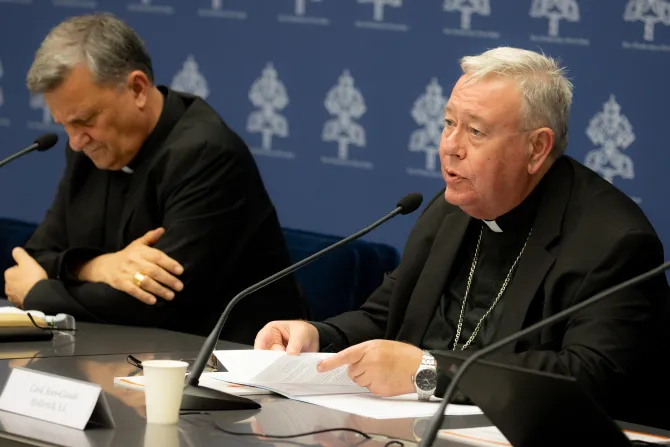
Cardinal Jean-Claude Hollerich, the 66-year-old archbishop of Luxembourg, remains one of the leading organizers of the Synod on Synodality as the relator general. The Jesuit cardinal is a member of Pope Francis’ council of cardinal advisers. In a March 2023 interview, Hollerich expressed openness to the possibility of women priests in the future and described the part of Church teaching calling homosexuality “intrinsically disordered” as “a bit dubious.”
Cardinal Mario Grech continues to serve as the secretary general for the Synod of Bishops. The former bishop of Gozo, Malta, Grech was one of two authors of the Maltese bishops’ controversial pastoral guidelines on Amoris Laetitia, which stated that divorced and remarried Catholics, in certain cases and after “honest discernment,” could receive Communion. In 2022, Grech decried the public criticism of the German “Synodal Way” as “denunciation.”
What happens after the synod?
The October 2024 assembly marks the end of the discernment phase. The next phase will focus on implementation. Fifteen study groups, formed to address topics from the 2023 session, will continue their work through June 2025. So while they will provide progress updates at the beginning of the October session, their work extends past the October synod.
The Instrumentum Laboris asserts that “without tangible changes, the vision of a synodal Church will not be credible.”
Is there a prayer for the Synod on Synodality?
The following “Prayer of Invocation to the Holy Spirit” was published by the organizers:
“We stand before you, Holy Spirit, as we gather together in your name. With you alone to guide us, make yourself at home in our hearts; teach us the way we must go and how we are to pursue it. We are weak and sinful; do not let us promote disorder. Do not let ignorance lead us down the wrong path nor partiality influence our actions. Let us find in you our unity so that we may journey together to eternal life and not stray from the way of truth and what is right. All this we ask of you, who are at work in every place and time, in the communion of the Father and the Son, forever and ever. Amen.”
This article was updated on Sept. 20, 2024.
This article was originally published on Catholic News Agency.