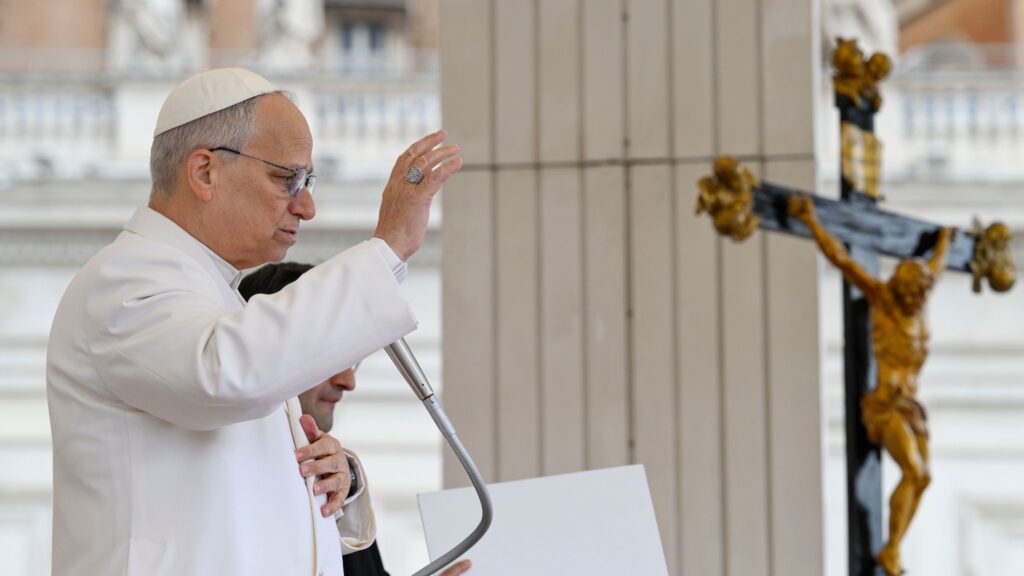
Pope Leo XIV, elected on Thursday, is the first pope from the Order of St. Augustine (OSA), also known as the Augustinians, an ancient religious order with thousands of members worldwide.
The Order of St. Augustine first came together nearly 800 years ago, first composed of a union of a number of religious communities that were using the Rule of St. Augustine, a document written by the saint in the fourth century that continues to be highly influential among Catholic orders today.
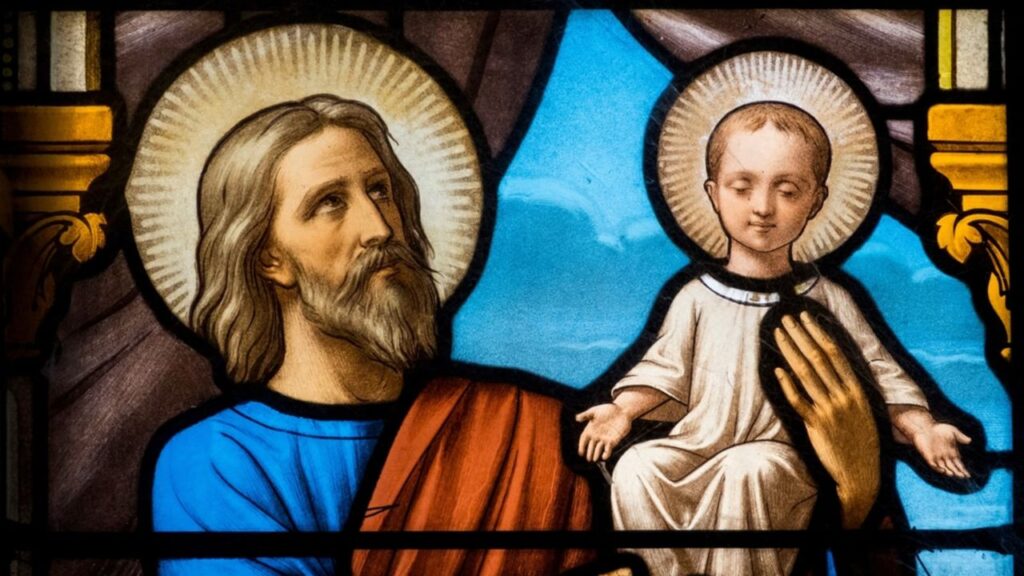
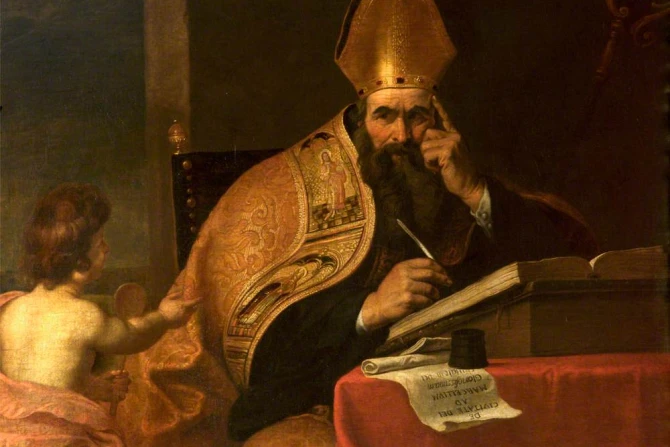
St. Augustine of Hippo (354–430)
St. Augustine was an early Catholic bishop, theologian, and doctor of the Church whose ideas and writings shaped Catholic doctrine for over a millennium.
As documented in his autobiographical work, the “Confessions,” Augustine was brought up Christian but later abandoned the faith for a life of worldly pleasure and revelry, while at the same time becoming an accomplished philosopher and rhetorician.
After years following the Manichaean heresy (which posits that the world is in a constant struggle between dark and light), Augustine met St. Ambrose, a bishop and fellow doctor of the Church, who inspired Augustine through his preaching to seek the truth in the Christian faith he had rejected. Augustine returned to his Catholic faith, fulfilling the many years of fervent prayer of his mother, St. Monica.
After returning to Africa, on a visit to Hippo, Augustine was proclaimed priest and then bishop against his will. He later accepted it as the will of God and spent the rest of his life as the pastor of the North African town, where he spent much time refuting the writings of heretics.
Augustine’s written works, including the “Confessions” and “The City of God,” remain classics of Christian writing and philosophy.
The order forms
As bishop — so reports the Catholic Encyclopedia — Augustine led a monastic community life with his clergy; vows were not obligatory, but the possession of private property was prohibited.
Many sought to copy his way of life, and Augustine wrote instructions during his lifetime to guide monastic communities, such as “De opere monachorum” (“On the Work of Monks”). The Lateran Synod in 1059 approved Augustine’s “rule” for canons — that is, clerics wanting to follow Augustine’s way of life — and the rule was steadily adopted by many communities, especially in Italy.
The rule emphasizes love for God and neighbor as the primary commandment, stressing the importance of communal living and sharing, and the prioritization of humility over earthly status.
Pope Innocent IV in 1244 later united all the disparate communities in Italy using the rule, thus forming the Hermits of St. Augustine, a mendicant order (meaning the friars take a vow of poverty and rely on the support of the faithful). A later pope, Alexander IV, further unified a number of other monasteries and communities in 1256 and also freed the order from the jurisdiction of the bishops.
Within a century of the Grand Union, as the 1256 consolidation was known, there were already 8,000 friars established in many countries. They became involved in a variety of works as pastors, preachers, educators, scholars, theologians, and missionaries.
As prolific missionaries, the Augustinians ventured throughout Europe, as well as to North and South America, Africa, Japan, Persia, India, and China. The Augustinians have been present in Peru — where Leo XIV spent over two decades of his ministry — since 1551.
In the United States today, there are three regional provinces of Augustinians: one based in Philadelphia, one in Chicago, and one in San Diego. The Philadelphia province was the first, founded after Bishop John Carroll of Baltimore invited Augustinians to come over from Ireland in the 1790s.
The Order of Saint Augustine today includes some 2,800 Augustinians in 47 countries throughout the world, according to the order.
Leo XIV is the first pope elected who is a member of the Order of St. Augustine. Five popes who came before him were canons regular — priests who followed St. Augustine’s rule — and one, Gregory VIII, was a member of the Norbertine order, which also follows St. Augustine’s rule.
There have, however, been several Augustinians canonized as saints, including St. Nicholas of Tolentino and St. Thomas of Villanova.
An Augustinian pope
The future Pope Leo XIV, Robert Prevost, attended an Augustinian seminary high school near Holland, Michigan, which is now an event venue. He later earned a bachelor of science degree in mathematics from Villanova University, which is sponsored by the Augustinians and located in Pennsylvania.
He made his solemn vows as an Augustinian in 1981 and was ordained to the priesthood in June 1982 after studying theology at the Catholic Theological Union of Chicago. After being ordained, he earned a doctorate in canon law from Rome’s Pontifical College of St. Thomas Aquinas (also known as the Angelicum) in 1987.
Prevost returned to Chicago for a short time in 1987, serving as pastor for vocations and director of missions for the Midwest Augustinians (Province of Our Mother of Good Counsel). He was then sent to Peru, where he served the Augustinians in various capacities including as a regional ecclesiastical judge and teacher of canon law in the diocesan seminary for Trujillo, Peru, for 10 years.
After being elected the head of the Augustinian Province of Chicago, Prevost returned to the U.S. in 1999. He was elected prior general of the Augustinians in 2001 and then reelected in 2007, serving as head of the order until 2013.
This article was originally published on Catholic News Agency.