Nov. 18 is celebrated in the Catholic Church as the feast day of the Dedication of the Basilicas of Sts. Peter and Paul. Here are three things to know about the historical, architectural, and spiritual significance of these two papal basilicas:
1. Historical significance of the Nov. 18 feast day
In the fourth century, the world’s first Christian Roman emperor, Constantine, commissioned the construction of two separate basilicas over the burial sites of St. Peter and St. Paul to enable the public veneration of the two great apostles, martyrs, and evangelizers of Rome.
After Christianity was legalized in the Roman Empire following the Edict of Milan issued by Constantine in 313, construction of the first Basilica of St. Peter began in 319 and was consecrated by Pope Sylvester on Nov. 18, 326. Historical records indicate that Sylvester consecrated the first basilica built by Constantine dedicated to the apostle St. Paul on Nov. 19 around the year 330.
The masses of pilgrims who came to pray at the tombs of the “Prince of the Apostles” and the “Apostle to the Gentiles” required constant repairs, renovations, and expansion of the two basilicas built by Constantine.
In 1506, Pope Julius II ordered the demolition of the original basilica dedicated to St. Peter to construct the second Basilica of St. Peter, which still stands today. Pope Urban VIII solemnly consecrated the magnificent Basilica of St. Peter 120 years later on Nov. 18, 1626.
Over the centuries the basilica dedicated to St. Paul underwent several renovations and two major reconstructions. The current Basilica of St. Paul Outside the Walls is the third basilica built above the apostle’s burial site. In 1854 — after the great fire of 1823 and over 30 years of construction work — Pius IX consecrated the newly-built basilica and fixed Nov. 18 as its commemoration date.
2. Architectural significance of the two basilicas
With histories that span nearly two millennia, both the Basilica of St. Peter and the Basilica of St. Paul Outside the Walls bear the marks of changing architectural designs dating back from the Paleo-Christian period to the present day.
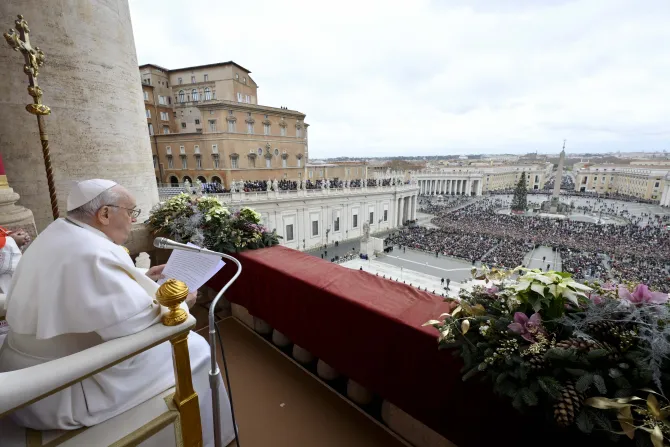
The world-famous 16th-century Basilica of St. Peter, visited by millions of tourists and pilgrims yearly, took more than 100 years to construct and was heavily influenced by Western artistic styles of the Renaissance and Baroque periods.
Designed by the Italian architect and sculptor Gian Lorenzo Bernini, the 94-foot-tall bronze canopy, known as the baldacchino, is a Baroque masterpiece that towers above the central altar and stands directly above the tomb of St. Peter. To highlight the primacy of Peter among the apostles, the baldacchino features sculptures of cherubs holding the papal tiara as well as the “keys to the kingdom of heaven,” which Jesus entrusted to St. Peter and his successors. Bernini also designed the keyhole shape of St. Peter’s Square.
Throughout its history, the Roman basilica dedicated to St. Paul was a testimony to the Catholic Church’s ancient past. Before the 1823 fire, the basilica housed artworks and historical artifacts from the Paleo-Christian, Byzantine, Renaissance, and Baroque periods.
Reconstructed to be identical to the basilica destroyed by fire, the art and architecture of St. Paul Outside the Walls has taken its inspiration from different architectural styles dating back from the 11th century to contemporary designs of the 21st century.
The Holy Door of this major basilica was designed by Enrico Manfrini in preparation for the 2000 Jubilee Year. Inside this door stands the Byzantine door, created in 1070, depicting scenes of the life of Christ and the first Christians.
3. Spiritual significance of the two basilicas
The burial sites of the two patron saints of Rome remain significant places of pilgrimage for Christians.
St. Peter’s Basilica and St. Paul Outside the Walls, two of the four papal basilicas of Rome, are visited by millions of tourists for their historical, architectural, and artistic importance. For Christian pilgrims, the two major basilicas hold a greater spiritual significance that links their faith in Jesus and his Church to two of its most faithful apostles who led the way for Christians throughout the ages through their teachings and witness.
On the June 29, 2024, solemnity of Sts. Peter and Paul, Pope Francis invited all of the Catholic faithful to imitate their example and “open the doors” of the Church during the 2025 Jubilee Year of Hope.
“The jubilee will be a time of grace, during which we will open the Holy Door so that everyone may cross the threshold of that ‘living sanctuary’ who is Jesus,” the Holy Father said in his homily.
The Holy Door in the Basilica of St. Peter opened on Christmas Eve 2024 to usher in the jubilee year and the Holy Door of St. Paul Outside the Walls opened on Jan. 5, 2025. The former wil close on Jan. 6, 2026, and the latter will close on Dec. 28, 2025.
This story was first published on Nov. 18, 2024, and has been updated by CNA.