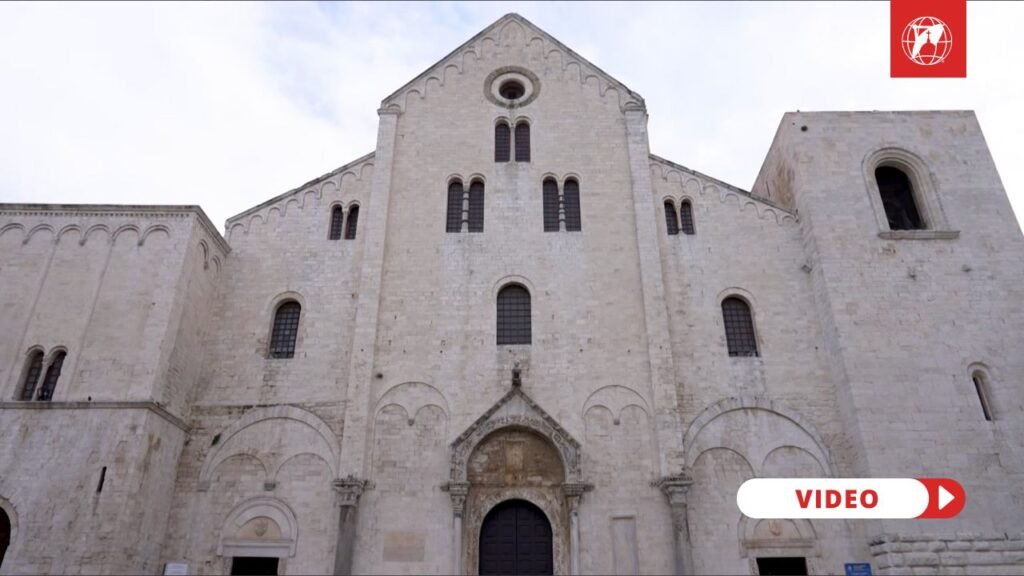
The Basilica of Saint Nicholas in Bari stands as one of the most significant places in Christianity, uniquely uniting Catholic and Orthodox pilgrims.
Since the relics of Saint Nicholas were brought from Myra in 1087, Bari has become a destination known throughout Europe and beyond. Even today, pilgrims from every nation arrive daily to venerate the saint often described as the “saint of interreligious dialogue.”
Devotion to Saint Nicholas of Bari
After the Blessed Virgin Mary, Saint Nicholas is the saint who has received the most widespread devotion in the history of the Church. According to Father Emmanuel Albano, Coordinator of the Saint Nicholas Ecumenical Institute, this devotion has always carried a profoundly unifying dimension.
“This is something the Basilica of Saint Nicholas has always generated through the centuries,” Fr. Albano explained, “continuous pilgrimages of brothers from every confession, who came here to pray at the tomb of Saint Nicholas.”
An Ecumenism Lived in Prayer
Over time, these pilgrimages evolved into something deeper than parallel devotions. “Gradually,” Fr. Albano said, they became “a way of meeting one another in prayer—praying together.” This lived ecumenism is visible not only spiritually, but architecturally.
Immediately after the Second Vatican Council, the Dominican fathers made a concrete gesture to welcome Orthodox worship. As Fr. Albano recounted, they decided “to build a small Orthodox chapel… the one you see as you enter on the left.” It became a place where Orthodox Christians could celebrate the Divine Liturgy within the Basilica itself.
Today, the sign of unity is even more striking. In the Basilica of Saint Nicholas, the Orthodox Divine Liturgy and the Catholic Mass are sometimes celebrated at the same time. Fr. Albano described the significance of this development.
“Here you see the extraordinary nature of this place—and of the ecumenical journey that has been made: an ecumenism, of prayer and of fraternal encounter,” he said. Over time, “there was no longer any need for that side chapel,” because Orthodox faithful began celebrating the Divine Liturgy “at the altar of Saint Nicholas… the very same altar where Catholics celebrate the Eucharist.”
“This is a truly beautiful sign,” Fr. Albano emphasized, “something that does not happen in every Christian church.”
Bari, a Capital of Unity
The reason Saint Nicholas has become such a powerful point of convergence remains, in some ways, a mystery. As Fr. Albano noted, it is not easy to explain “why a saint who is certainly popular and deeply linked to charity has managed to unite, in such a special way, so many people in devotion.”
Still, the facts are undeniable. “Among the Orthodox and Catholics,” he said, “he is certainly the most venerated saint after the Virgin Mary. So, the Basilica is truly a place of particular importance. It is certainly a meeting point.”
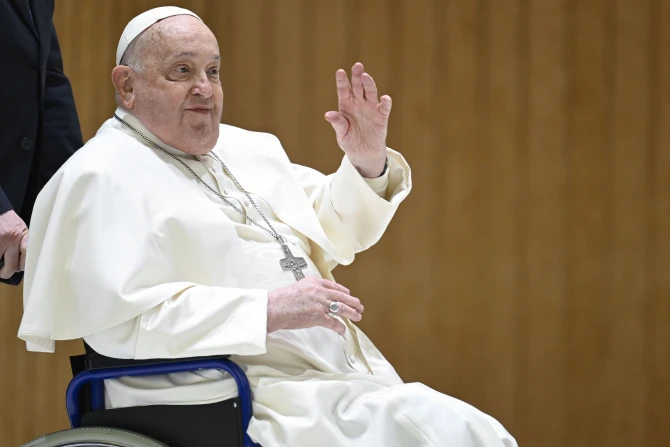
It is for this reason that Pope Francis has called Bari a “capital of unity.” The city is home to stable Orthodox communities—Russian, Romanian, Georgian, Greek, and others—who worship regularly in the Basilica, not merely as visiting pilgrims, but as residents who live their faith around Saint Nicholas.
“Here in Bari you feel it strongly,” Fr. Albano explained, because these communities “celebrate and live their liturgy and their devotion to Saint Nicholas” on an ongoing basis.
From this lived experience of unity emerged the Saint Nicholas Ecumenical Institute, founded by Bari’s Archbishop Monsignor Enrico Nicodemo, together with the Apulian Bishops’ Conference and the Dominicans. What makes the Institute remarkable, Fr. Albano noted, is its origin.
“Culture is essential—the capacity to know one another, and to face the chapters of history that have, unfortunately, divided Christians,” he said. “What makes it remarkable is this: it didn’t begin as an academic project. It’s one of those rare cases where scholarship grew out of lived reality. That is truly extraordinary.”
In Bari, devotion to Saint Nicholas continues to do what centuries of division could not: draw Christians together in prayer, fraternity, and hope—around a shared altar, and a shared longing for unity.
Adapted by Jacob Stein. Produced by Andrea Manna, Ilaria Chimenti; Camera by Andrea Manna, Ilaria Chimenti; Video Edited by Ilaria Chimenti; Special thanks & Credits: Basilica of Saint Nicholas, Bari.