This is a place where humanity touched the deepest abyss of evil. More than one million innocent lives were extinguished in silence. This is Auschwitz. And yet, even in the blackest darkness, the light did not go out.
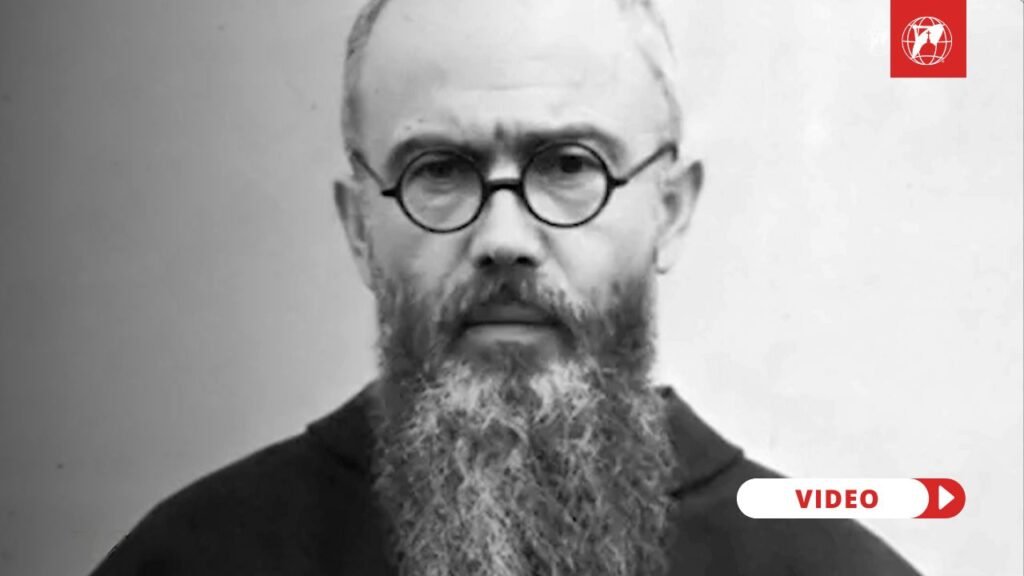
Among the countless martyrs who bore witness to a love stronger than hatred was Saint Maximilian Kolbe, a Polish Franciscan priest. His act of self-giving charity has become one of the most powerful testimonies of Christian love in the twentieth century.
When a fellow prisoner, Franciszek Gajowniczek, cried out in despair for his wife and children, Kolbe stepped forward and offered his own life in his place. The full meaning of that decision is found in Cell 18 of Block 11, the starvation bunker known as the “death block.”
Reflecting on this sacrifice, Fr. Nicolas Abou Anny, a Franciscan student from Lebanon, explains: “The answer lies in the Auschwitz cell where he gave his life for someone, that is, a stranger, someone he didn’t even know. It’s all there, in my opinion, like the sacrifice of Christ on the cross, based on this mercy, this forgiveness, this love, which is the foundation of all his actions.”
Kolbe was left to starve. Nearly two weeks later, he was still alive. When the SS ordered the bunker cleared, the remaining survivors were killed with injections of phenol on August 14, 1941.
A Martyr of Charity and a Model for Today
For many Franciscans, Saint Maximilian Kolbe remains a deeply personal model of holiness. Fr. Leszek Łuczkanin, General Treasurer of the Franciscan Order in Rome, speaks of Kolbe’s enduring influence on his own vocation.
“Saint Maximilian is personally very important to me,” Fr. Łuczkanin says. “We share the same nationality, we wear the same habit, but personally, he is a man who offered the gift of his life, and he is a model for me to follow.”
He adds that Kolbe’s witness is not only about extraordinary heroism, but about daily self-giving: “I will probably never be in a situation like his, where giving the gift of life becomes something absolute and total, but I am learning from him to offer the small moments of my own life to those who need them.”
Even in Auschwitz, Kolbe continued to live his priesthood to the end—comforting fellow prisoners, praying, and spiritually sustaining others. Fr. Abou Anny reflects on how Kolbe understood suffering and sacrifice: “Now, we might think it is difficult to face that death, yet in the moment of trial, as in the moment of the Eucharistic sacrifice, we become a person in whom Christ acts. In fact, he always said, ‘Do not worry. Let the Spirit speak through you.’”
Rome: Where Kolbe’s Mission Took Shape
Born in 1894, Maximilian Kolbe entered the Franciscan seminary in Poland at just twelve years old. In 1911, he came to Rome to continue his studies at the Pontifical Gregorian University and at the Convent of the Friars Minor Conventual.
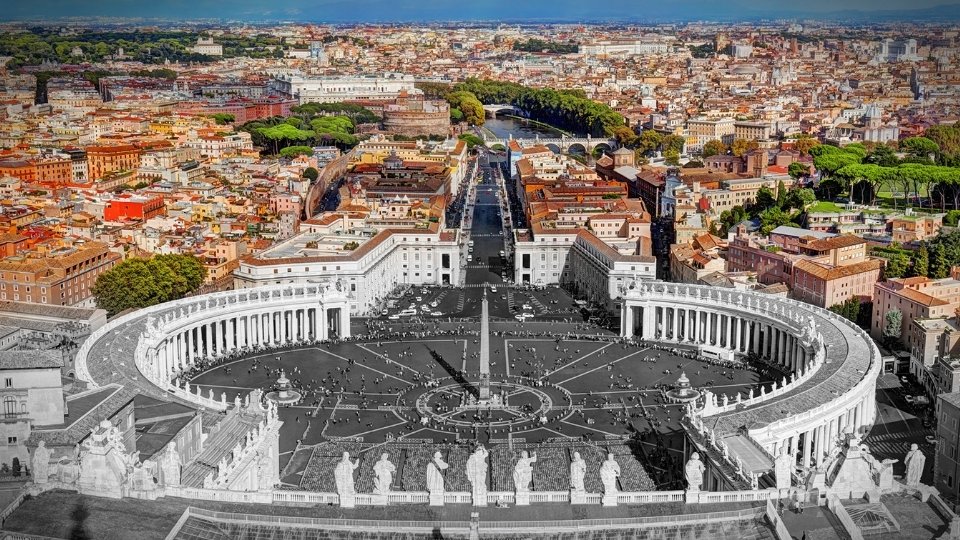
Walking through the Eternal City today, countless traces of Kolbe’s formation and vocation remain. Fr. Łuczkanin recalls the years Kolbe spent in Rome as decisive for his spiritual development. “In San Teodoro we had our monastery, where he studied from 1912 to 1919,” he explains. “He spent seven years in Rome. That was a kind of hidden time, when his spirituality was truly taking shape.”
For Fr. Łuczkanin, returning to these places is deeply moving. “I like returning there, looking through the window that he looked through. And through that very window, he actually saw his calling—to bring people back to God, to pray for those who are far from God and from the Church.”
Kolbe was ordained a priest in Rome in 1918. Fr. Łuczkanin notes the significance of these sacred spaces: “I love walking around Rome, discovering places that in some way bear the mark of Saint Maximilian. These are the places known to everyone. I think of the place where he was ordained, at Sant’Andrea della Valle—it’s a beautiful church. Then, near Piazza Navona, there is the church of Sant’Andrea delle Fratte, where he celebrated his first Mass.”
During these Roman years, Kolbe’s devotion to the Immaculate Virgin Mary deepened, laying the foundation for his later missionary work at Niepokalanów, one of the largest monasteries in the world. He embraced the press and radio to evangelize, promote peace, and spread Marian devotion.
Fr. Abou Anny sees this as a prophetic witness for today’s world: “We must share with both the faithful and the non-faithful the treasure of our faith, and he began to work, using all the technology of his time to share it—better to say, to make it bear fruit—for the world.”
He adds a sober warning for the present age: “And today, with the technology we have, we can use it for evil—destroying nations, waging wars, and so on. Or we can do as Kolbe did, using it for our good.”
Canonized in 1982 by Pope John Paul II, Saint Maximilian Kolbe is remembered as a martyr of charity, a witness to faith in the darkest of places, and a lasting sign that love, rooted in Christ, is stronger than evil.
Adapted by Jacob Stein. Produced by Alexey Gotovskiy; Camera by Alberto Basile.