The forty days of Lent invite Christians to look inward. It is a season that calls for examination of conscience, for change, and for a renewed encounter with the Lord before the joy of the Resurrection.
In Rome, that invitation is made visible in a striking way. More than 900 churches across the Eternal City open their doors wide during Lent—from small parish churches on the outskirts to the great papal basilicas at the heart of Catholic life.
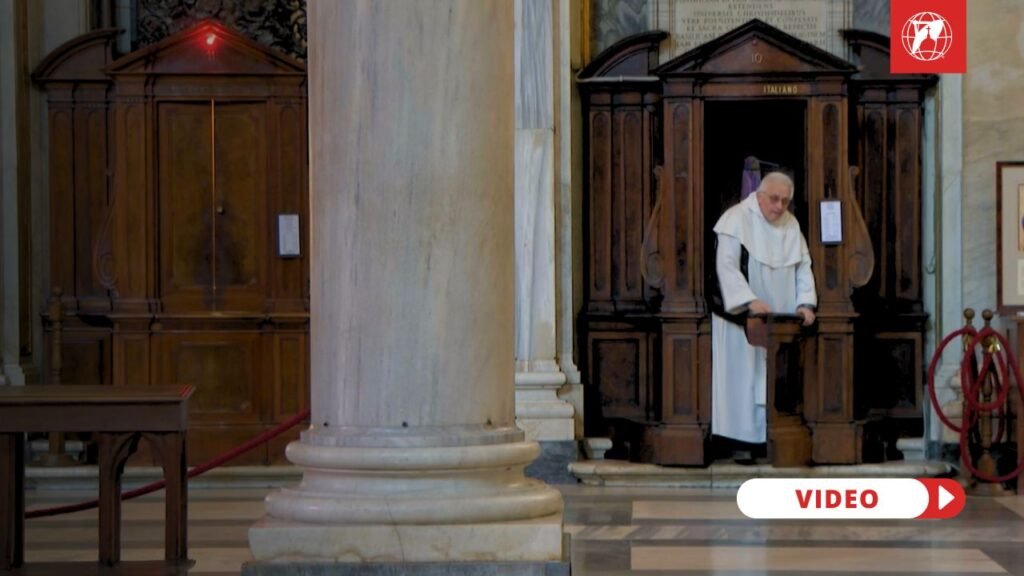
Among them stands the Basilica of Saint Mary Major, the oldest Marian basilica in the world. For nearly five centuries, the Sacrament of Reconciliation has been administered here by the Dominican Fathers. Their ministry was formally established in 1568, when Pope Saint Pius V—himself a Dominican—instituted the Apostolic College of Penitentiaries.
Today, that tradition continues in a global Church.
A Confessional That Speaks 20 Languages
Fr. Krzysztof Popławski, one of the confessors at Saint Mary Major, explains how the ministry has evolved over time. “Originally, they were basically Italians,” he says, “but since the 1950s—and later after the Council—the confessors have come from different countries and hear confessions in various languages.”
He notes that the diversity is striking: “For example, nowadays there are usually 12 of us brothers from literally all over the world—India, Benin, Africa, and various European countries—and we offer the possibility of confession in over 20 languages.”
A native of Poland, Fr. Popławski hears confessions daily in Polish, Italian, English, and Chinese. The presence of Chinese penitents often surprises visitors, but he explains that it is not uncommon. “Contrary to what we might think, there are quite a few Chinese visitors, partly because many priests and nuns from China study here,” he says. He adds that there is even “a sort of Chinatown in Rome,” not far from the basilica. “So, there are many Chinese faithful who come to confess, plus there are also tourist groups who, seeing that confessions are offered in Chinese, come out of curiosity to check if it’s true.”
Regardless of the language spoken, the confessional becomes a quiet place of encounter—a space where people pause and listen to their own hearts.
Why Do People Come?
What draws someone to kneel in a confessional? Is it the search for peace, or the desire to draw closer to God?
Fr. Popławski says the reasons vary widely. “One can create a kind of model of recurring reasons why people come to the confessional. I think the spectrum is very wide,” he explains. “In fact, a lot depends on faith: those who are deeply faithful are genuinely seeking reconciliation with God. Then there are those who may not fully know why they come, but even that is a sign that they are searching for something.”
Between firm belief and quiet uncertainty, he says, most penitents fall somewhere in between. “So, between these two extremes—on one end, someone who comes because they deeply believe in the sacrament, and on the other, someone who doesn’t entirely know why but feels the need—essentially everyone who comes fits somewhere within that range.”
As a papal basilica, Saint Mary Major draws pilgrims of all ages. “The uniqueness of Santa Maria Maggiore and the place where we hear confessions is that people of all ages come—ranging from children right after their First Communion to those who come with the thought that it might even be their last confession,” he says.
Mercy That Transforms
During the recent Jubilee of Hope, more than 20 million people crossed the threshold of Saint Mary Major. The lines for confession stretched from morning until closing time.
Fr. Popławski recalls that during the Holy Year, “one person came after 65 years.” He admits, “I didn’t even want to tell them that the last time they had confessed was before I was even born.” Yet for him, the most powerful moments are not defined by the length of absence. “I must admit, the most moving situations aren’t necessarily those related to such long absences from the confessional. Rather, it’s the moments when you can see that someone has been deeply touched by God’s mercy and their desire for reconciliation.”
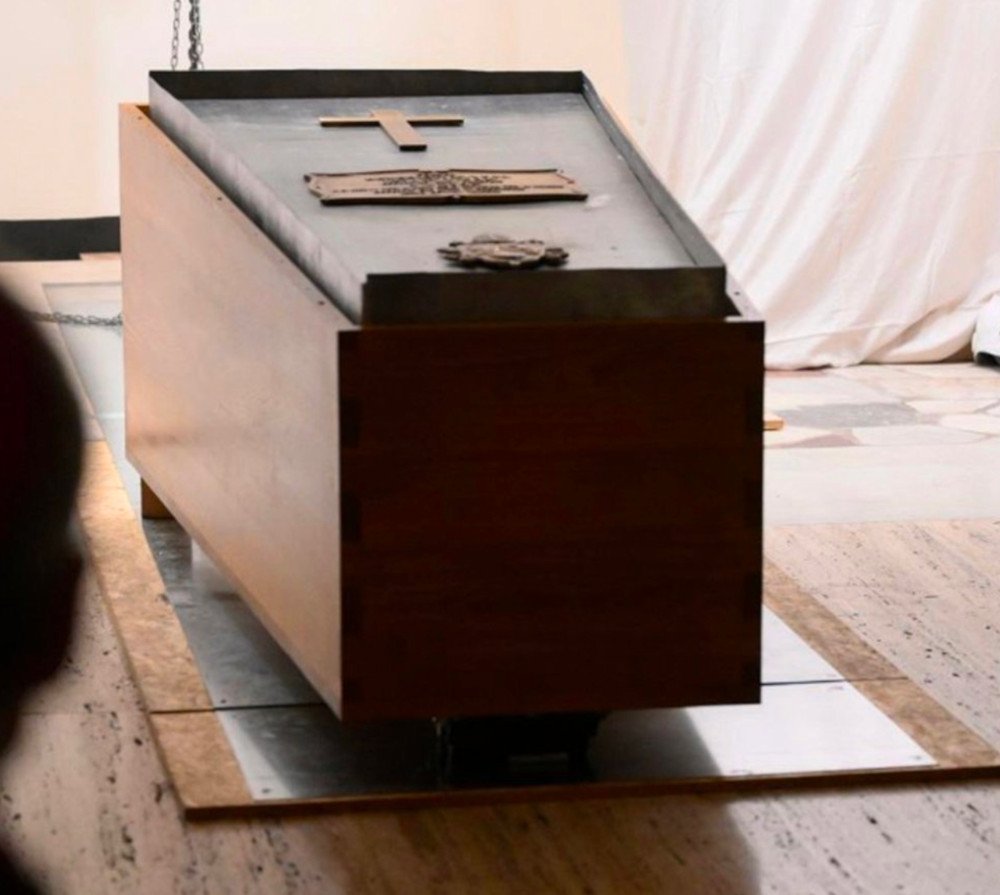
Since the burial of Pope Francis in April, the basilica has continued to draw the faithful. Many kneel in prayer at his tomb before making their way to the confessional. Some arrive spiritually lost or carrying heavy burdens—wounds that have shaped their lives for years.
“There are very concrete wounds that these people carry,” Fr. Popławski observes. “These are all wounds that come from a lack of love—starting from the family they came from, from relationships built over the course of life, from experiences of loneliness, and the difficulties that arise from it.”
In the confessional, those wounds are named, entrusted to God, and offered up in hope.
A Universal Language of the Soul
Is confession a universal language—one that transcends culture and nationality? Fr. Popławski believes it is. “I believe it is,” he says. “I would even say that this stems from a fundamental human experience. Naturally, there are cultural differences, but I don’t think there are any profound differences that arise simply from hearing confessions in different languages.”
At its core, the sacrament touches something deeply human: the need to be forgiven, to be understood, and to begin again.
As Lent unfolds, the Dominican confessor sees the season itself as a grace-filled opportunity. “The season of Lent strongly encourages us to pause and reflect—reflect on ourselves, on our relationships, and on our relationship with the Lord,” he says.
In the quiet of a Roman confessional—whether in Italian, Polish, Chinese, or English—that pause can become the beginning of transformation.
Adapted by Jacob Stein. Produced by Alexey Gotovskiy; Camera by Alberto Basile, Fabio Gonnella.