The Vatican secretary of state pointed to recent contacts with Cuban and U.S. officials as the Holy See seeks a dialogue-based solution on the island.
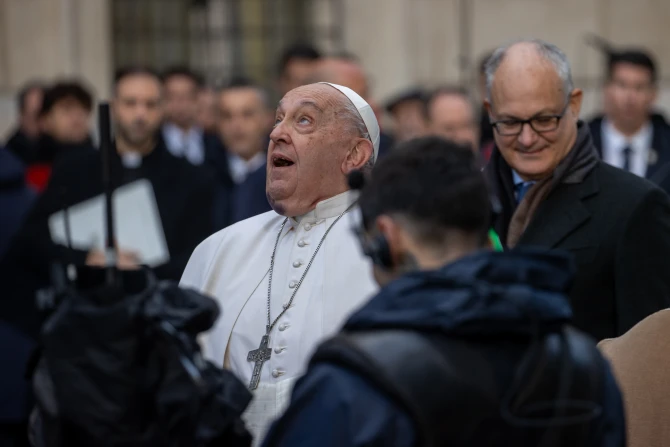
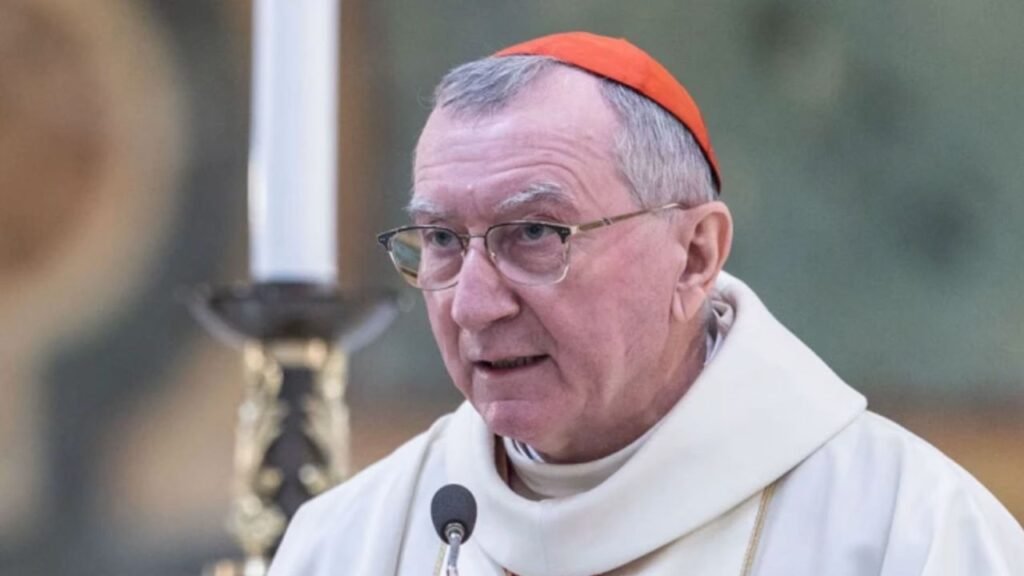
Vatican Secretary of State Cardinal Pietro Parolin said the Holy See is promoting dialogue on Cuba and has taken “the necessary steps” with the aim of encouraging a negotiated solution to the problems facing the island.
“For Cuba as well, we have done what we had to do, we met with the foreign minister and we took the necessary steps, always with a view to a dialogue-based solution to the problems that exist,” Parolin said in comments to several media outlets, including the Holy See’s official news outlet, Vatican News.
The cardinal made the remarks March 9 in Rome on the sidelines of the second edition of the interreligious initiative “Il Tavolo del Ramadan–Iftar,” dedicated to encounters among Christian, Jewish, and Muslim representatives.
Parolin’s comments come amid intensified diplomatic contacts involving Cuba. On Feb. 28, Pope Leo XIV received Cuban Foreign Minister Bruno Rodríguez Parrilla in audience at the Vatican. Rodríguez attended as special envoy of Cuban President Miguel Díaz-Canel Bermúdez.
After the meeting, the Cuban foreign minister publicly thanked the pontiff on X, writing: “I deeply thank His Holiness Leo XIV for the honor of receiving me in audience as Special Envoy of the President of the Republic of Cuba.”
The visit by Cuba’s top diplomat came days after another significant meeting in Rome on the situation in Cuba. On Feb. 20, the head of the U.S. diplomatic mission in Havana, Mike Hammer, met with Archbishop Paul Richard Gallagher, the Vatican’s secretary for relations with states, to discuss conditions in the Caribbean nation and the “important role” played by the Catholic Church in Cuban society.
In comments to EWTN after that meeting, Hammer said Cuba is at a decisive moment and expressed hope that the country will soon attain “the freedom it has not had in 67 years.”
“If there is freedom, there will not be suffering because there will be the necessary change. How will it happen? Well, that is what we are working on,” the U.S. diplomat said in an interview with EWTN.
Eight days after that meeting, Rodríguez Parrilla traveled to the Vatican, where he met with both Leo XIV and Parolin.
Also on March 2, a group of Cubans in exile in Miami led by Rosa María Payá — founder of Cuba Decide and daughter of the late dissident leader Oswaldo Payá — signed what they call a Liberation Agreement for Cuba, a 10-step roadmap to restore “democracy and the rule of law” on the island.
The Holy See has repeatedly played a mediating role between Cuba and the United States. The most recent example came during the administration of President Joe Biden, when the Vatican helped facilitate efforts that led to the release of 553 prisoners in Cuba in exchange for the removal of Cuba from the U.S. list of state sponsors of terrorism.
Parolin also addressed the growing military escalation involving the United States, Israel, and Iran, which has spread to other countries in the Middle East. He said the Holy See continues to keep channels of communication open with all parties in an effort to prevent a broader conflict.
“It is necessary to have open dialogue with everyone so that this immense tragedy now unfolding does not continue to expand instead of being contained,” he said.
The secretary of state said one of the defining characteristics of Vatican diplomacy is its willingness to remain in contact with all sides involved.
“The Holy See speaks with everyone and, when necessary, also speaks with the Americans and the Israelis, presenting what, in our view, could be solutions,” he said.
Parolin also referred to the killing of Maronite Father Pierre El-Rahi, pastor of Qlaya’a in Lebanon. The priest died after going to help a parishioner and was later struck by a bombardment.
Leo XIV expressed his “deep sorrow” that same day over the priest’s death and for all the victims of the recent bombings in the Middle East, including many civilians and children, according to the Vatican press office’s Telegram channel.
“Unfortunately, the Church too is a victim of this situation; we are not exempt or immune from what the population is suffering,” Parolin said.
The cardinal also warned of the risk that the Christian presence in the Holy Land and throughout the Middle East could continue to decline because of war, instability, and growing hatred.
“It is a risk the Holy See has always denounced. War, destabilization, and conflict certainly do not favor the presence of Christians,” he said, underscoring that the situation is an additional cause of concern for the Vatican.
This story was first published by ACI Prensa, CNA’s Spanish-language news partner. It has been translated and adapted by EWTN News English.