The story of Javier Sartorius has reached Rome, where his family, friends and production team presented the film Only Javier and had the chance to speak about him with Pope Leo XIV. The documentary follows the journey of a young Spanish aristocrat and promising tennis player who chose to abandon success and comfort for a life of radical faith.
Javier’s brother, Fernando Sartorius, shared, “He was my companion in every adventure — like a twin. Even though we have other siblings, it was always Javier and Fernando, the two of us together.”
In their youth, the two crossed the Atlantic together, chasing possibility in the United States. Fernando recalls that even in those years, Javier had a disarming clarity and honesty — a kind of transparency that would later shape his entire path of conversion:
“We used to sell vacuum cleaners door to door in America, and our parents were worried about us. So, my father would call me and ask, ‘Fernando, what are you doing in Dallas?’ And I’d tell him, so he wouldn’t worry, ‘Dad, I work for a German company.’
“My father would say, ‘Germany? Bravo! Germany, very good, very good — that’s a great future.’ Then he’d say, ‘Put Javier on the phone. Javier, what are you doing?’
“And Javier would say, ‘I sell vacuum cleaners.’
“Javier, to be honest, didn’t care.”
Javier was looking for meaning in life and more profoundness, first he looked in Eastern spiritualities, then through volunteer missions in Peru, where he rediscovered the faith he had abandoned.
“When Javier left,” Fernando continued, “he said to me, ‘Come with me.’ And I said, ‘No… you go ahead, you go there… I’ll stay here.’ And I became a personal trainer, and he became an athlete of the Spirit.”
The call did not stop there. Javier entered a seminary for a time, but his desire for a more radical simplicity led him to leave and share life with people living on the streets of Barcelona. Eventually, he found his home at the Sanctuary of Lord in the Pyrenees — where he embraced poverty, silence, fraternity, and service.
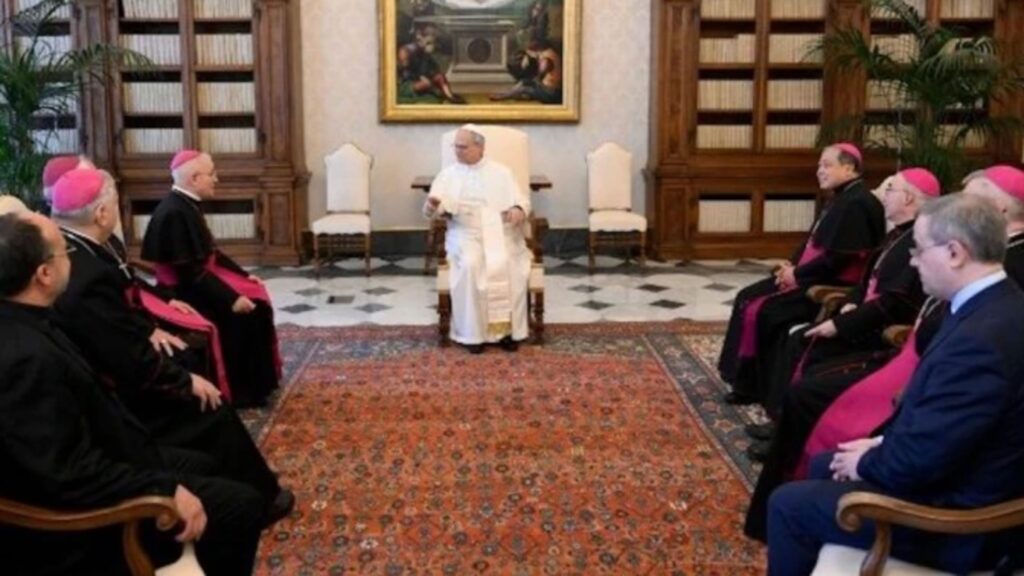
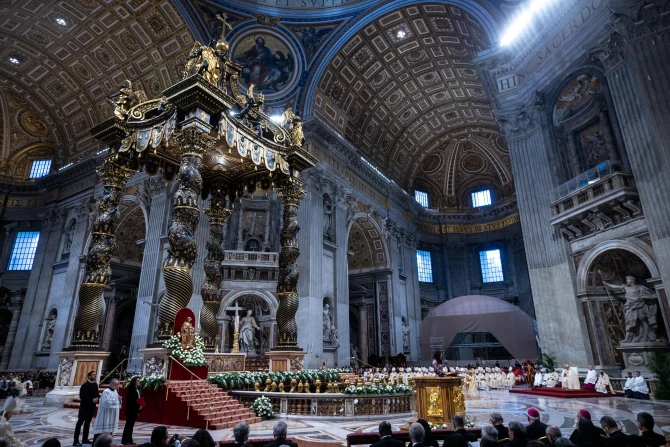
The group met Pope Leo XIV at the General Audience, sharing the testimony of Javier’s life.
Jordi Bosch is the President of Javier Sartorius Association. He explained:
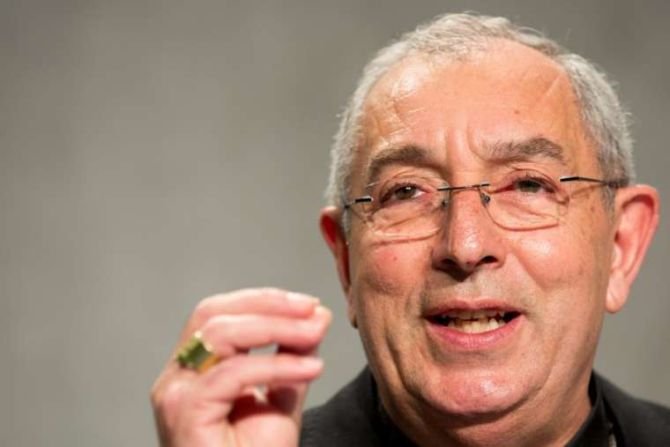
“It was a very simple meeting. We talked to him about Javier, who was a missionary, a monk, and at the same time an elite tennis player. We reminded him briefly about the visit from the President of the Generalitat of Catalonia, who gave him the book ‘Solo Javier’ and the film ‘Solo Javier.’ He remembered it. We exchanged just a few words — he welcomed us warmly, and it was all very simple and very familiar.”
An association named “Javier Sartorius” is now dedicated to sharing his story and testimony, with the hope of inspiring others and eventually opening his cause for canonization.
“This association asked the bishop if there could be a possible cause for sainthood. The bishop told us no — his life wasn’t well known. And that’s why we decided to make a film and a book,” Bosch added.
For the film’s director, Josepmaria Anglès, Javier’s story that he portrayed in the film is not simply something to remember — it is something meant to awaken the heart.
“In the end,” he explained, “Javier’s life is a relentless search for a life of fulfillment, a life of meaning — a life that isn’t just about accumulating pleasures and experiences, but about truly experiencing love and encountering God.”
Josemaria says that the movie does not present a perfect man — but a man who refused half-measures, who wanted a love that was total. A life that, according to those who knew him best, continues to speak today, as his brother attests:
“And he said to Jesus: ‘Jesus, what must I do to reach the Kingdom of Heaven? What must I do so that when I die, I can go to heaven? I do everything right — I’m good to my parents, and so on, and so forth.’ And Jesus said, ‘Look, I’ll tell you what you must do: go home, leave your family, sell everything you have, and follow me.’ And he did — he followed Him all the way to his death.”
Adapted by Jacob Stein. Produced by Alexey Gotovskiy; Camera by Alberto Basile; Video Edited by Gianluca Gangemi