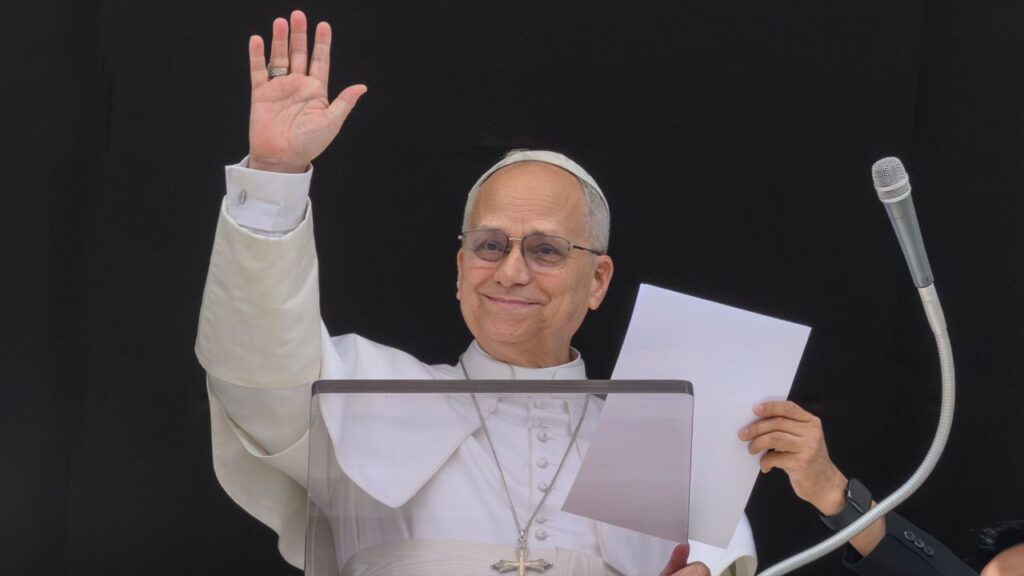
The pontiff discussed the legitimate exercise of authority in a message to the Pontifical Academy of Social Sciences.
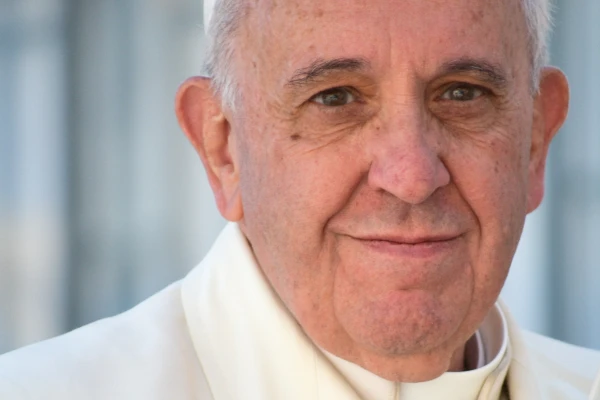
VATICAN CITY — Pope Leo XIV emphasized that technological, economic, and military power must be directed toward the common good.
In an address to the plenary assembly of the Pontifical Academy of Social Sciences, the pontiff discussed authority in the context of Catholic social teaching and described it as grounded not in strength but in moral virtue.
“Catholic social teaching regards power not as an end in itself but as a means ordered toward the common good,” the pope wrote in his message. “This implies that the legitimacy of authority depends not on the accumulation of economic or technological strength but on the wisdom and virtue with which it is exercised.”
Leo’s message follows his remarks at a Vatican prayer vigil for peace on April 11, where he denounced the “delusion of omnipotence” among global leaders amid ongoing conflicts in the Middle East and Ukraine. In his letter, he criticized the imbalance of economic and military power among nations, calling it a threat to democracy.
“The concentration of technological, economic, and military power in a few hands threatens both democratic participation among peoples and international concord. Divine power does not dominate but rather heals and restores. It is precisely this logic of charity that must animate history, for human activity inspired by charity helps to shape the ‘earthly city’ in unity and peace,” Leo wrote.
Referring to Centesimus Annus, St. John Paul II’s encyclical on Catholic social teaching, Leo stated that legitimate power “finds one of its highest expressions in authentic democracy,” a democracy that recognizes human dignity and is not dominated by “economic and technological elites.”
“Far from being a mere procedure, democracy recognizes the dignity of every person and calls each citizen to participate responsibly in the pursuit of the common good,” Leo wrote. “Reflecting this conviction, St. John Paul II affirmed that the Church values democracy because it ensures participation in political choices and ‘the possibility both of electing and holding accountable those who govern them, and of replacing them through peaceful means when appropriate.’”
This article was originally published by EWTN News in English.