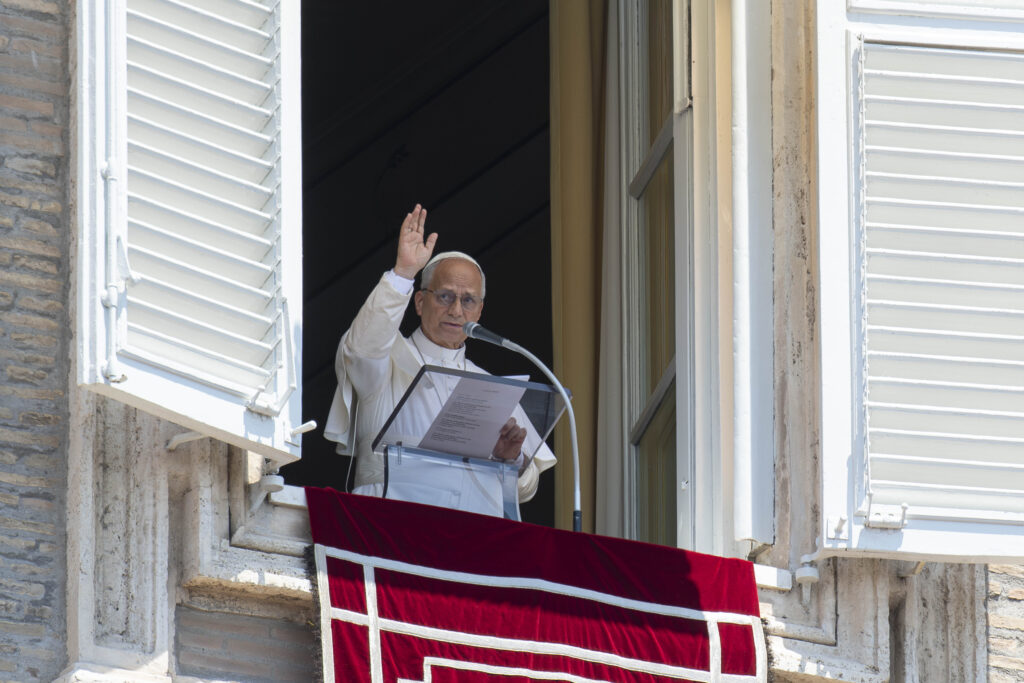
As artificial intelligence rapidly transforms society, Pope Leo XIV is urging educators, students, and policymakers to ask a deeper question than how technology can make life easier.
The real question, he suggests, is what kind of people we are becoming.
In his first encyclical, Magnifica Humanitas, Pope Leo identifies artificial intelligence as one of the defining challenges of our time. While public debate often focuses on AI’s impact on employment, economics, and security, the pope argues that something even more fundamental is at stake: the formation of the human person.
Beyond Information: The Formation of the Human Person
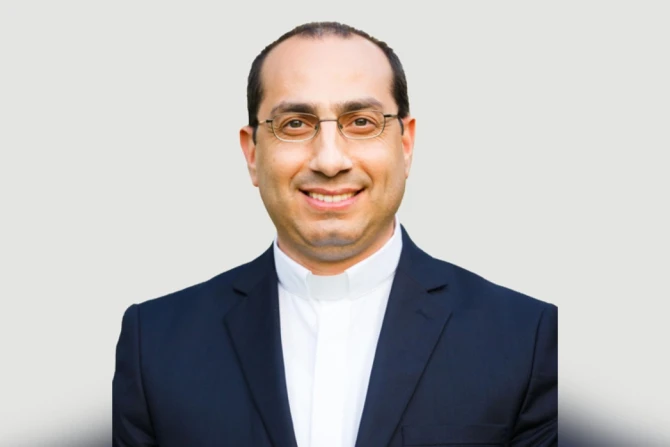
According to Fr. Thomas Joseph White, OP, Rector of the Pontifical University of St. Thomas Aquinas in Rome, artificial intelligence is changing not only the way people work but also the way they think.
“Something more interior is happening,” he explained. “Human ways of thinking are being replaced by computer-generated large language models, which will, you might say, do the reasoning for you or do some of the work of gathering information for you, sometimes making proposals about conclusions.”
The implications reach far beyond convenience. As AI systems become increasingly capable of processing information and generating responses, questions arise about whether essential human activities—from medicine and philosophy to art and education—might gradually be delegated to machines.
“No longer maybe… Is your doctor going to reflect on your medical lab work or is a machine going to do it without the intermediary of a human judgment?” Fr. White asked. “Or are we really going to still learn to do things like philosophy or medicine or art or are these things going to be given over to animated agents?”
Universities are already confronting these challenges. Students can use AI to draft essays, summarize readings, and generate ideas in seconds. Professors can rely on similar tools to prepare lectures and course materials. Yet for Catholic educators, the concern is not primarily technological but human.
“There’s nothing wrong with artificial intelligence or with technology or with computer science,” Fr. White said. “But it has to be located within this matrix of educational opportunities. If students are simply asking a computer to write their papers for them, instead of writing themselves, or professors are using computers to generate their class notes, the real issue is, fundamentally, what kind of persons are we becoming? What kind of habits are we acquiring?”
Education, he argued, is not merely about acquiring information. It is about developing the habits, virtues, and intellectual discipline that shape a person’s character.
“You can use a computer to grow in understanding and virtue,” he said, “but you can also use it to alleviate yourself from the task of forming your character in a certain kind of way.”
Education as a Path to Wisdom
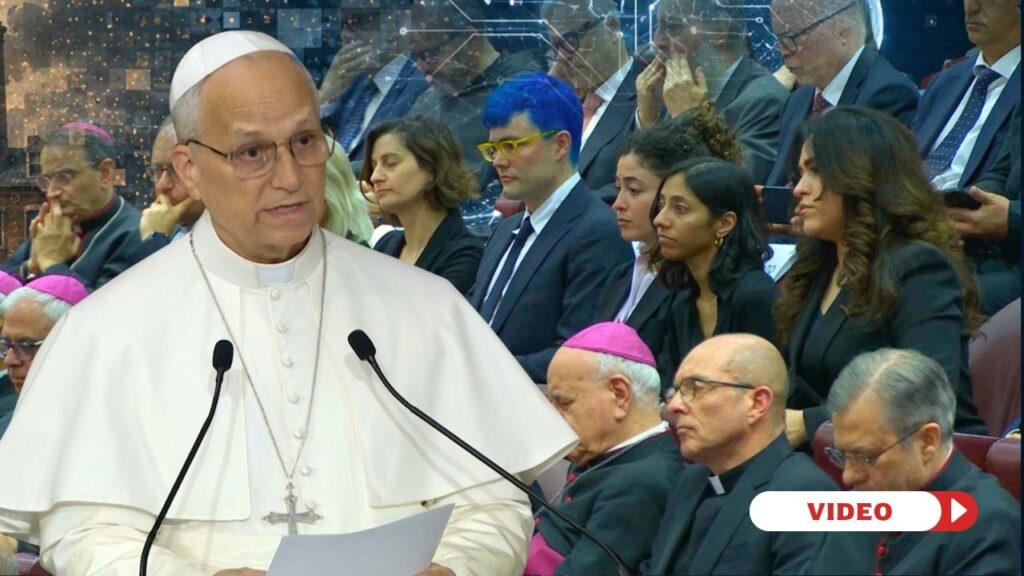
This understanding of education was at the heart of Pope Leo XIV’s visit to Sapienza University of Rome, Europe’s largest university with more than 125,000 students.
Speaking to students and faculty, the pope emphasized that education serves a purpose far greater than professional success.
“It is about loving human life always and in all circumstances, about valuing its potential, so as to speak to the hearts of young people, without focusing solely on their knowledge,” he said. “What sense would it make, after all, to train a researcher or professional who does not, however, cultivate their own conscience, a sense of justice and respect for that which cannot and must not be dominated? Knowledge, in fact, serves not only to achieve professional goals, but to discern who one is.”
His message comes at a time when many students face growing pressure to perform academically and professionally while navigating an increasingly competitive and technology-driven culture.
Addressing these concerns directly, Pope Leo challenged a mindset that measures human worth according to productivity or achievement.
“It is the pervasive lie of a distorted system, which reduces people to numbers, exacerbating competitiveness and leaving us caught in spirals of anxiety,” he said. “It is precisely this spiritual malaise felt by many young people that reminds us that we are not the sum of what we have, nor a random collection of matter in a silent cosmos. We are a desire, not an algorithm!”
For many students, the pope’s words resonated deeply.
Medical student Chiara Clementoni described his speech as “really encouraging,” particularly his reminder that “we are not simply the sum of what has happened to us, but that through knowledge and study we can also build ourselves as persons and open ourselves more deeply to the mysteries God has placed in nature, in everything that can become the object of our study.”
The Human Person at the Center of Education
University leaders share the pope’s conviction that education must form whole persons rather than simply produce skilled professionals.
Antonella Polimeni, Rector of Sapienza University, stressed that institutions of higher learning must remain attentive to the unique gifts and talents of each student.
“In a society that tends to push for performance and results, there is a risk of failing to truly recognize and value the talent present in each and every one of these young people,” she said. “This is therefore, in a sense, a call especially to the academic and teaching staff to be ever more attentive in nurturing these young people, and in discovering the talent that exists within each of them.”
At the Pontifical Urban University, Rector Vincenzo Buonomo likewise emphasized that education involves more than technical competence.
“Education presupposes not only technical skills, but also the formation of consciences,” he said. “The moment I know, or fully understand, the technical data of a given situation, I may be able to act, but the real question is whether, in conscience, I want to act for the good of everyone, for the good of the community, and not merely for the benefit of a few.”
This concern lies at the heart of Pope Leo XIV’s vision for the digital age. As artificial intelligence becomes more powerful, the Church insists that human beings must remain capable of moral judgment, responsibility, and freedom.
As Fr. Thomas White concluded, “We can’t outsource thinking about justice to non-human agents. It’s par excellence, the human act, to be free and responsible for other people through what we choose to do and say.”
For universities facing the opportunities and challenges of artificial intelligence, the pope’s message is clear. Technology may assist education, but it cannot replace its ultimate purpose: forming persons capable of seeking truth, exercising wisdom, and choosing the good.
In an age increasingly shaped by algorithms, Pope Leo XIV is reminding the world that education remains, above all, a profoundly human endeavor.
Adapted by Jacob Stein