Pope Leo XIV has notably revived the use of the papal mozzetta, which Pope Francis had discarded during his papacy. But what is its history and symbolism?
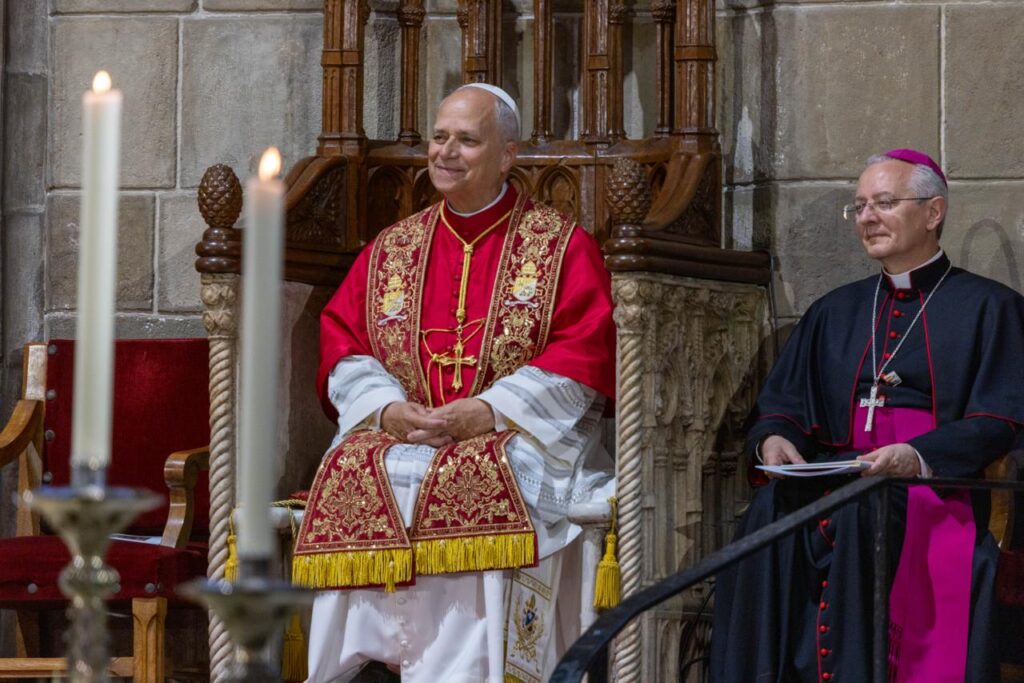
A distinctive feature of Pope Leo XIVʼs apostolic journey to Spain has been the frequent use of the red papal mozzetta, from meeting Spanish royalty in Madrid to praying the Divine Office in Barcelona.
When Leo first appeared on the balcony of St. Peterʼs Basilica to the thousands of faithful gathered in the square after his election, many noticed the return of the mozzetta as reestablishing a papal tradition.
The mozzetta, which fell out of use under Pope Francis, is a short red cape worn over the shoulders. Leo has worn it often when meeting heads of state, delivering his “urbi et orbi” addresses at Christmas and Easter, and at special prayer services.
By wearing the mozzetta, Leo has chosen to revive a long-standing custom. But why does he wear it, and what does it symbolize?
History of the mozzetta
The mozzetta is a nonliturgical garment worn by the pope, cardinals, bishops, abbots, and certain priests, including canons of a cathedral chapter. It is normally worn over the cassock.
The history of this garment dates back to at least the 14th century, shortly after the papacy returned to Rome from Avignon. Initially, it was worn by the popes in Avignon to adapt to the colder French climate. Eventually, it became part of the popeʼs ceremonial dress around 1400, initially reserved for the pope but later extended to all cardinals and bishops.
The mozzetta also has roots from the earliest centuries of the papacy, when popes began to wear red mantles over white vestments in imitation of the Roman emperors, asserting both temporal and spiritual authority.
The mozzetta traditionally also had a hood attached to it to symbolize penance, but this was discontinued by St. Paul VI in 1969.
Symbolism, use, and differences
The mozzetta, in the case of a prelate, symbolizes his spiritual authority and rank within the Church hierarchy. For a pope, it is normally worn with the papal stole as a sign of his universal jurisdiction over all Catholics.
As a nonliturgical vestment, the mozzetta is normally not used to administer the sacraments. Instead, it is used by the clergy as a choir dress at certain services, e.g., the Divine Office, and by the pope for certain occasions, including audiences, prayer services, and “urbi et orbi” addresses. It is customary for the pontiff to wear it when he first presents himself to the crowd after his election.
The mozzetta a pope wears is different from those worn by cardinals and other clerics.
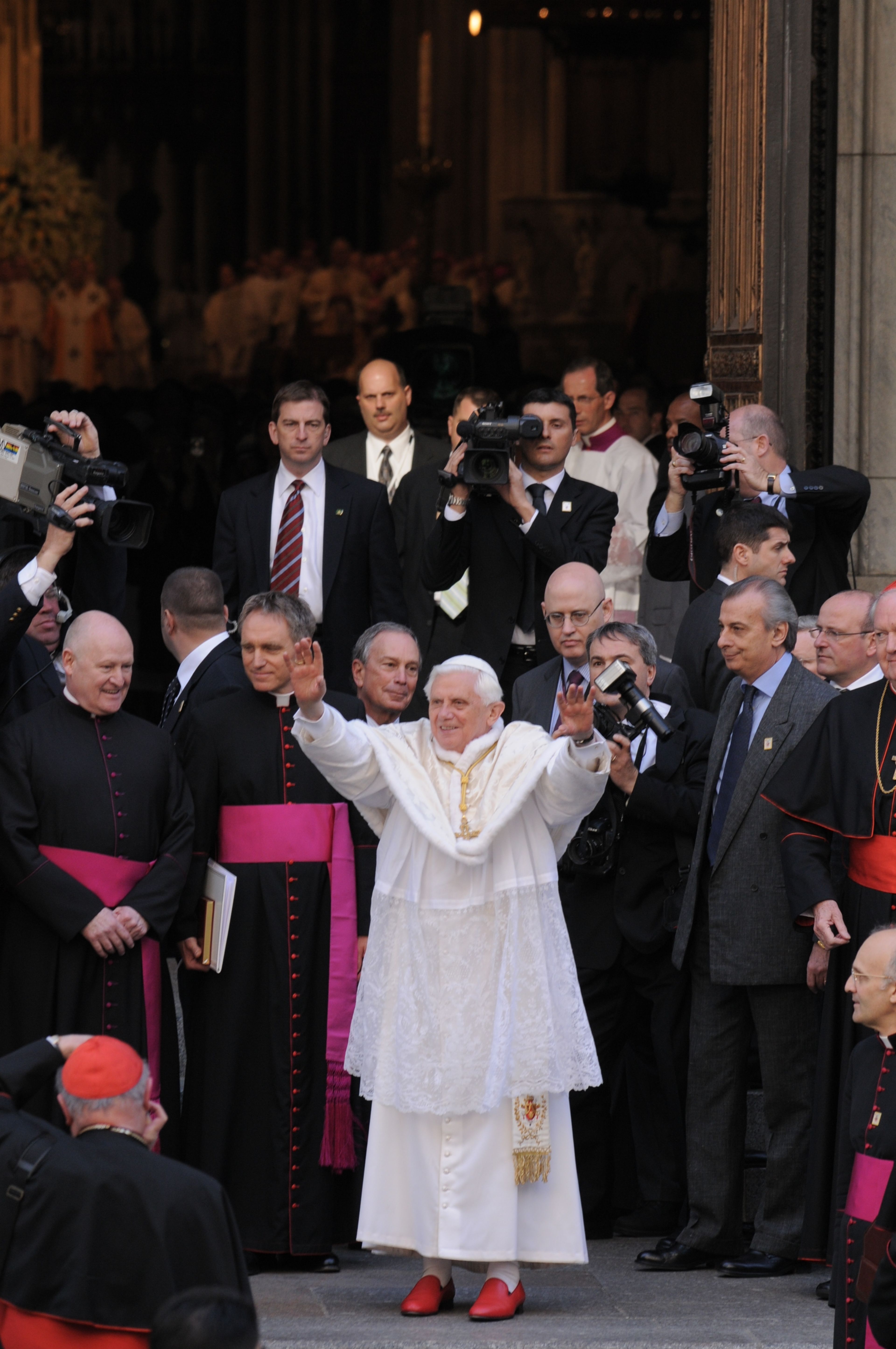
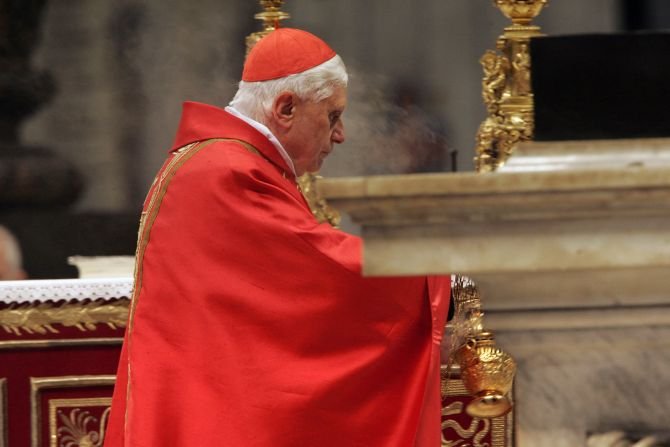
Pope Benedict XVI arrives to St. Patrick’s Cathedral in New York during his only visit to the United States from April 15–20, 2008. | Credit: Vatican Media
While the mozzetta for cardinals is red and for bishops purple, the pope has five versions of the mozzetta.
The one most commonly worn by the pontiffs is the red satin mozzetta, usually with an embroidered stole.
Pope Benedict XVI revived the use of other styles of the papal mozzetta, including the winter mozzetta (made of red velvet trimmed with white ermine fur) and the white silk mozzetta, worn during the Easter season.
Discontinuity under Francis and a reviving under Leo

Pope Leo XIV waves to pilgrims in St. Peter’s Square shortly after his election on Thursday, May 8, 2025. | Credit: Daniel Ibáñez/EWTN News
When Pope Francis stepped out on the balcony of St. Peterʼs Basilica after his election to greet the faithful, he did not wear the papal mozzetta, preferring a simple white cassock. He chose not to wear the vestment during his 12-year pontificate, becoming the first pontiff in living memory not to do so.
Leo XIV has instead chosen to revive the use of the papal mozzetta, in line with his predecessors, who favored wearing certain vestments as a visible reminder of papal tradition.
This article was originally published by EWTN News English.