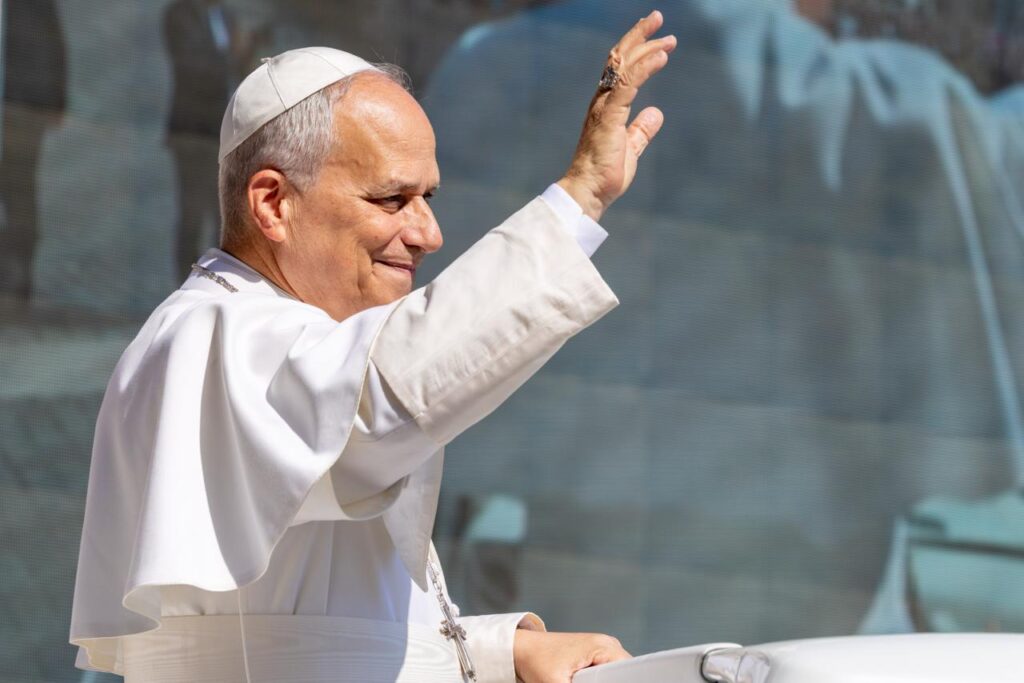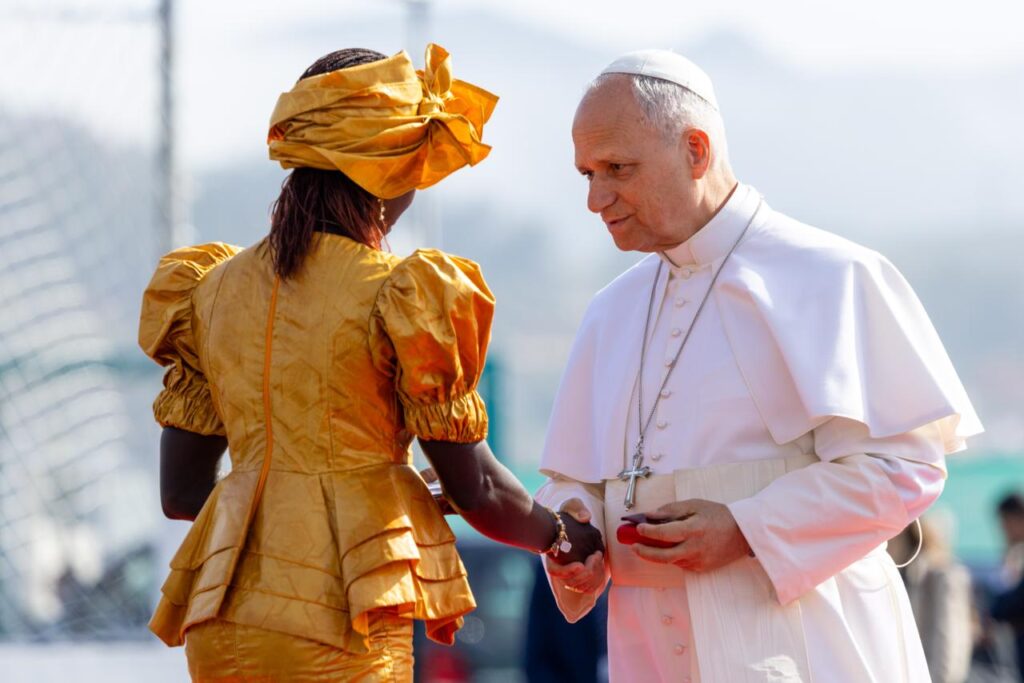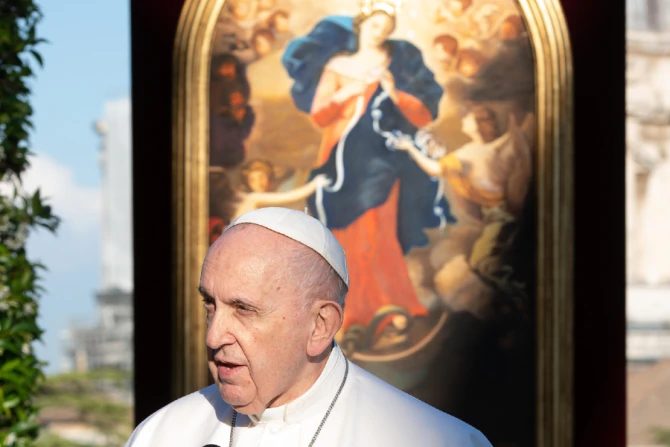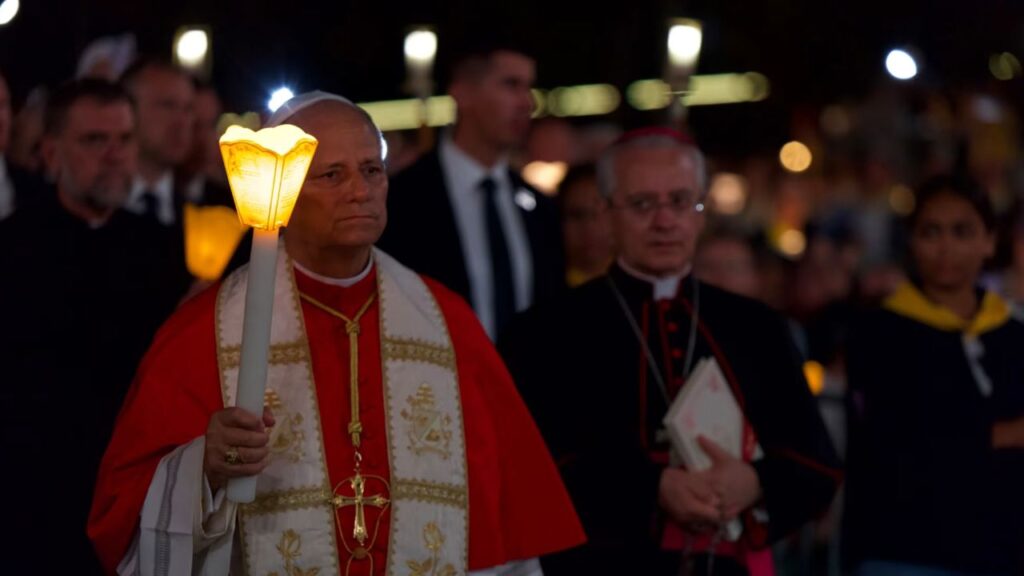
Standing as a pilgrim at the Grotto of Massabielle, Pope Leo XIV offered a visible reminder of why the Church upholds apparitions such as those at Lourdes.
When Pope Leo XIV arrived as a pilgrim at the Grotto of Massabielle on Sept. 27, his presence highlighted a foundational question for Catholics: If divine revelation is complete in Jesus Christ, why does the Church recognize and promote a shrine born of private apparitions?
Watch the livestream here
The answer rests on the Churchʼs crucial distinction between the closed deposit of public revelation and the subordinate, pastoral role of private revelations.
The unrepeatable fullness of public revelation
A fundamental Catholic doctrine is the conviction that Godʼs self-communication reached its complete fulfillment in Jesus Christ.
As the Second Vatican Councilʼs Dogmatic Constitution on Divine Revelation, Dei Verbum, teaches, after speaking through the prophets, “in these last days he has spoken to us by a Son” (Heb 1:1-2). Christ is “the mediator and fullness of all revelation,” completing salvation through his words, deeds, death, and resurrection.
Consequently, the council declares that “no new public revelation is to be expected before the glorious manifestation of our Lord Jesus Christ.”
This boundary is firm.
In the Dogmatic Constitution on the Church, Lumen Gentium, the council reiterates that the faithful do not accept “a new public revelation as pertaining to the divine deposit of faith.”
As the Catechism of the Catholic Church emphasizes, and as commentary surrounding the popeʼs visit has noted, the Church has not received a single new revealed truth since the death of the last apostle.
No vision or apparition in history adds a single word to what was handed down through the apostles (Nos. 65-67).
The nature and limits of private revelation
How, then, does the Church view the Sanctuary of Our Lady of Lourdes?
The Church categorizes events like Lourdes as “private revelation.”
According to the catechism, private revelations, some of which have been recognized by the authority of the Church, “do not belong, however, to the deposit of faith. It is not their role to improve or complete Christʼs definitive Revelation, but to help live more fully by it in a certain period of history” (CCC, No. 67).
Because private revelations do not form part of mandatory doctrine, no Catholic is obliged to believe in the apparitions of Lourdes.
Church approval does not elevate an apparition to the level of dogma. Rather, such revelations remain private, nonbinding, and matters of prudent belief.
Pastoral discernment: Testing the Spirit
To protect the faithful from credulity, the Church approaches claims of apparitions with strict vigilance.
Dei Verbum states that the Churchʼs teaching authority serves the word of God by “guarding it scrupulously and explaining it faithfully” in accordance with its divine commission and with the help of the Holy Spirit.
Similarly, in Lumen Gentium, the council notes that, regarding extraordinary gifts, “judgment as to their genuineness and proper use belongs to those who are appointed leaders in the Church,” whose task is “to test all things and hold fast to what is good” (No. 12).
This principle guided the Churchʼs evaluation of St. Bernadette Soubirous’ reports of apparitions in 1858.
A four-year investigation examined Bernadetteʼs character, psychological state, doctrinal orthodoxy, and the spiritual fruits associated with the apparitions, including conversions and healings. In 1862, the local bishop concluded that the faithful were justified in believing the apparitions to be authentic.
Pointing back to the Gospel
Authentic apparitions never supplant Christ. Rather, they direct believers back to sacred Scripture and the sacraments.
In his homily at Lourdes, Pope Leo XIV observed: “This Sundayʼs readings touch on a central part of the message that the Virgin Mary entrusted to St. Bernadette: the call to conversion, both tender and urgent.”
Maryʼs statements to Bernadette, including “I do not promise to make you happy in this world but in the next” and “Penance! Penance! Penance!” echo the central demands of the Gospel, the pope said.
This understanding of Maryʼs role aligns with Lumen Gentium, which teaches that the “maternal duty of Mary toward men in no wise obscures or diminishes this unique mediation of Christ, but rather shows His power” (No. 60).
The council adds that “all the salvific influence of the Blessed Virgin on men originates, not from some inner necessity, but from the divine pleasure” (No. 60).
A signpost to eternal life
When Pope Leo XIV knelt at Massabielle as “a pilgrim among pilgrims,” he demonstrated the Churchʼs authentic approach to private revelation.
Popes do not go to Lourdes to seek new doctrine. Rather, they go to witness, as Pope Leo noted, how “the miracle of Lourdes is that it can awaken the joy of hope in the very midst of suffering and hardship.”
By affirming Lourdes without adding to revelation, the Church ensures that the grotto remains a signpost pointing souls back to the definitive word spoken in Jesus Christ.
Rosary aux Flambeaux with Pope Leo in Lourdes:
Follow the Live Updates of Pope Leo’s Trip in France available at EWTN News.
This article was originally published by EWTN News English.