Sacred music is more than a heritage to preserve: it is a living tradition that must be taught, experienced and passed on to future generations. This conviction inspired the inaugural International Week of Sacred Music, organized by the Pontifical Institute of Sacred Music in Rome, which brought together 110 participants from 30 countries to deepen their knowledge of the Church’s musical tradition.
The initiative offered an opportunity to explore sacred music through study, practical training and liturgical prayer, bringing together choir singers, educators, seminarians, priests, religious and other musicians dedicated to serving the Church.
Fr. Robert Mehlhart, OP, president of the Pontifical Institute of Sacred Music, described the week as an opportunity to immerse participants in the breadth of the Church’s musical heritage, from Gregorian chant to contemporary compositions written by students at the Institute.
The goal, he explained, was not simply to study this tradition, but also “to pray with it and to perform it in the liturgies.”
Forming the next generation of sacred musicians
The Pontifical Institute of Sacred Music plays a key role in preparing choir directors, organists, composers and musicians to serve the Church. Its International Week extended that mission to participants from different countries and professional backgrounds, offering specialized programs tailored to their needs.
For Myrna Keough, director of sacred music at Mount Angel Seminary in Oregon, the event offered an opportunity to reflect on her work after two decades of teaching in Catholic seminaries. Her responsibilities include teaching seminarians to sing the Roman Missal and Gregorian chant, as well as preparing them for liturgical celebrations.
Ryan Murphy, who serves in the Archdiocese of Galveston-Houston and is originally from New York, came to Rome to study sacred music and sing alongside musicians from around the world.
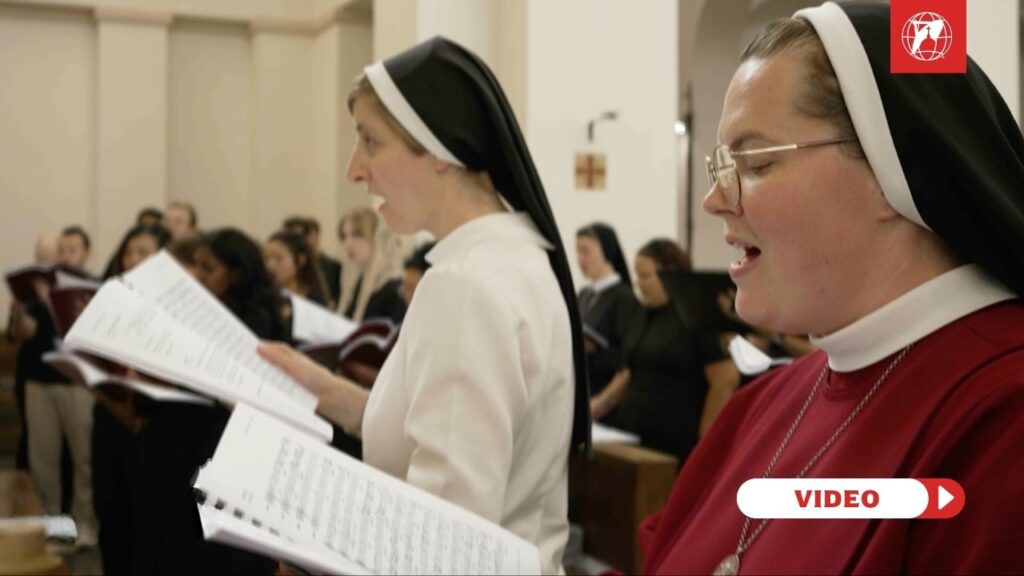
Sr. Christina Skelley of the Apostles of the Sacred Heart of Jesus also welcomed the opportunity to deepen her knowledge of the vocal music used in the liturgy. Although her musical background is primarily instrumental, including piano, viola and organ, she wanted to develop her understanding of liturgical singing and bring what she learned back to her religious community.
Making sacred music accessible to children
One of the program’s dedicated tracks focused on educators and those working with children’s choirs. Participants explored practical strategies for teaching sacred music in ways that are engaging, accessible and spiritually meaningful for young people.
Luca Buzzavi, a professor of children’s choir direction, led sessions on methods for helping children discover the beauty of Gregorian chant and ancient music.
Teaching these traditions can be challenging, particularly when the music includes Latin or unfamiliar musical forms. The aim, Buzzavi explained, is to help children develop an interest in sacred music while discovering the faith expressed through singing.
Kirsten Trudeau, co-founder and co-director of the Diocese of Gaylord Gregorian Schola in Michigan, brought both professional experience and personal knowledge of the Institute’s formation. She earned a bachelor’s degree and a licentiate in Gregorian chant there between 2015 and 2020.
Although she was already familiar with the music, Trudeau wanted to learn how to communicate it effectively to younger generations.
She described teaching children to sing complex compositions or music in an unfamiliar language as a challenge requiring both musical knowledge and an understanding of how children learn. The course provided techniques to make the music more approachable and exciting.
Training clergy and religious to sing the liturgy
Another track was designed for seminarians, priests and religious, with vocal coaching and workshops in Gregorian chant aimed at strengthening their ability to sing the prayers of the Mass and the Divine Office.
For Sr. Skelley, the sessions provided practical instruction in traditional chants, expressing the meaning of Latin texts through music and adapting chant for use in other languages.
She hopes to bring these skills back to her community, where they can enrich its music ministry and liturgical life.
Discovering the beauty of polyphony
The largest track was dedicated to choral singers, who had the opportunity to expand their repertoire, refine their vocal technique and perform in choral settings throughout Rome.
Choir director Maestro Walter Marzili worked with participants on the Roman polyphonic tradition and a broader international repertoire.
He praised the singers’ enthusiasm and described the experience of sharing the techniques and beauty of polyphony with so many voices as a particular joy.
For Murphy, the training also offered practical benefits, including improved breathing and vocal technique. He hopes to use these skills not only in his own singing but also to help others serve the liturgy more effectively.
A global community united by faith
Beyond musical instruction, the International Week of Sacred Music fostered a sense of communion among participants from different cultures and backgrounds.
For Sr. Skelley, gathering people from so many countries around a shared faith expressed through music was one of the most meaningful aspects of the experience.
Keough similarly emphasized that the gathering was about more than musicians exchanging knowledge. It brought together people whose work in sacred music is rooted in a common desire to serve God.
“It’s not like a gathering of musicians,” she said. “It’s a gathering of people who love the Lord and are doing this music in order to bring glory to his name.”
With 110 participants representing 30 countries, the inaugural International Week of Sacred Music highlighted the enduring importance of sacred music in the life of the Church. By combining formation, performance and prayer, the initiative sought to ensure that this rich tradition continues to inspire the faithful and be passed on to future generations.
Adapted by Jacob Stein. Produced by Bénédicte Cedergren; Camera by Fabio Gonella, Alberto Basile; Video Edited by Andrea Manna; Special thanks & Credits to The Pontifical Institute of Sacred Music.