What does it take for someone to be declared a saint by the Catholic Church? Behind every canonization is a lengthy process of investigation, theological examination, and, ordinarily, the recognition of miracles. From the dioceses where causes begin to the Dicastery for the Causes of Saints in Rome, the Church carefully examines the lives and virtues of those proposed for sainthood.
But canonization is about more than recognizing extraordinary individuals. As Church leaders emphasize, holiness is a calling extended to everyone — including young people — and the saints serve as examples of what it means to live the Gospel in every age.
How the Church Investigates a Cause for Sainthood
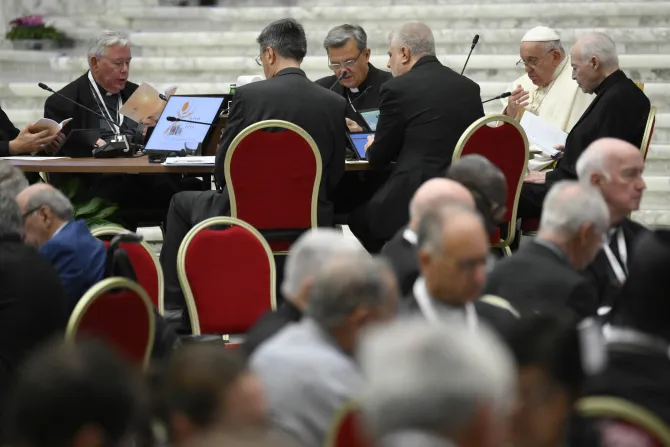
The formal process of canonization begins at the diocesan level, where investigators gather documentation about a candidate’s life, writings, and reputation for holiness. Once the cause reaches Rome, the Dicastery for the Causes of Saints examines the evidence.
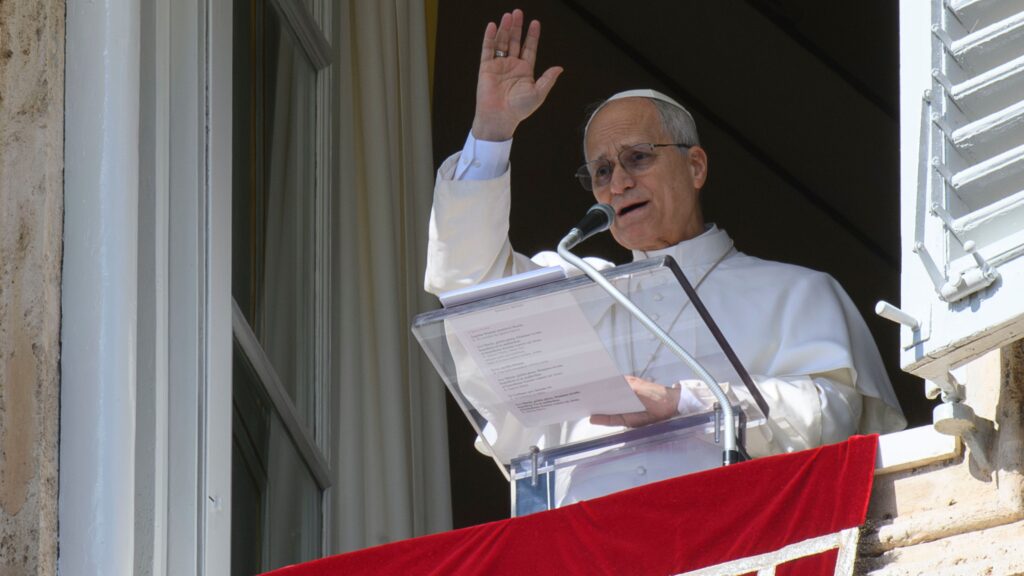
Cardinal Marcello Semeraro, prefect of the dicastery, explains that the process involves several stages of review and is far from the simplified idea of a “saint factory.”
“The work of investigation and the study of the documentation takes place in the dioceses, and I like to emphasize this, also as a way of correcting the idea of what is sometimes called the ‘saint factory.’ Here at the Dicastery for the Causes of Saints, we receive the documentation and study it. We have it examined, and in some cases there is a commission of historians; there is also a commission of theologians. If it concerns a miracle, there is a commission of physicians.”
The dicastery examines at least six causes every month, receiving cases from dioceses around the world. Every aspect of a candidate’s life is carefully scrutinized.
The process typically follows several stages. A candidate is first given the title Servant of God. After an examination of their life and writings, the Pope may recognize their heroic virtues, declaring them Venerable. Ordinarily, one approved miracle attributed to their intercession is then required for beatification, while a second miracle is required for canonization.
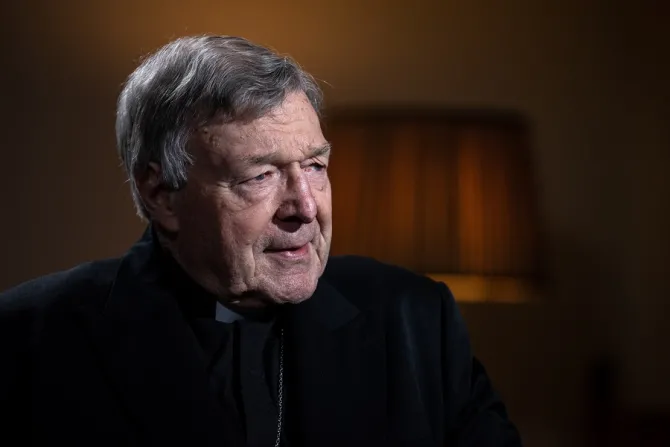
Archbishop Fabio Fabene, secretary of the Dicastery for the Causes of Saints, explains why miracles remain an important part of the process.
“Pope Francis used to say: ‘A miracle is the finger of God’. It is a sign of the work carried out by the Church, and even today, miracles are sought precisely because we need a sign from heaven – a sign of God’s favor – to show that a particular person can serve as a model of life for Christians.”
The Role of Miracles: The Healing That Led to Frassati’s Canonization
One of the miracles recognized by the Church in recent years involved the extraordinary healing of Father Juan Manuel Gutiérrez, whose severely torn Achilles tendon recovered through the intercession of St. Pier Giorgio Frassati.
Following surgery, Father Gutiérrez had been told that his recovery would require months of rest and physiotherapy, with a full recovery expected to take up to a year. However, after praying a novena to Frassati, he experienced an inexplicable healing.
“I needed to spend months in rest and then physiotherapy after the surgery. And to have a full recovery will take up to a year. The fact that, 9 days before, because the healing happened before I finished my novena, before 9 days this was gone, it was unexplainable.”
The experience left even his surgeon astonished.
“The surgeon said, ‘you must have someone up there looking out for you.’ And when he said that, that’s when I connected everything, what happened in the chapel, my novena with Pier Giorgio. And about three years later I met a priest who worked for the Dicastery for the Saints, I told my story and he called Rome and he said: Rome is interested in investigating.”
The healing was subsequently recognized by the Church as the miracle needed for Frassati’s canonization in 2025. His canonization, alongside that of St. Carlo Acutis, brought renewed attention to the call to holiness among young people.
From the “Devil’s Advocate” to the Promoter of the Faith
The canonization process has evolved throughout the Church’s history. One of its best-known historical features was the role of the so-called “devil’s advocate,” whose task was to challenge the evidence presented in support of a candidate and raise possible objections.
In 1983, St. John Paul II reformed the canonization process, and the role was given a new name: the Promoter of the Faith.
Archbishop Fabene explains that this office continues to serve an important purpose in ensuring that a cause is examined thoroughly.
“That role still exists, although it is no longer called the Devil’s Advocate but rather the Promoter of the Faith. This is the person responsible for verifying whether the spirituality and writings of a Servant of God are in accordance with the doctrine of the Church, and for bringing to light any aspects that could be problematic from a theological standpoint in view of a possible canonization.”
The role reflects the Church’s careful approach: a reputation for holiness alone is not enough. A candidate’s life, writings, and spiritual legacy must be examined to establish whether they can be proposed as an authentic model of Christian life.
Pope Leo XIV: Young People Are Called to Be Saints
While the canonization process recognizes particular men and women as models for the universal Church, Pope Leo XIV has repeatedly emphasized that the call to holiness belongs to everyone.
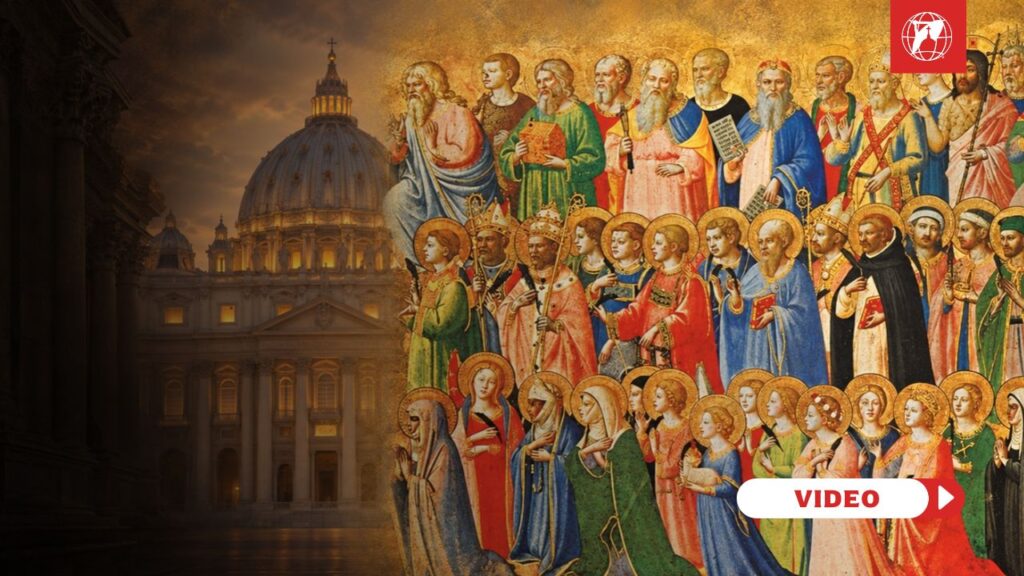
During his recent trip to France, the Pope renewed this message while praying with nearly 80,000 young people. A series of tableaux presented France’s “army of saints,” recalling figures who helped shape the country’s Christian history, including St. Thérèse of Lisieux, St. Bernadette Soubirous, and St. Joan of Arc.
Addressing the young people, Pope Leo declared:
“You are the saints of France!”
For Archbishop Fabene, the saints are not simply figures of the past. They are witnesses who reflect their own historical period while also transforming it through their faith.
“Saints are an expression of the time in which they live – the most beautiful expression of the life of the Church – while, on the other, they live deeply embedded within their own era and renew it. Indeed, as the Pope has also noted, saints change history – steering it toward the good – and, through their actions, which are animated by faith and evidenced along the path of the Gospel, they render human history beautiful.”
The Pope’s encounter with young people in France, Fabene added, was an invitation to embrace the Christian life fully and remain open to God’s grace.
“I believe this was a truly wonderful moment, as it served as a call to live the Christian life to the fullest. To live the Gospel of Christ completely, guided by grace and with hearts open to the initiative of God’s grace. In this sense, young people can be young saints, and all young people are invited to look toward the fullness of life that faith in Christ bestows.”
Holiness Is Within Everyone’s Reach
The recent canonizations of St. Carlo Acutis and St. Pier Giorgio Frassati have offered young Catholics contemporary examples of holiness. But the Church’s message extends well beyond young people or those whose lives are marked by extraordinary events.
Cardinal Semeraro stresses that sainthood is not reserved for a select few or for individuals who appear larger than life.
“Holiness is not something achieved only by heroes like those of Greco-Roman mythology, such as Prometheus or Ulysses. Holiness is within everyone’s reach; it is a call addressed to all. The Church canonizes certain individuals because there is evidence that they can be held up as models for others. As St. Augustine put it: ‘If he was able to do it, then I can do it too.’”
The road to canonization may involve years of investigation and rigorous examination, but its ultimate purpose is to point the faithful toward a universal vocation. The saints are recognized not because holiness is beyond ordinary people, but because their lives demonstrate that, through God’s grace, it is possible to live the Gospel fully.
Adapted by Jacob Stein. Camera by Fabio Gonella. Produced by Bénédicte Cedergren. Special thanks & Credits to Dicastery for the Causes of Saints.