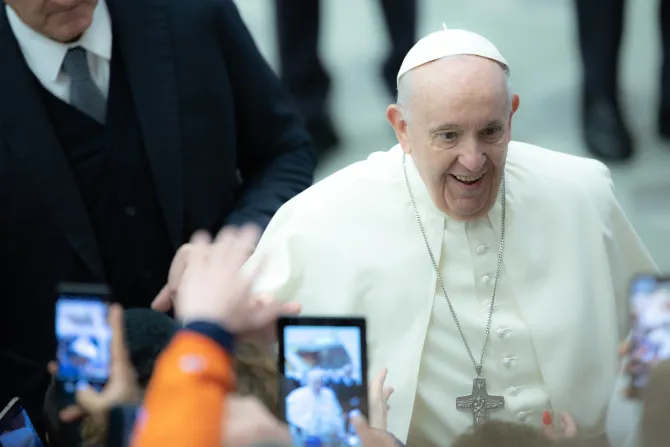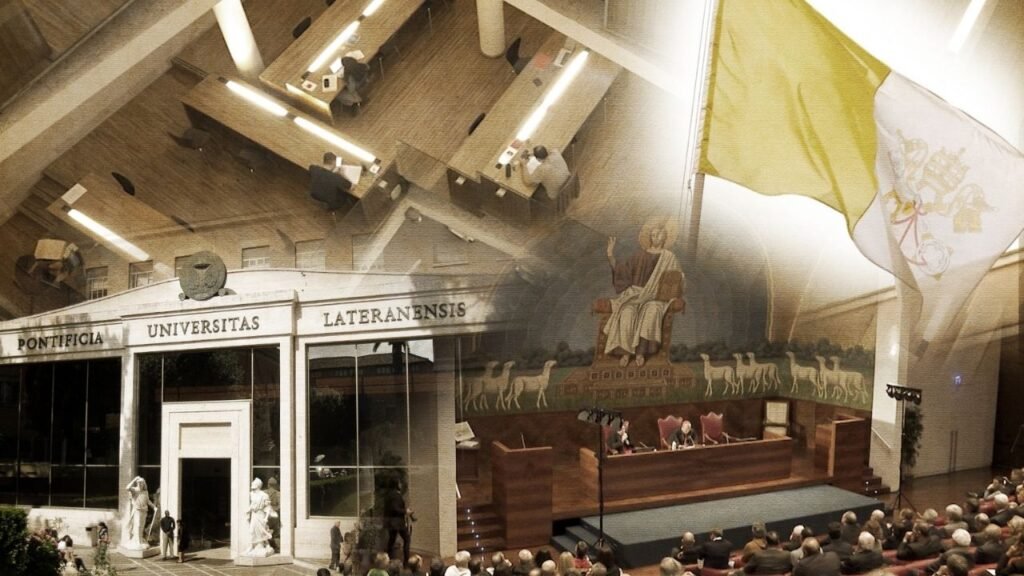
The Pontifical Lateran University, known as the “University of the Pope,” recently celebrated its Dies Academicus for the academic school year.
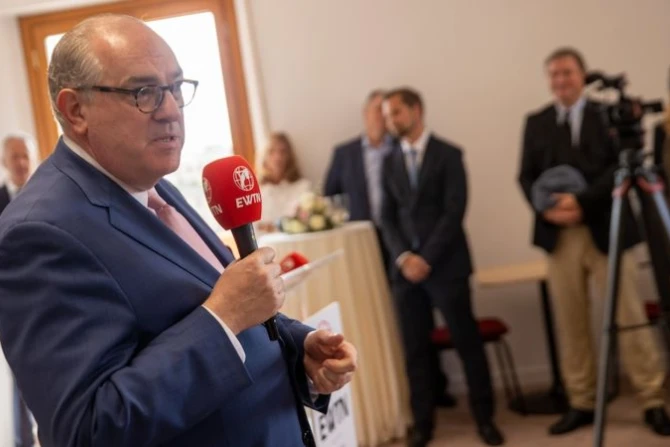
Andreas Thonhauser, EWTN Vatican Bureau Chief, interviewed Archbishop Alfonso Amarante, Rector of the university. Archbishop Amarante highlighted the university’s unique blend of philosophical, theological, and canon law studies alongside secular legal disciplines, attracting a diverse international student body from all five continents.
The Pontifical Lateran University holds a special role with the Holy See and is crucial in training future church leaders.
Andreas Thonhauser, EWTN Vatican Bureau Chief:
This is the University of the Pope. Can you tell us a bit about what the students are learning here at the Pope’s University?
Archbishop Alfonso Amarante, Rector of the Pontifical Lateran University:
This is a Pontifical University. Pontifical means that it has a special status linked to the Holy See, and here there are two branches of this university. Philosophical, theological, canon law studies; and legal studies, which we could say are more secular, for worldly sciences.
Andreas Thonhauser, EWTN Vatican Bureau Chief:
How many students are there?
Archbishop Alfonso Amarante, Rector of the Pontifical Lateran University:
At this moment there are about 1,200 students, where 60% belong to religious orders—seminarians, nuns—and then there’s 40% composed of lay people, precisely because of the dual nature of the university with these two paths: one philosophical and theological studies and one legal studies.
Andreas Thonhauser, EWTN Vatican Bureau Chief:
Why should they come here? Why should I study here at the Pontifical Lateran University?
Archbishop Alfonso Amarante, Rector of the Pontifical Lateran University:
The reasons are really many. The first reason I can say is that this university has a special connection with the Holy See and therefore with all the Popes—today with Francis, yesterday with Benedict, the other day with John Paul II—and tomorrow? As God wills. The first reason. Second reason, because truly studying in Rome means studying at the center of Christianity, at the center of the world. Coming to Rome means experiencing the Church. In fact, our students—the percentage of Italians is really very small—they come from all five continents.
Andreas Thonhauser, EWTN Vatican Bureau Chief:
You said here. It’s not only about studying theology, but also developing and growing, deepening the idea of theology.
Archbishop Alfonso Amarante, Rector of the Pontifical Lateran University:
Thank you for this question because it gives me the opportunity to respond and clarify even better. There are multiple levels of study. This is the first level, the one to obtain a degree. At this level, what is provided? The foundations of philosophy, theology, canon law, pastoral studies, or jurisprudence. But after this first level, there is a second level, which is that of a specialist degree. At this level, what happens? If in the first level the student is called more to receive the content, here in the second level they are called to engage with the sources. So, to confront, to really understand, to then reach a third level which corresponds to a doctoral degree where, starting from the sources, they develop an autonomous thought. But with faithfulness to the magisterium.
Adapted by Jacob Stein