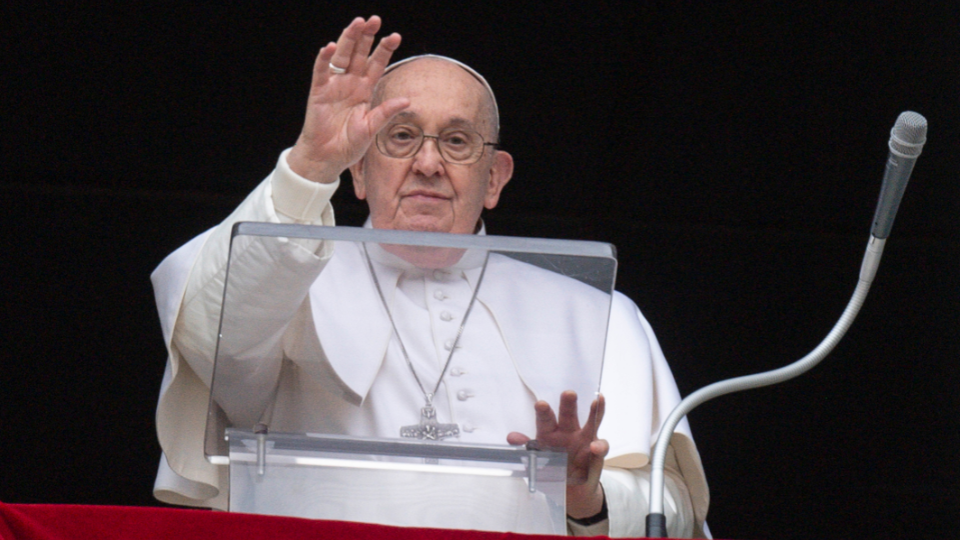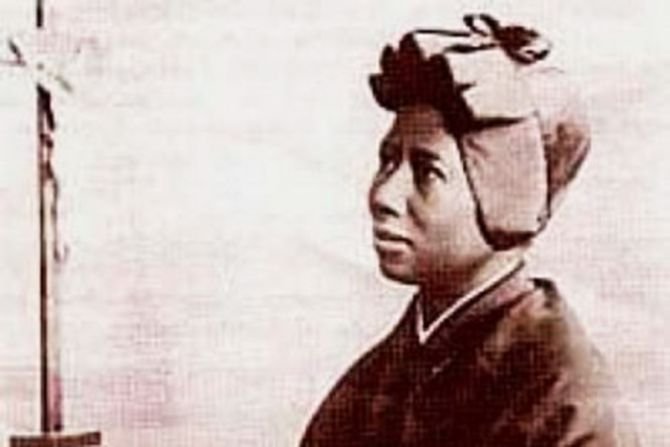
Speaking in his first general audience since the start of the Synod on Synodality last week, Pope Francis on Wednesday resumed his ongoing catechesis on the theme of apostolic zeal, this time focusing on the story of the Sudanese-Italian saint Josephine Bakhita, which he described as “an existential parable of forgiveness.”
Born in 1869 in the region of Darfur, Josephine was sold into slavery as a young girl. She was traded between different owners and endured incredible hardship, being forcibly converted to Islam and was subjected to scarification, a process by which the skin is intentionally cut, or branded, to make a set pattern. Incidentally, her captors gave her the name Bakhita, which from the Arabic translates to “fortunata,” or fortunate.
In 1883 she was sold to Italian Vice Consul Callisto Legnani. In 1884, following the political instability that had engulfed Khartoum, they fled Sudan to Italy. She was subsequently passed to Augusto Michieli, a friend of Legnami. She first encountered Catholicism when she was entrusted to the care of Canossian Sisters in Venice.
While Micheli tried to force her back to Sudan with him, she refused. Her case went before the Italian court, which ultimately ruled that her slavery was null, given that Britain had outlawed slavery before she was sold and it was never legal in Italy. On Jan. 9, 1890, as a free woman, she converted to Catholicism, and, nine years later, in 1896, made her final vows with the Canossian Sisters. Bakhita was canonized on Oct. 1, 2000, by Pope John Paul II and is the patron saint of Sudan and human trafficking survivors.
It was the sisters’ example of kindness and charity that so profoundly touched Bakhita, ultimately leading to her conversion, and was the catalyst for her religious vocation but also instilled in her the evangelical imperative of forgiveness.
She famously said: “If I were to meet those who kidnapped me, and even those who tortured me, I would kneel and kiss their hands. For, if these things had not happened, I would not have been a Christian and a religious today.”
Her life, which was characterized by hardship but also hope and mercy, was the backdrop for Pope Francis’ appeal for forgiveness, which he said stems from God’s love. He quoted an excerpt from Wednesday’s Gospel (Lk 23:34): “Father, forgive them, they know not what they do.”
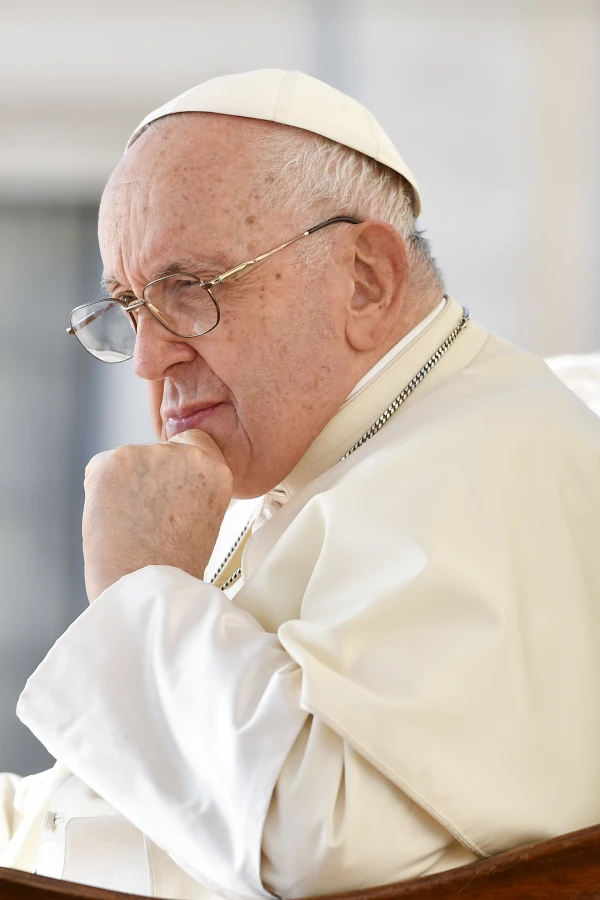
“What is the secret of St. Bakhita?” the pope asked, adding: “The vocation of the oppressed is that of freeing themselves and their oppressors, becoming restorers of humanity. Only in the weakness of the oppressed can the force of God’s love, which frees both, be revealed.”
The pope went on to say that “to pity means both to suffer with the victims of the great inhumanity in the world and also to pity those who commit errors and injustices, not justifying, but humanizing.”
“When we enter the logic of struggle, of division between us, of bad feelings, one against the other, we lose humanity. And many times we think that we need humanity, to be more human. And this is the work that St. Bakhita teaches us: to humanize, to humanize ourselves and to humanize others,” the Holy Father said, departing from his prepared remarks.
Throughout his address the pope emphasized that forgiveness is an essential component of Christian life. It is what enabled St. Josephine Bakhita to become “a free, joyful woman, capable of loving.”
In this way she stands as a model of not only living God’s love authentically, the pope said, but also “helps us to unmask our hypocrisies and selfishness, to overcome resentments and conflicts. She encourages us to reconcile with ourselves and find peace in our families and communities. She offers us a light of hope in these difficult times of mistrust and distrust of others.”
Prayers for peace, Afghanistan
At the end of the audience the Holy Father made an appeal for peace as the conflict between Israel and Palestine intensifies, following Hamas’ unprecedented military foray that commenced on Oct. 7.
“I continue to follow with tears and apprehension what is happening in Israel and Palestine: Many people killed, others injured,” he said. He went on to call for the immediate release of those being held hostage by Hamas and stressed that “terrorism and extremism do not help to reach a solution to the conflict between Israelis and Palestinians but fuel hatred, violence, revenge, and only make both suffer.
“The Middle East does not need war, but peace, a peace built on justice, dialogue, and the courage of brotherhood,” Pope Francis said.
The pope concluded the audience by asking those present to pray for the people of Afghanistan, which was hit by a second 6.3-magnitude earthquake in the western province of Herat on Wednesday morning, following an equally powerful temblor that killed an estimated 2,000 people on Saturday.
“I invite all people of goodwill to help this people, already sorely tried, contributing in a spirit of fraternity to alleviating the sufferings of the people and supporting the necessary reconstruction,” the pope said.
This article was originally published on CNA.