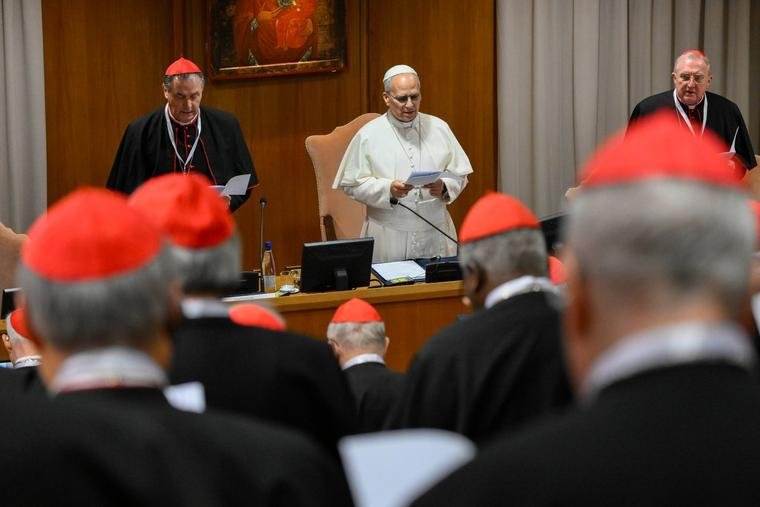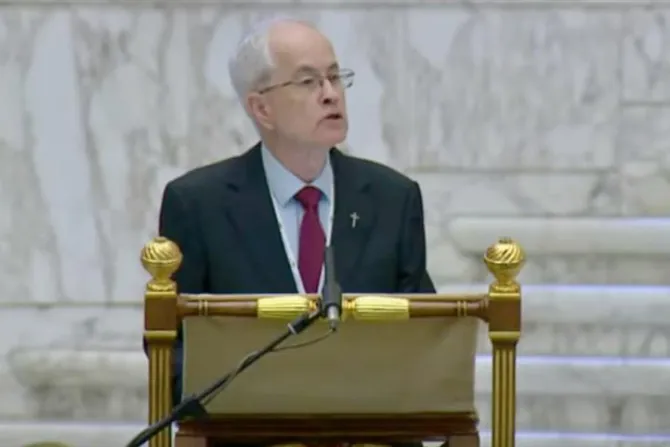
Vatican II’s discussion of tradition is the authority for the Synod on Synodality’s reflections today, a theologian and Australian Catholic priest told delegates as the assembly’s final week kicked off Monday.
“Having listened to you over these past three weeks, I have had the impression that some of you are struggling with the notion of tradition, in the light of your love of truth,” Father Ormond Rush said.
Tradition “was a major point of discussion at the Second Vatican Council,” he added. “Their answers are, for us, the authority for guiding our reflections on the issues that confront us today.”
He called the Oct. 4–29 assembly the delegates’ “discernment regarding the future of the Church.”
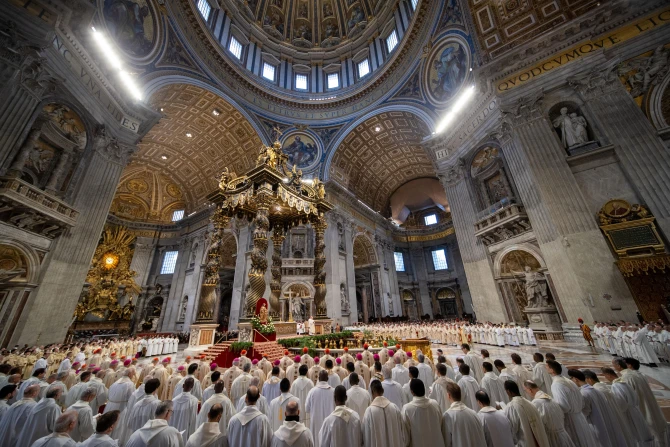
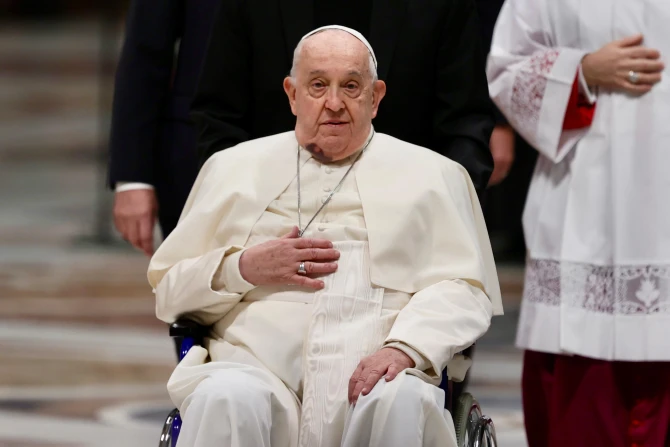
Rush addressed the synod members and Pope Francis on Oct. 23 before they review a draft of a document summarizing their conversations over the past three weeks. The assembly will vote to approve the document on Saturday, shortly before it is expected to be publicly released.
Speaking about discernment, the theologian told synod delegates they should strive to see with the eyes of Jesus. He also warned them of “traps” where they could be “drawn into ways of thinking that are not ‘of God.’”
“These traps could lie in being anchored exclusively in the past, or exclusively in the present, or not being open to the future fullness of divine truth to which the Spirit of truth is leading the Church,” he said. “Discerning the difference between opportunities and traps is the task of all the faithful — laity, bishops, and theologians — everyone.”
Rush spoke about a tension during the Second Vatican Council related to two approaches to tradition. Benedict XVI, then Father Joseph Ratzinger, was a theological consultant at Vatican II. He wrote about “a ‘static’ understanding of tradition and a ‘dynamic’ understanding,” Rush said.
“The former is legalistic, propositional, and ahistorical (i.e., relevant for all times and places); the latter is personalist, sacramental, and rooted in history, and therefore to be interpreted with a historical consciousness,” the theologian described. “The former tends to focus on the past, the latter on seeing the past being realized in the present, and yet open to a future yet to be revealed.”
Rush cited paragraph 8 of Dei Verbum, Vatican II’s dogmatic constitution on divine revelation, and the apostles’ development of the tradition of the Church with the help of the Holy Spirit: “There is a growth in insight into the realities and words that are being passed on.”
“And [the dogmatic constitution] goes on,” he said, “to speak of three interrelated ways through which the Holy Spirit guides the development of the apostolic tradition: the work of theologians, the lived experience of the faithful, and the oversight of the magisterium. Sounds like a synodal Church, doesn’t it?”
Another synod theologian, Father Dario Vitali, also has spoken to the Synod on Synodality about the need, in a synodal Church, for the contributions of the lived experience of Catholics, the magisterium, and theologians. Vitali said last week that “the possibility of developing a style and a synodal form of Church depends on the virtuous circularity of ‘sensus fidei’ [sense of the faith], magisterium, and theology.”
Rush called the synod “a dialogue with God” and told delegates that in the final synthesis document, which they will review this week, “God is waiting” for their answer.
“At the end of this week of synthesis, you might well want to begin that synthesis by saying, as did that first Council of Jerusalem, described in Acts 15: ‘It seemed good to the Holy Spirit and to us …’” Rush said, referencing the apostolic council described in the Acts of the Apostles, which concerns the question of whether or not Gentile believers should be required to be circumcised.
The apostles, the theologian said, addressed in a letter to the churches “an issue on which Jesus himself had left no specific directions. They and the Holy Spirit together had to come to a new adaptation of the Gospel of Jesus Christ regarding that new question, which had not been envisaged before.”
Rush, one of the synod’s 62 “experts and facilitators,” is an associate professor of theology at Australian Catholic University in Brisbane and a priest of the Diocese of Townsville.
He has published books and articles on the Second Vatican Council, the “sensus fidei” (sense of the faith), and on synodality.
These article was originally published on Catholic News Agency.