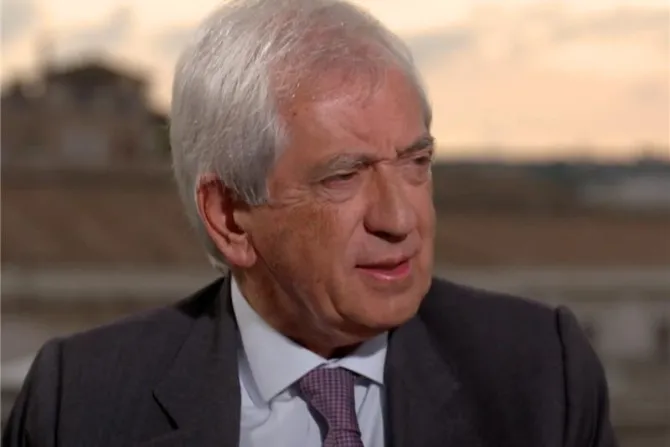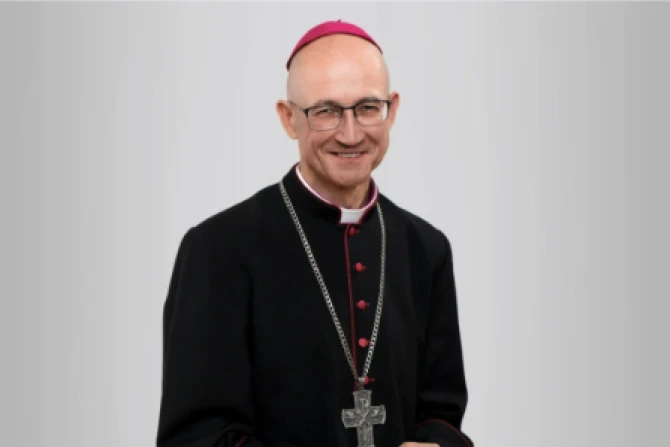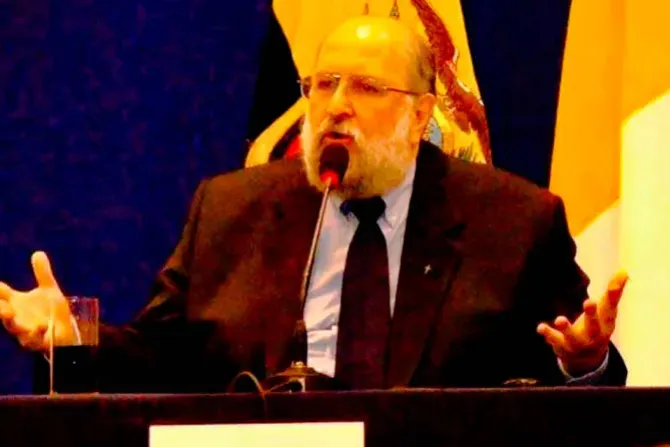
Luis Fernando Figari Rodrigo, founder of the Sodalitium Christianae Vitae (Sodality of Christian Life) and accused of committing sexual abuse, has been expelled from the organization by decision of the Vatican, the Peruvian Bishops’ Conference announced.
In an Aug. 14 statement posted on its website, the conference said that the Dicastery for Institutes of Consecrated Life and Societies of Apostolic Life has announced, in a decree, that Figari, 77, has been expelled from the sodality “in accordance with Canon 746 of the Code of Canon Law.”
The decree explains that Figari has been expelled based on the “results obtained and the certainties acquired” in the investigation carried out by Archbishop Charles Scicluna and Monsignor Jordi Bertomeu of the Dicastery for the Doctrine of the Faith following their visit to Peru in July 2023 on behalf of Pope Francis.
At the time, the Holy Father entrusted both prelates with clarifying the accusations against the founder of the sodality and “other members” for sexual abuse and the abuse of power.
Following the results, on Aug. 6 Pope Francis delegated to the Dicastery for Institutes of Consecrated Life and Societies of Apostolic Life the task of ordering the expulsion of Luis Fernando Figari “in order to restore justice which had been violated … and to protect in the future the individual good of the faithful and of the Church.”
Sodality of Christian Life: Figari is no longer part of our community
In a statement, the superior general of the Sodality of Christian Life, José David Correa González, called Pope Francis’ decision “a gesture of pastoral charity, justice, and reconciliation within our community” and with all of Figari’s victims. Correa underscored that Figari “no longer has ties with our community” as a result of the measure taken by the pontiff.
Correa also referenced previous actions taken by the sodality against its founder, including the disciplinary measures imposed on him in 2014 “after receiving testimonies of abuse” and his being declared a “persona non grata” in 2016. In addition, he stated that following the sanctions by the Holy See in 2017, as superior general, he asked the Vatican in 2019 to expel Figari from the society of apostolic life.
“As we have stated previously, Luis Fernando Figari is the historical founder of the Sodality of Christian Life, but he is not a spiritual role model for our community or for the Sodality family,” the superior general explained.
The statement concluded by renewing the sodality’s commitment to continue its process of renewal and reiterating its request for forgiveness and its solidarity with the victims.
“We reaffirm our readiness to continue with efforts to guarantee a safe environment in all our communities and apostolic works,” Correa emphasized.
Who is Luis Fernando Figari?
Figari founded the Sodalitium in Peru in 1971. The society of apostolic life is currently present in several countries in the Americas and in Italy.
However, in 2015, journalists Pedro Salinas and Paola Ugaz published the book “Mitad monjes, mitad soldados” (“Half Monks, Half Soldiers”), in which they accused Figari and other members of the sodality of sexual abuse and abuse of power.
The following year, the Vatican appointed Cardinal Joseph Tobin, then-archbishop of Indianapolis, as delegate to the sodality. Among his duties was to help make decisions “about the accusations made against the founder.”
In February 2017, the Holy See sanctioned Figari, among other things prohibiting him from returning to Peru and having contact with any member of the organization he founded. The Vatican indicated that it had determined that while he was superior general, the founder of the sodality was authoritarian and committed “acts contrary to the Sixth Commandment.”
Days later, the sodality presented its report, which identified Figari, Germán Doig (vicar general who died in 2001), and others as alleged abusers.
Regarding the criminal proceedings against him in Peru, the Vatican stated in June 2018 that Figari “has never been covered up, hidden away, or protected in any way by the Apostolic See” and is therefore not prevented from “defending himself or responding to the accusations made against him in Peru.”
Figari currently resides in Italy.
This story was first published by ACI Prensa, CNA’s Spanish-language news partner. It has been translated and adapted by CNA.