The Vatican has released Pope Francis’ original responses to a set of dubia on highly-charged doctrinal questions submitted by five cardinals earlier this summer — and criticized the cardinals for going public with the matter just days before the start of the Synod on Synodality.
The pope’s responses, originally issued July 11, responded to requests for doctrinal clarification on the nature of the development of doctrine, the Church’s inability to bless same-sex unions, the authority of the upcoming synod, the impossibility of sacramentally ordaining women, and the necessity of repentance to be sacramentally absolved. They were made available on the Vatican’s website earlier today, only hours after the cardinals publicly announced that the pope had not answered a revised set of questions meant to elicit more clear answers.
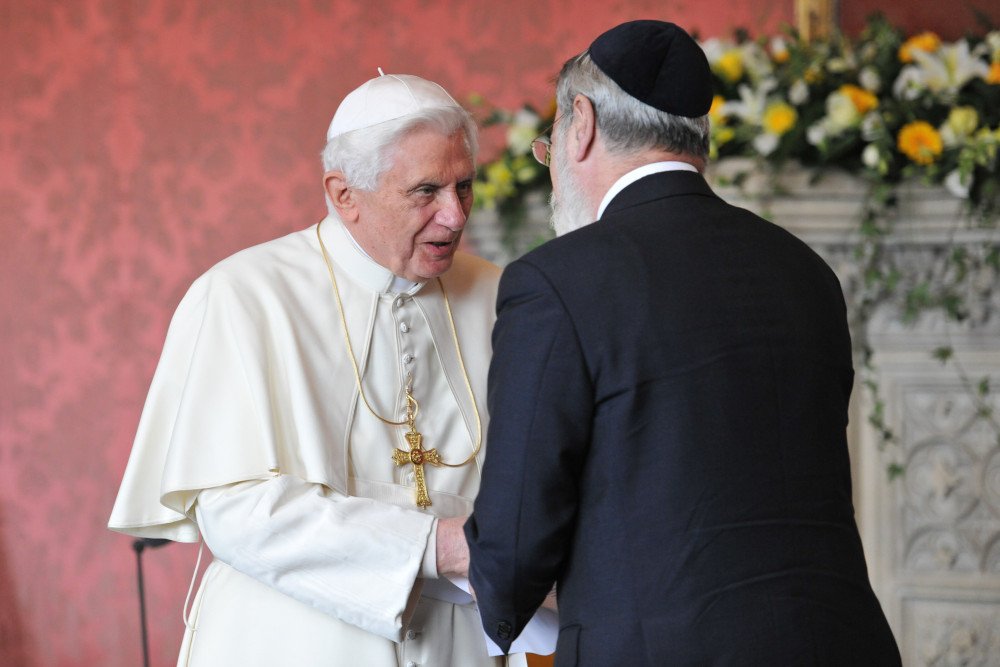
“While it doesn’t always seem to me to be prudent to respond to questions directed specifically to me, and it would be impossible to address them all, in this case, it seemed appropriate to do so due to the proximity of the synod,” the pope wrote in response to the cardinals’ July 10 dubia, addressing them as “dear brothers.”
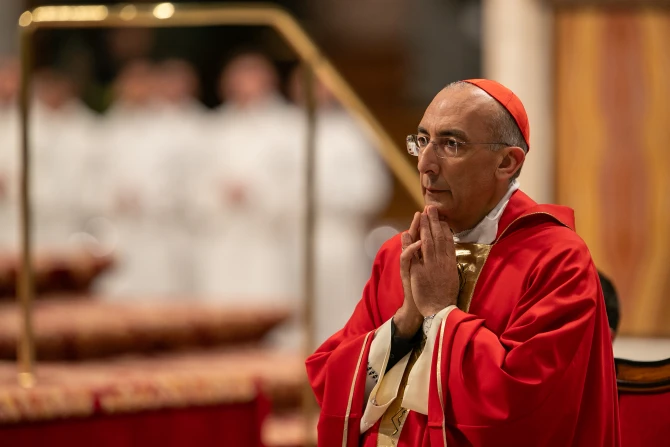
The five cardinals — German Cardinal Walter Brandmüller, American Cardinal Raymond Burke, Chinese Cardinal Zen Ze-Kiun, Mexican Cardinal Juan Sandoval Íñiguez, and Guinean Cardinal Robert Sarah — submitted a revised set of dubia to the pope on Aug. 21 because, as they said in a statement to the National Catholic Register earlier today, his original responses were not in the customary “yes” or “no” format, and “have not resolved the doubts we had raised, but have, if anything deepened them.” The cardinals went public with their dubia earlier today after the pope did not respond to their revised set of questions.
However, a high-ranking Vatican official sharply criticized the five cardinals for not simultaneously releasing the pope’s original responses, which he provided to them “despite his many occupations.”
“Instead of publishing those answers, they now make public new questions, as if the pope were their slaves for errands,” Cardinal Victor Manuel Fernandez, the new head of the Vatican’s doctrine office, told the Spanish news agency ABC.
The five cardinals said they did not publish the pope’s responses because they were addressed specifically to them, and therefore itwould not be appropriate to share publicly.
The pope’s response
In his newly released July 11 responses, the pope provided lengthy, multi-part responses to each submitted question.
In response to the cardinals’ dubium regarding the blessings of same-sex sexual unions, the pope underscored that the Church “avoids any rite or sacramental that may contradict” its conviction in marriage as “an exclusive, stable, and indissoluble union between a man and a woman, naturally open to procreation.”
“However,” the pope wrote, “in dealing with people, we must not lose pastoral charity,” going on to state that “pastoral prudence must discern properly if there are forms of blessing, requested by one or more persons, that do not convey a mistaken conception of marriage” and, citing his 2015 apostolic exhortation Amoris Laetitia, “do not necessarily have to become a norm.”
In addressing the cardinals’ question related to the development of doctrine and the possibility of contradiction, Pope Francis wrote that while “cultural changes and new challenges in history do not modify revelation,” the Church must always strive to interpret texts in a way that “allows us to distinguish their perennial substances from cultural conditioning,” with special attention to the interpreting texts in light of “the perennial truth of the inalienable dignity of the human person.”
Because there can be no change to “what has been revealed ‘for the salvation’ of all,” the Church must constantly discern what is essential for salvation and what is secondary or less directly connected to this goal,” which can inevitably “lead to a better expression of some past affirmations of the magisterium.”
On the topic of the upcoming synod’s authority, the pope reaffirmed his teaching that the Church is inherently synodal, implying “real participation” by all its members in ways that “must make their voice heard and feel part of the Church’s journey,” but he did not appear to directly address the cardinals’ question regarding the extent of the synod’s authority.
Regarding the Church’s ordination of only men to the priesthood, Pope Francis wrote that the Church’s established teaching on the matter “must be accepted by all,” despite the fact that a “dogmatic definition” on the issue has not been provided. However, while no one can publicly contradict this teaching, it can still be “the subject of study, as is the case with the validity of ordinations in the Anglican Communion.”
The pope also added that failing to recognize that the priesthood is “wholly ordered to the holiness of the members of Christ” would make it “difficult to accept that the priesthood is reserved only for men.”
Finally, the pope affirmed the necessity of repentance for the validity of sacramental absolution but noted that “there are no mathematics here” and that ordained ministers must “make room in pastoral care for the unconditional love of God,” especially in cases where a penitent’s psychological state or “deeply wounded self-esteem” may inhibit their ability to follow typical practices in the confessional.
Synod prelude
The public back-and-forth over the cardinals’ dubia and the pope’s response comes just two days before the start of the Synod on Synodality’s universal assembly, which runs from Oct. 4–29.
The cardinals expressly stated that they decided to submit their concerns “in view of various declarations of highly placed prelates” made in relation to the upcoming synod that have been “openly contrary to the constant doctrine and discipline of the Church.”
Vatican organizers have insisted that the synod — which includes an additional assembly in October 2024 — is not focused on doctrinal questions but on how the Church can enhance the participation of all its members in its communion and mission.
This article was originally published on Catholic News Agency.