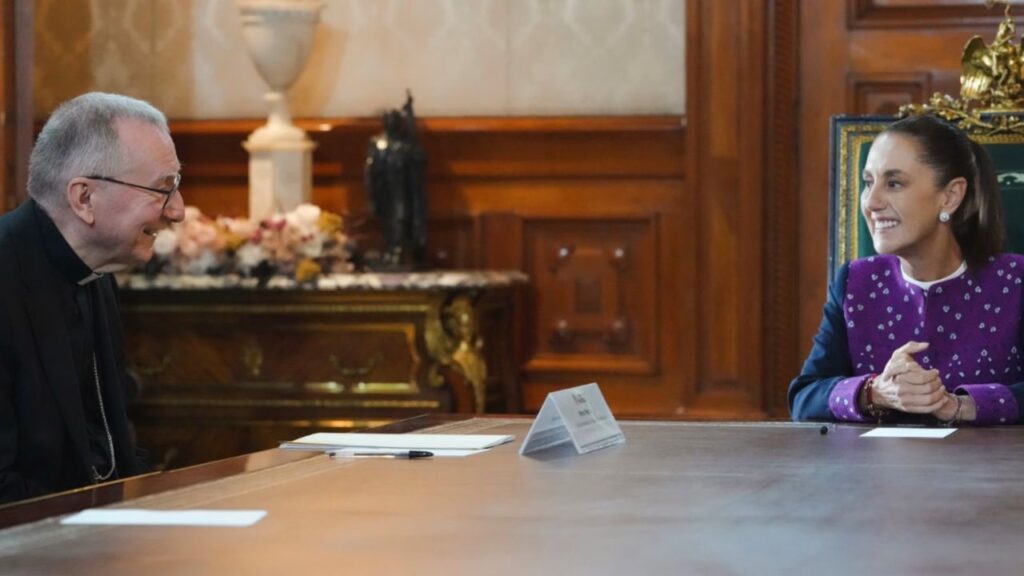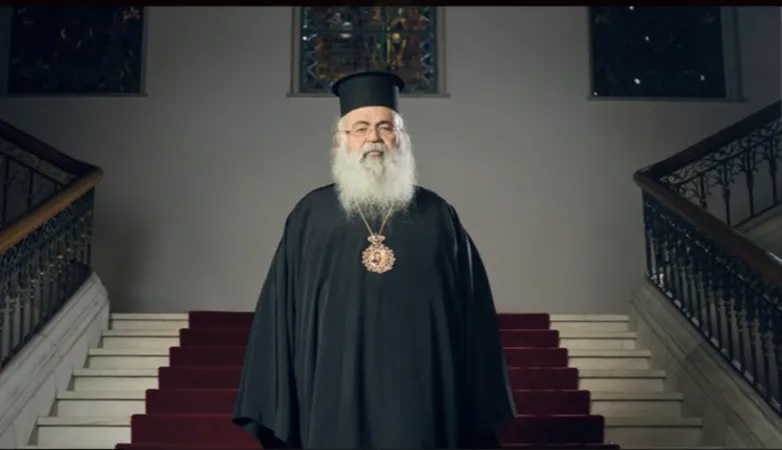
The idea is to arrange a visit to Pope Francis, following appropriate protocols and venues. However, for Georgios III, the Orthodox Archbishop of Cyprus, the challenge goes beyond that: it’s about advancing the cause of ecumenical dialogue and setting aside divisive factors to bring Christian hope to the world.
Georgios III assumed the position after the passing of Archbishop Chrysostomos II on November 8th. Chrysostomos II made history as the first Orthodox archbishop to visit the Vatican in 2007, signing a joint declaration with Benedict XVI. He also hosted two Popes during their visits to the island.
Georgios III continues to walk in his predecessor’s footsteps, fully aware that ecumenical dialogue increasingly holds the key to peace. In this conversation, his first with a Western media outlet since becoming Archbishop of Cyprus, Georgios III touches upon various topics. These range from relations with the Holy See to the situation in Ukraine and the pressing issue of Cyprus’s division, which represents the last barrier in Europe.
You were elected as the successor to His Beatitude Chrysostomos II on December 24th. Could you share some details about your initial interactions with the Catholic Church?
The Church of Cyprus maintains excellent relations with the Vatican. These ties stem from our respect for ancient Rome and the assistance we have received from it following the Turkish invasion. We also recognize the role our church plays in the Christian community worldwide. The visits of the last two Popes to Cyprus carry significant weight, highlighting the island’s status as an apostolic church and a country that embraces the Gospel message. Before the establishment of the Church of Rome, Cyprus welcomed notable figures such as Barnabas, Paul, and Mark. The visits from leaders of the Roman Catholic Church underscore the importance they attribute to our country, situated at the crossroads of diverse cultures and peoples, where Africa meets Asia and Europe. Over the years, these cultures have left their mark on the island. As a country close to the Holy Land, Cyprus has welcomed countless pilgrims traveling to Jerusalem and has played a crucial role in the spread of Christianity. The visits by the Popes serve as a testament to Cyprus’s significant position.
Archbishop Chrysostomos visited the Vatican in 2007, signing a joint declaration with Pope Benedict XVI. Is there any consideration for a new joint declaration or possible collaboration?
Indeed, the late Archbishop Chrysostomos II signed a joint declaration with Pope Benedict XVI, drawing attention to the destruction of Christian heritage in occupied territories. This declaration shed light on the dire situation in Cyprus. I had the privilege of accompanying Archbishop Chrysostomos on his official visit to Rome. During our discussions with the Pope and the Secretary of State of the Holy See, we witnessed the promised support and assistance for the repatriation of stolen icons and treasures from our churches. We also witnessed their commitment to raise awareness about the rights of our people. As a result, our mutual relations are characterized by warmth, friendship, and a strong bond of trust between our respective churches.
If we can effectively consult with the Holy See, we intend to visit Pope Francis. In today’s world, where we face challenges from other religions, such as Muslim fundamentalism, it is crucial for Christians to set aside minor differences and emphasize our shared values. By presenting a united message of Christian hope to the world, we can also invite those who have not yet encountered Christ to embrace Him as the Savior and Redeemer of humanity.
What role does the Church of Cyprus play in the Orthodox world?
The Church of Cyprus has historically played a significant role within the Orthodox world. Its early establishment as an autocephalous church, its recognition during the Third Ecumenical Council, and the privileges bestowed upon its primate, have garnered respect throughout the Orthodox community. The church has actively participated, with representatives, in all seven ecumenical councils, and its influential figures have graced its episcopal thrones. The names of notable personalities like Barnabas, Epiphanius, Spyridon the Trimythous, and St. John the Merciful are synonymous with the spread of Christianity, reaching far beyond Cyprus. In more recent times, Archbishop Makarios, a freedom fighter, became an icon not only within the Christian world but also globally, symbolizing the struggle against colonialism and elevating the Christian faith in the eyes of many. Today, the Church of Cyprus plays a crucial role in Pan-Orthodox Conferences, affirming its significance in shaping Orthodox affairs.
This year marks the 50th anniversary of diplomatic relations between the Holy See and Cyprus. The Holy See aims to strengthen its ties with Cyprus. Discussions are underway regarding the opening of a Nunciature in Nicosia and the imminent appointment of a Latin Bishop. How does the Orthodox Church of Cyprus view these developments, and what impact could they have?
Indeed, the completion of fifty years of diplomatic relations between the Republic of Cyprus and the Holy See adds to our responsibilities. We greatly appreciate the support we have received over the years, both in the aftermath of the invasion and currently through Vatican delegations worldwide. Therefore, we recognize the substantial assistance provided by the diplomatic relations between the Holy See and our country. We joyously celebrate this fiftieth anniversary and express our willingness to actively participate in any celebratory events. We are committed to strengthening the relations between the Holy See, our country, and our church.
Amidst the ongoing war in Ukraine, ecumenical relations in Europe have gained renewed significance. The decision of the Patriarchate of Constantinople to grant autocephaly to the Orthodox Church of Ukraine has led to what is often inaccurately labeled an “Orthodox schism,” resulting in the Patriarchate of Moscow’s detachment from multilateral dialogue bodies. What is the position of the Orthodox Church of Cyprus on this matter, and what steps can be taken?
The Church of Cyprus acknowledges the autocephaly granted to the Ukrainian Church by Ecumenical Patriarch Bartholomew. Orthodox institutions recognize that the Ecumenical Patriarchate has historically granted and continues to grant autocephaly to churches previously under its jurisdiction. Ecumenical synods have determined that northern regions, Asia Minor, and Europe fall within the jurisdiction of the Ecumenical Patriarchate. The first autocephaly granted by the Ecumenical Patriarchate was to Russia, followed by Greece, Serbia, Romania, Bulgaria, and other countries. Thus, when Ukraine gained independence and requested autocephaly, it was granted by the Ecumenical Patriarchate. It is worth noting that during the grant of autocephaly to Russia, the Ecumenical Patriarchate defined the geographical boundaries, excluding Ukraine. In accordance with the moral and ecclesiastical rules prevailing in the Eastern Orthodox Church, the Church of Cyprus recognizes the Ecumenical Patriarchate’s action in granting autocephaly to Ukraine. Although other Orthodox Churches may currently delay recognition due to factors beyond canonical or ecclesiastical matters, likely related to Russia’s size and economic influence, we are confident that all Churches will soon acknowledge the rights of the Ukrainian Church within the Orthodox community.
Do you see any parallels between the situation in Cyprus, where the last “wall” of Europe exists, and the Ukrainian situation?
Cyprus stands as the only divided country in the European Union and Europe itself, with 38% of its territory under occupation. There remains an ever-present risk, openly expressed by the Turks in recent years, of a complete occupation of Cyprus. Our world is acutely sensitive to any form of invasion.
Thus, our people, government, and Church strongly condemn the Russian invasion of Ukraine. We firmly call for the immediate withdrawal of the invader and the restoration of the Ukrainian people’s rights. However, we seek the same level of attention and action for Cyprus. While Europe and the rest of the world have noticed and responded to the situation in Ukraine, perhaps due to its significant size or the broader threat Russia poses, Cyprus has only received limited verbal declarations. We demand respect for our rights as citizens of a united Europe and advocate for the freedom of movement, residency, and property acquisition for all Europeans throughout the Republic of Cyprus. Our citizens should be able to move freely within our country, not only for visits but also to permanently reside in their homes and enjoy their properties within the currently occupied areas.