Pope Francis has made it clear: the Synod should no longer be an event but a process. And as part of this process, there are moments of continental steps and assemblies of the whole people of God (from bishops to laity) that highlight the challenges of their churches and seek to build a synodal mentality.
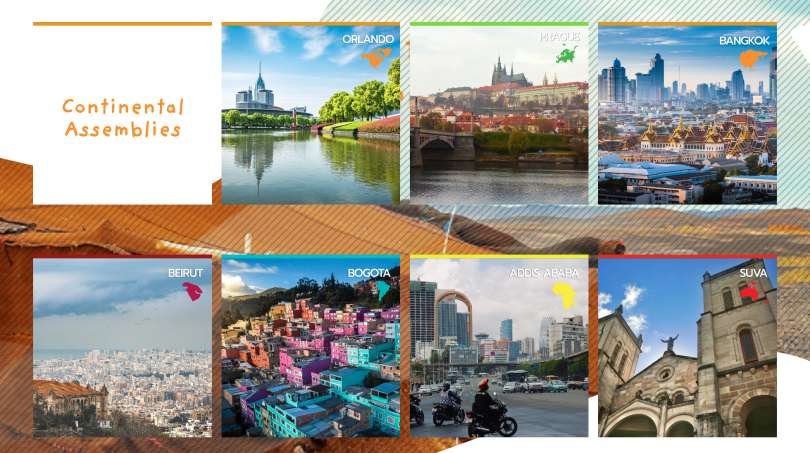
Thus, after the European leg of the Synod in Prague, which took place at the same time as the one held in Suva, Fiji, in Oceania, the North American assemblies (February 13-17) are currently meeting in Orlando, and the Middle East assemblies are meeting in Beirut (February 12-18).
From February 23 to 27, the Asian leg is scheduled to meet in Bangkok, the African leg in Addis Ababa, Ethiopia, from March 1 to 6, and the Latin American leg from March 17 to 23.
These are not decision-making assemblies. The final text is expected to represent the common feeling of local churches and is not a conclusion but more of a synthesis of all the voices heard. It is up to the General Secretariat of the Synod to incorporate all suggestions into the Instrumentum Laboris for the two sessions of the Synod on Synodality to be held in 2023 and 2024.
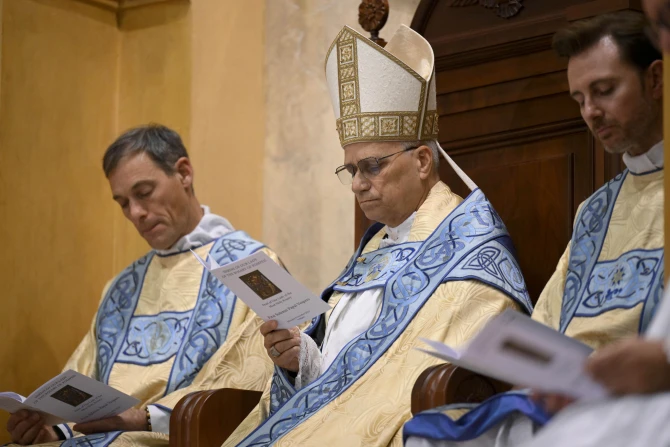
So, meetings are currently taking place in Beirut and Orlando. Cardinal Bechara Boutros Rai, Patriarch of the Maronite Church, celebrated the opening Mass of the Middle Eastern assembly, which brings together all the churches of the Middle East.
The Gospel was where Jesus asked his disciples why they were afraid and did not have faith. And this, the Cardinal explained, was meant to testify to “the primacy of faith” because “faith is at the basis of every miracle of God,” while “without faith, there is no room for miracles.”
In Orlando, ten delegates from the Catholic Bishops’ Conference of the United States and seven from the Canadian episcopate are working on drafting the text based on the people of God’s response to the Working Document of the Continental Phase. While the European synodal assembly took place in person, with the addition of several online delegations that the Episcopal Conferences always nominated, the Orlando assembly had ten Virtual Continental Assemblies that took place between December 13 and January 25 in French, Spanish, and English, in which 3 to 5 delegates from the bishops representing the 268 dioceses of the United States and Canada participated, accompanied, among other things, by their bishops.
The Oceania assembly, instead, focused on three themes: caring for the oceans, the need to become a more synodal church, and training for the mission.
In particular, the final document of the Oceanic leg emphasizes that “training is always at the service of the mission, which has different dimensions,” from “witnessing to life” to “explicit proclamation of the Gospel,” from “conversion” to “the ability to be ourselves agents of evangelization.”
From the European leg, there was also the idea of modifying the structures of the Church in a synodal sense, a matter that is still to be understood.
The point, however, is to understand what should be discussed in this Synod. Whether it is just about understanding a new method of work or whether thinking “in synod” will change the nature of the Church.
Cardinals Grech and Hollerich, the Secretary and General Relator of the Synod, have already taken a position, saying that there are no doctrinal changes and that, on the contrary, bishops have an even more critical role. However, how everything will be implemented remains to be seen.