ROME — For diocesan seminarians from across the United States, six weeks in the Eternal City offer more than an opportunity to study theology and Church history. The experience allows them to encounter the universality of the Catholic Church, deepen their friendship with Christ, and discover Rome as a spiritual home.
Each summer, the Rome Experience brings American seminarians to the heart of the Church for a program combining academic study, prayer, fraternity, and visits to Rome’s basilicas, sacred sites, and Vatican institutions.
“Every time I come here, I truly do feel the embrace of those arms of St. Peter,” said David Slonkosky, a seminarian for the Archdiocese of Cincinnati.
Although St. Peter’s Basilica can appear immense and distant, Slonkosky said entering it produces a profound sense of belonging.
“As a baptized Catholic, I feel: This is my home.”
Growing in friendship with Christ
The Rome Experience was established in 2009 by the Midwest Theological Forum at the request of several U.S. bishops.
Its purpose is to strengthen the spiritual, intellectual, human, and pastoral formation of seminarians by immersing them in the history and living faith of the Church in Rome.
Father Eric Sternberg, director of the Rome Experience, said the program is built around two central principles.
The first is to help seminarians grow in friendship with Jesus Christ and with one another.
He cited St. John Paul II’s words on priestly formation: “This is the meaning of your life and the goal of your education, to know Jesus Christ as a friend who cares about you and the person next to you.”
The second principle is to help seminarians see Rome as both a practical and spiritual home.
“They should see Rome as a home,” Sternberg said, “both for their own spiritual formation and so that they can give that knowledge and formation to others.”
The seminarians may later draw upon their experiences to preach about the saints, explain Church history, or lead their own parishioners on pilgrimages to Rome.
Studying the Church through theology and art
During the program, the seminarians take courses at the Pontifical University of the Holy Cross in theology, Church history, Christian art, and architecture.
The classes provide an academic foundation while helping participants appreciate the intellectual, spiritual, and artistic heritage of Catholicism.
Slonkosky described Rome as one of the most important places in the world to study sacred art and architecture.
He particularly praised art historian Elizabeth Lev for helping the seminarians understand the history of the Church through its artistic treasures.
“With such a deep love of Church history and the Church’s art, she lets us in on this great secret of the Church’s narrative and history through the lens of art,” he said.
Encountering the saints of Rome
Formation also takes place outside the classroom.
The seminarians visit Rome’s major basilicas, ancient churches, archaeological sites, and the tombs and relics of saints who shaped the history of Christianity.
Michael Falcone, a seminarian for the Diocese of Nashville, recalled a moment of prayer during a visit to the Colosseum.
“I had a very deep moment in prayer there, thinking about all the martyrs who died and how they laid the seed for future generations of the Church,” he said.
Standing before the relics of the saints allows the seminarians to encounter them not simply as historical figures, but as real men and women who experienced weakness, conversion, persecution, and sacrifice.
“You realize that these were human beings who lived in the flesh, and they struggled like we struggle,” Falcone said.
He described the saints as older brothers and sisters in the faith whose witness can provide strength during difficult moments in seminary and future priestly ministry.
“If Peter was able to turn back and go to Rome amid persecution, I can endure this little difficult day in the seminary or in the parish,” he said.
Discovering the work of the Roman Curia
The seminarians also visit Vatican dicasteries and other institutions of the Holy See, gaining a closer look at the work of the universal Church.
Among the institutions visited was the Apostolic Penitentiary, one of the three tribunals of the Roman Curia.
Often referred to as the “Tribunal of Mercy,” the Apostolic Penitentiary addresses matters concerning the internal forum and certain grave sins or canonical penalties reserved to the Holy See.
Unlike public judicial cases, the matters handled by the tribunal remain confidential. These can include certain cases involving the violation of the seal of confession or the profanation of the Eucharist.
Slonkosky said meeting those who serve in Vatican offices helped him understand their work in a more personal way.
“I’ve been so edified by the men who hold those offices,” he said, adding that he sensed in them a sincere conviction that their work affects the entire Body of Christ.
Rafael Lopez, a seminarian for the Diocese of Brownsville, Texas, said the visits helped make institutions that often appear abstract more concrete.
“It’s very good to see the people behind all of these institutions,” he said.
Meeting Pope Leo XIV
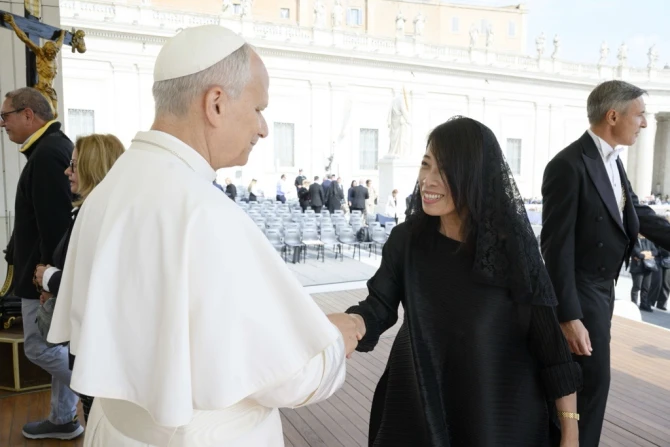
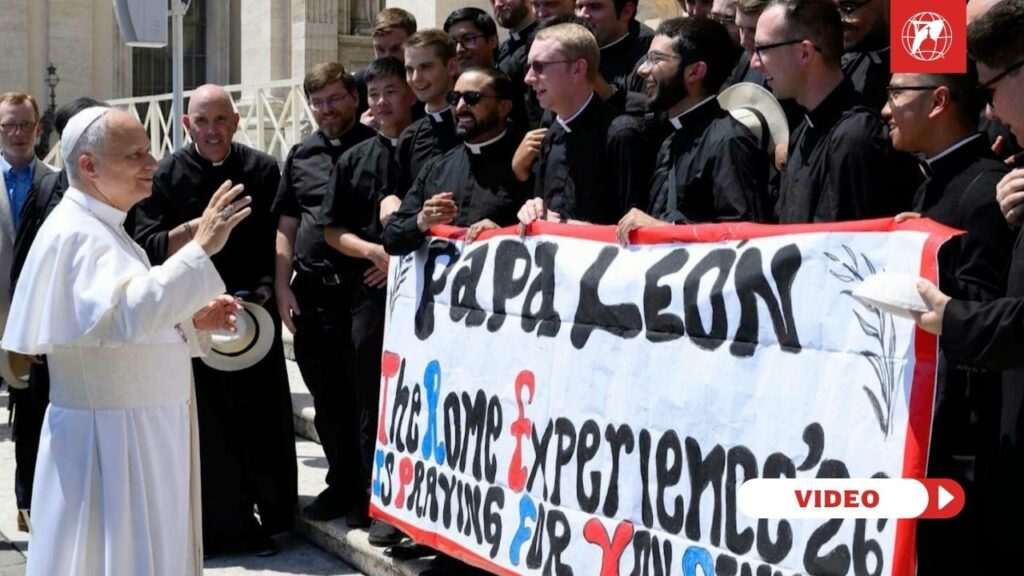
One of the highlights of the program was attending Pope Leo XIV’s Wednesday general audience in St. Peter’s Square.
The seminarians had the opportunity to see the Holy Father and, for some, greet him personally.
Lopez said he was struck by the Pope’s attentiveness toward each person he encountered.
“It’s like his whole world becomes the person who’s in front of him,” he said.
The encounter also strengthened the seminarian’s understanding of the Church’s call to pray for the successor of St. Peter.
“Having this experience of being here and seeing him face to face really solidifies that aspect of our faith,” Lopez said.
Falcone also described meeting Pope Leo as a powerful experience.
“We pray for Pope Leo all the time, but to get to meet him and put a face and a voice to him — now I want to pray for him all the more,” he said.
During their brief exchange, Falcone said the Pope told him, “See you stateside,” a lighthearted moment that remained one of the memorable encounters of the program.
United through prayer and the Eucharist
Alongside academic formation and encounters with the universal Church, the Rome Experience remains firmly rooted in prayer.
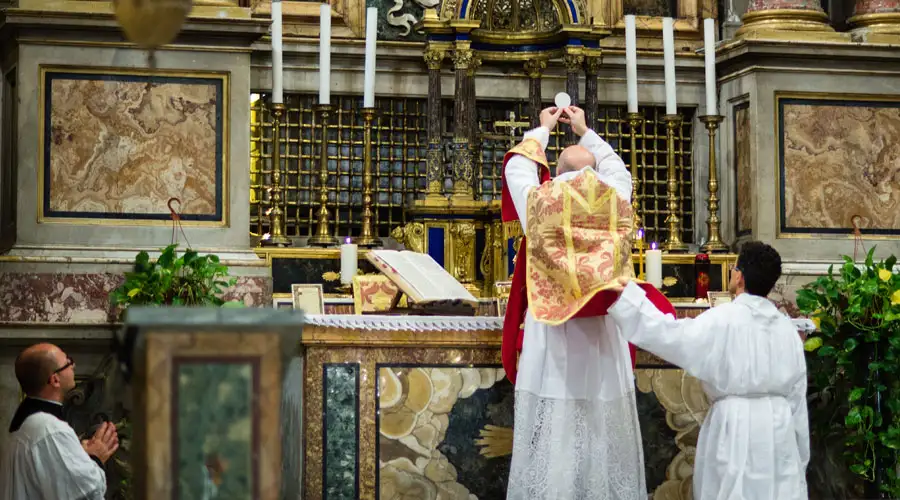
The seminarians follow a daily spiritual rhythm centered on the celebration of Mass, the Liturgy of the Hours, meditation, Eucharistic adoration, and communal prayer.
Slonkosky said the quiet moments of prayer alongside his brother seminarians would remain among his deepest memories of the summer.
“We were adoring our one Lord together each day,” he said.
Although the seminarians will eventually return to dioceses separated by hundreds of miles, he said their strongest bond does not depend on physical proximity.
“The greater connection is this mystical connection through the Body of Christ and the Eucharist.”
For the seminarians taking part, Rome becomes not only a place of study, but a school of prayer, fraternity, and fidelity to Christ and His Church.
Adapted by Jacob Stein