Cardinal Jean-Claude Hollerich, SJ, stated in a recent interview that he “would not define morality — especially sexual morality — as narrowly as the Church does today.”
At the same time, the archbishop of Luxembourg and general relator of the multiyear Synod on Synodality under Pope Francis affirmed that “morality is essential. We cannot do without it.”
In conversation with the Austrian weekly Die Furche, he reflected on his role in the synod, shared insights on the recent conclave, and discussed the prospects for the Church in Europe.
Hollerich urged the Church to move beyond what he described as a backward-looking perspective: “Some look to the past with nostalgia, others with fear. Both are wrong. We are part of a history — this we must accept and learn from. But we must also move forward.”
Synod imagery: Tent vs. family
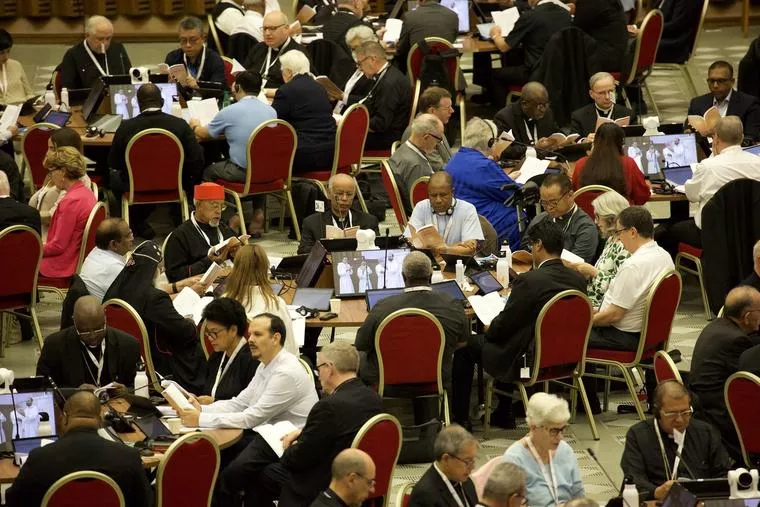
The Jesuit cardinal spoke in detail about his work on the Synod on Synodality. One concept that emerged during the process was “the image of a tent that needs to be expanded so that everyone can find space within it.” He said this image was “very well received by many” but “not at all in Africa.” There, people said, “a tent reminds us of refugee camps — we want to move beyond tents. In Africa, the preferred image was that of a family.”
Hollerich emphasized that Pope Francis had “insisted” on the participation of laypeople in what had originally been conceived by Pope Paul VI as a Synod of Bishops. “It was a controversial decision — some bishops didn’t like it. It was still a topic at the pre-conclave. But it did a lot of good for the overall atmosphere.”
Pope Leo XIV: ‘Continuity and discontinuity’
Regarding Pope Leo XIV, Hollerich sees “continuity in substance, discontinuity in form” when compared with Pope Francis, adding: “Every pope has his own personality.”
Shortly before his death, Pope Francis approved — while still in the hospital — a document that effectively extended the world synod process by nearly three and a half years by announcing an ecclesial assembly for 2028. Although Pope Leo XIV has since confirmed the plan, it remains unclear what exactly such an ecclesial assembly will entail.
Hollerich explained that such an assembly is “somewhat more flexible than a synod. Canon law dictates who may participate in a synod.” He continued: “I attended an ecclesial assembly in Latin America where participation was split as follows: 20% bishops, 20% priests and deacons, 20% religious, and 40% laypeople. That’s a good mix.”
SIGN UP FOR OUR NEWSLETTER HERE
This story was first published by CNA Deutsch, CNA’s German-language news partner, and has been adapted by CNA.