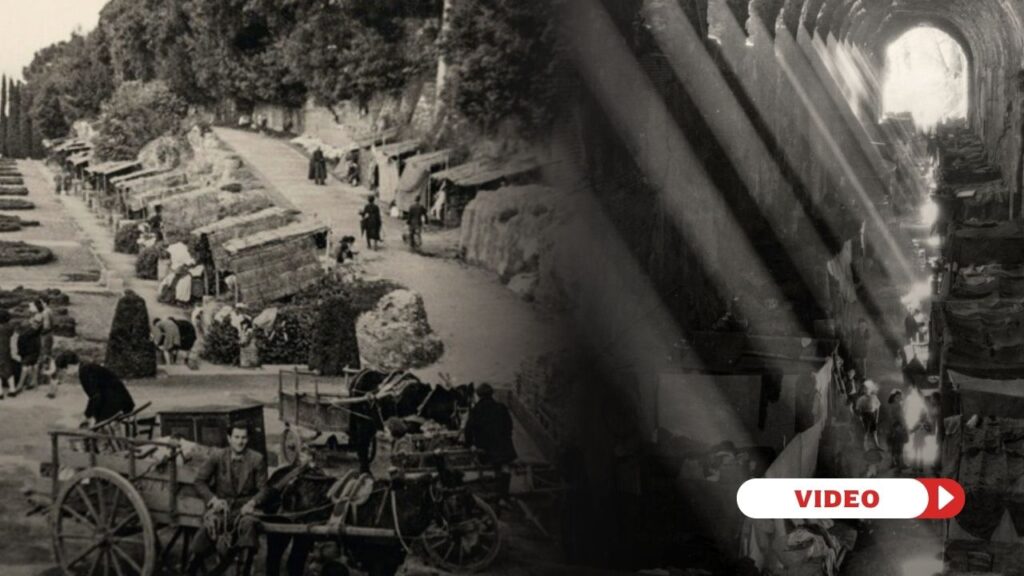
Castel Gandolfo is known as the summer residence of the Popes, but during the Second World War it became something far more urgent: a place of refuge. Under Pope Pius XII, the Pontifical Villas sheltered thousands fleeing violence and destruction.
Pope Leo XIV and the Return to Castel Gandolfo
Thirteen years after Pope Francis decided not to spend the summer in Castel Gandolfo and transformed the Apostolic Palace into a museum, Pope Leo XIV’s decision to return to the town each summer marked the revival of a centuries-old papal tradition.
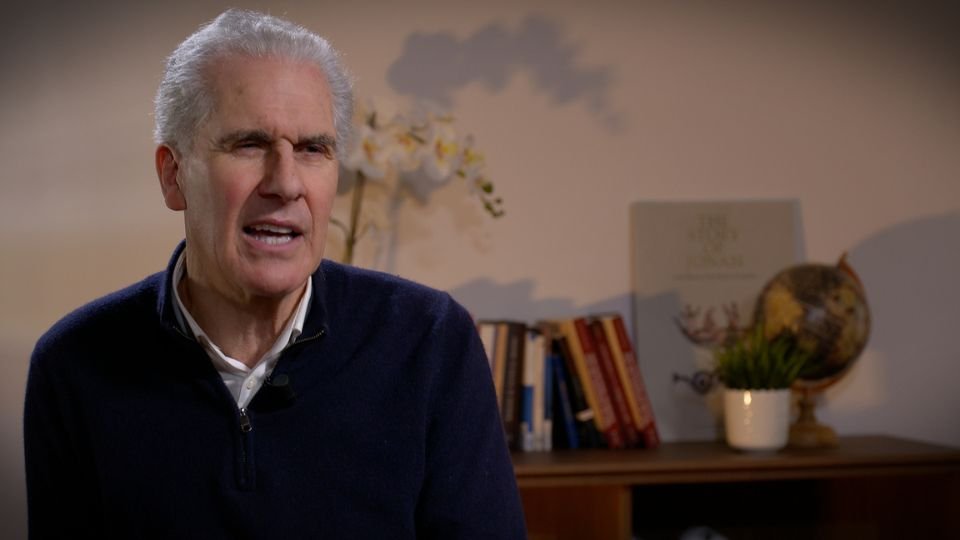
For Maurizio Carosi, a shop owner in Castel Gandolfo, the return felt like the fulfillment of a long-held hope.
“Sometimes dreams come true, don’t they?” he says. “Everyone used to tell me, ‘No, I don’t think so. You’re just a dreamer.’ But I always remained confident and thought, slowly, slowly, patience, we’ll see what he does.”
The choice was welcomed with joy and anticipation. “For someone from Castel Gandolfo, the Pope means everything,” Carosi explains. “There isn’t a single resident of Castel Gandolfo who doesn’t have a photo with a Pope. Very few have one with Pope Francis, though, because he only came a couple of times and never held those more special, informal receptions. So, there’s a 13-year gap to make up for. Pope Leo is making up for those 13 years — perhaps even a little too well.”
A New Way of Living the Papal Residence
Pope Leo XIV has introduced a new rhythm to the papal presence in Castel Gandolfo. Instead of coming only for the summer, the Holy Father has been returning to the town every Monday evening and staying through Tuesday, always taking time to greet the pilgrims who come to meet him.
He has also chosen to move back into the Apostolic Palace, the traditional residence of his predecessors, rather than staying at Villa Barberini in the heart of the papal gardens, where he spent the early months of his pontificate.
For Luciano Pagnanelli, an expert in Church history and a Castel Gandolfo resident, the reopening of the palace is a deeply meaningful moment.
“For us, the people of Castel Gandolfo, it’s a great joy because the palace was closed for 13 years,” he says. “Throughout Pope Francis’ entire pontificate, it remained closed. For us, it’s an immense joy, because we’ve always lived alongside the Popes.”
Father Stefano Cascio, Vice-Director of the Borgo Laudato Si’, notes that this return coincides with a major anniversary: “This year we are celebrating the 400th anniversary of the Pope’s first ‘holiday,’ because Urban VIII came here and stayed from 10 to 20 May 1626. So it is truly a place rich in history.”
A Refuge During the Second World War
The papal palace itself holds within its walls the memory of four centuries of history, including some of the most painful chapters of the 20th century.
“It also became a place of refuge, especially during the Second World War, when Pope Pius XII gave shelter to some 12,000 refugees,” Father Cascio explains.
Fausto D’Angelo, now 86 years old, remembers those days well. Born in Castel Gandolfo, he grew up in a family whose shoemaker workshop stood opposite the Papal Palace. During the war, his father urged the Pope to open the gates of the Pontifical Villas to those fleeing the conflict.
As neutral Vatican territory, the villas were not only protected from attack during the war, but also became a safe haven for thousands of civilians.
“I remember it well, I was a small child,” D’Angelo recalls. “We slept in the Swiss Guards’ barracks, even on mattresses on the floor, on those simple canvas camp beds. We stayed there for a long time, until the bombing of Propaganda Fide.”
The Bombing of Propaganda Fide
The College of Propaganda Fide was mistakenly hit during a major Allied air raid on 10 February 1944. German forces had established strategic positions in the surrounding hills south of Rome, making the area a target as the Allies sought to disrupt enemy supply lines.
Despite the papal residence’s extraterritorial status, the bombing destroyed the College and devastated the surrounding area. Nearly 500 local civilians were killed.
D’Angelo still remembers the rescue efforts that followed: “The bombing of Propaganda Fide happened right before our eyes, and we saw everything that followed, the rescue efforts, the wounded being brought in, even into the Apostolic Palace itself. It was a remarkable gesture by the Holy See to shelter the people of Castel Gandolfo, and to this day the townspeople remain deeply grateful for it.”
Over the past 400 years, the Palace has witnessed the history of many Popes. The same is true for the families of Castel Gandolfo, who share a deep bond with the Pontiffs and with this place.
“The Popes chose this place, and we followed along,” Carosi says. “After all, many of our families are now centuries-old families who have been living here for generations. For the people of Castel Gandolfo, that’s the way it has always been.”