Every few years, millions of young Catholics gather in a different country to celebrate their faith, encounter the Pope, and experience the universality of the Church. But this now-global tradition — World Youth Day — began with a wooden Cross and a bold call from a saint.
In 1984, during the Holy Year of Redemption, Pope St. John Paul II invited young people to gather in Rome on Palm Sunday. Over 300,000 responded. At the end of that gathering, the Pope entrusted them with a large wooden Cross, declaring:
“At the end of the Holy Year of Redemption, I entrusted you with a large wooden Cross, inviting you to carry it into the world as a sign of the Lord Jesus’ love for humanity and as a proclamation that only in Christ who died and rose again is there salvation and redemption.”
That Cross became the symbol — and mission — of World Youth Day.
“St. John Paul II wanted to give a mission to the young people,” says Fabiola Inzunza, a volunteer at the San Lorenzo International Centre near the Vatican.
“He asked us to take this cross and to go all over the world announcing that Jesus was alive and only by his death and resurrection, we could find salvation and redemption.”
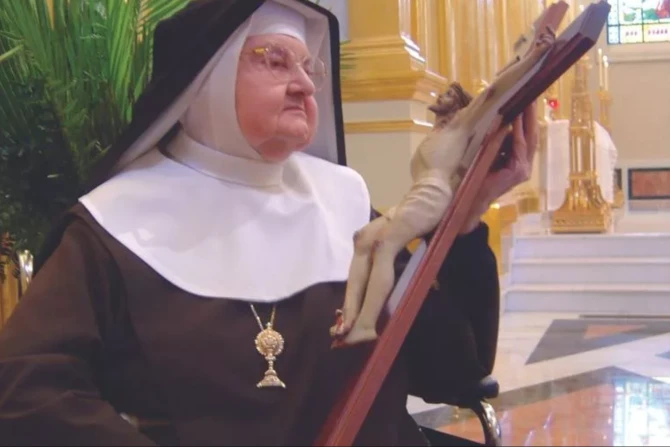
Inside the San Lorenzo chapel today stands the original World Youth Day Cross — the same one once placed at the main altar of St. Peter’s Basilica.
“From there everything started,” says Inzunza. “Then it became the pilgrim cross of the World Youth Day.”
For Pope John Paul II, young people were not an afterthought — they were central to the Church’s future.
“The Holy Father, St John Paul II, paid a lot of attention to young people,” recalls Fr. Pawel Ptasznik, one of his closest collaborators.
“Like he wrote himself, he considered the youth as the hope — the hope of the Church, the hope of society — because the youth has a lot of potential of dreams, desires… and if that development is going the right way then one can indeed look to the future with confidence.”
The Pope’s vision took root. In 1985, during the UN’s International Year of Youth, he gathered hundreds of thousands again in Rome. Soon after, he officially established World Youth Day. The first local edition took place in 1986; the first international WYD was in Buenos Aires in 1987.
“It developed in such a way that the Holy Father also began to visit other continents,” explains Fr. Ptasznik, “to offer such meetings for young people, for example from America or Asia… and these were wonderful events. I had the opportunity to participate in many of them. It really was a great experience for everyone.”
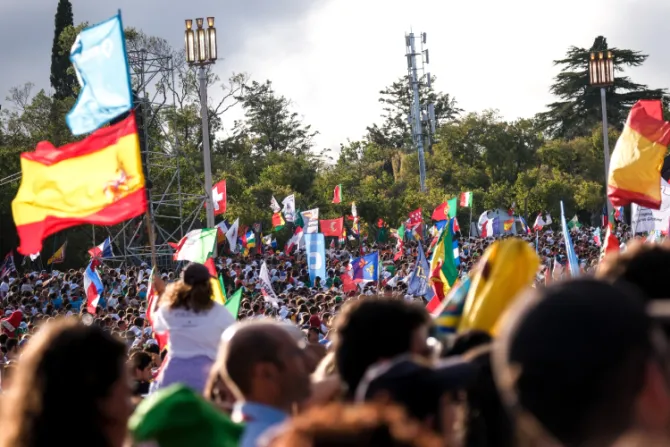
St. John Paul II led every WYD of his pontificate — ending with Toronto in 2002. His successors carried the torch: Pope Benedict XVI in Sydney and Madrid, Pope Francis in Rio, Krakow, Panama, and Lisbon.
And the journey continues.
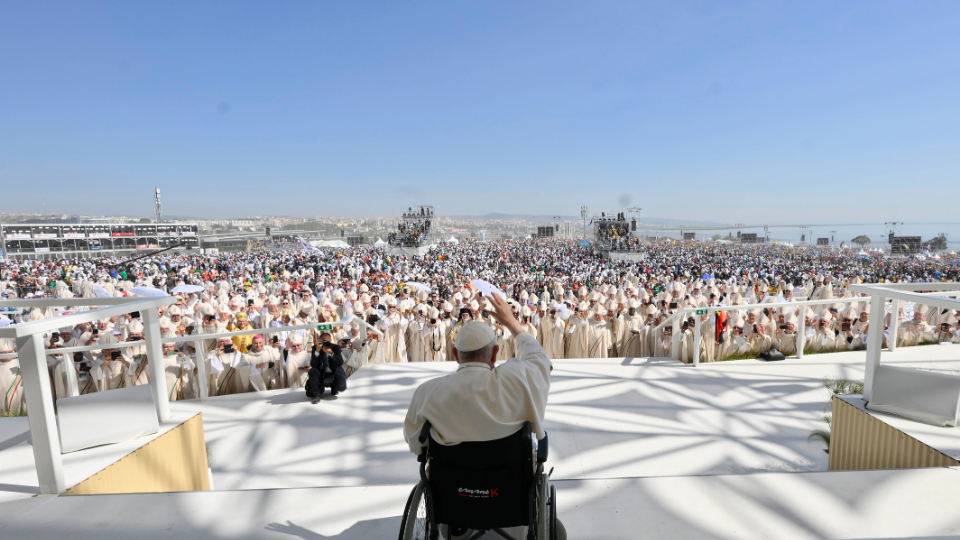
At the closing Mass in Lisbon, Pope Francis announced that the next World Youth Day will be held in Seoul, South Korea, in 2027 — the first WYD in East Asia in over 30 years, and the first under the leadership of Pope Leo XIV.
He now carries forward the same mission St. John Paul II once entrusted to the world’s youth:
To carry the Cross. To carry Christ. And to carry hope — wherever the world needs it most.