While Easter dates usually differ between Eastern and Western Christians, this year both Easter celebrations land on the same day — a coincidence that could be an opportunity for progress in ecumenical dialogue.
This year’s Easter falls in the 1,700th anniversary year of the Council of Nicaea — the first ecumenical council that was held in the fourth century. Most known for defending the divinity of Christ against the heresy of Arianism, the council also established a universal formula for calculating the date of Easter.
Nicaea decreed that Easter should be celebrated on the first Sunday after the first full moon following the spring equinox. The Julian calendar, which was the standard at the time, had a fixed date for the spring equinox. The fixed Easter date, based on the Julian calendar, was gradually implemented.
Centuries after the council, Western churches switched to the Gregorian calendar due to inaccuracies in the Julian calendar, while the Eastern Church has continued to use the Julian calendar for religious feast days. Both East and West follow the council, but they have different starting points and therefore different Easter dates.
Why has the Easter date been different?
In 46 B.C., Julius Caesar established the Julian calendar. While similar to the now-standard Gregorian calendar, the Julian calendar had its flaws.
Minute inaccuracies in the Julian calendar caused worlds of confusion centuries afterward, affecting agriculture and planting, shipping navigation, and even the celebration of holy days.
While a year is colloquially known to be 365 days, it takes the earth precisely 365.24219 days to travel around the sun. The Julian calendar intended to account for that extra bit of time by establishing a leap year every four years. But that meant that the Julian calendar had 365.25 days — just beyond of the precise revolution of the earth around the sun.
Because the Julian calendar had 365 and quarter, the calendar was 11 minutes and 14 seconds off every year. More than a millennium later, those superfluous minutes had added up to 10 extra days.
In 1582, Pope Gregory XIII decided to address the season offset by removing an occasional leap year in the future and cutting the 10 extra days from the calendar. People went to bed on Oct. 4 and woke up on Oct. 15. Bad luck for early October birthdays that year.
At the time, this put a 10-day gap between the Gregorian calendar and the Julian calendar. Now, in 2025, the Julian calendar is 13 days behind the Gregorian calendar and by 2100, it will be 14 days behind.
For religious feast days like Easter, both East and West follow the universal formula established by Nicaea — but the Eastern churches base their holiday calculations off of the Julian calendar, while Western churches use the Gregorian calendar.
One Easter again?
On April 20, 2025, Easter will land on the same day for both the East and the West.
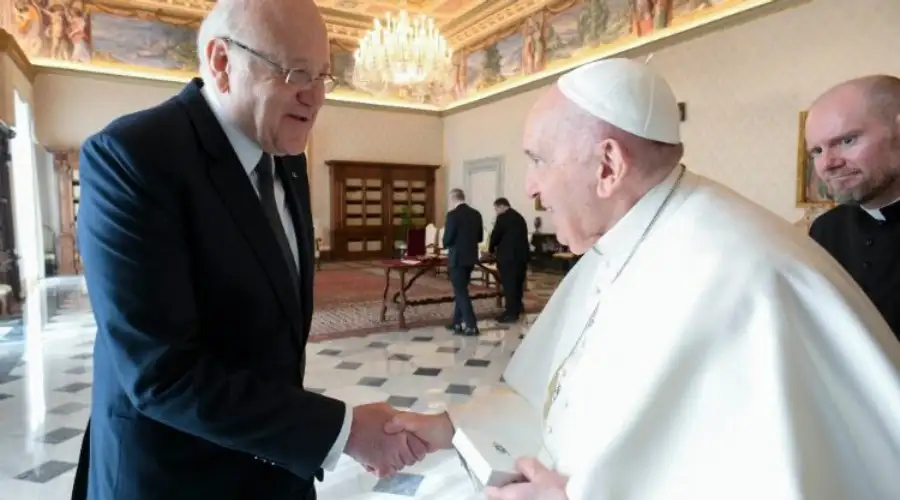
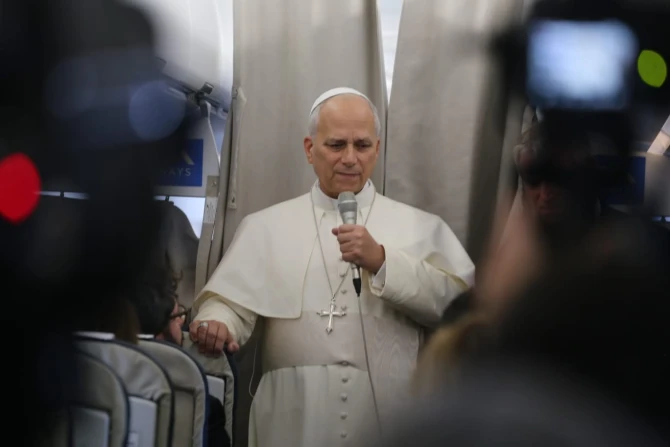
In light of this and the Nicaea anniversary, both Pope Francis and the Orthodox Patriarch Bartholomew of Constantinople have expressed hopes that the shared date of Easter this year could be the beginning of something more.
Last April, the Eastern Orthodox patriarch of Constantinople, Patriarch Bartholomew, expressed a desire that Christians in the East and West celebrate Easter on a “unified date.”
Bartholomew hoped that the shared date would “not merely be a fortuitous occurrence but rather the beginning of a unified date for its observance by both Eastern and Western Christianity.”
At the beginning of 2025 during an ecumenical event, Pope Francis renewed his appeal that Christians might take “a decisive step forward toward unity around a common date for Easter.”
It’s an opportunity to, in the Holy Father’s words, “live the anniversary of the Council of Nicaea as a call to persevere on the path toward unity.”
But April 20, 2025, isn’t the only opportunity for a shared Easter date. In just a few years, Easter will fall on April 16, 2028, for both the East and the West, and again on April 13, 2031, and April 9, 2034.
This article was originally published on Catholic News Agency.