The feast of Christ the King was instituted by Pope Pius XI in 1925 following his encyclical Quas Primas. Today it is celebrated on the final Sunday before Advent.
Quas Primas
Quas Primas was Pope Pius XI’s profound response to the rising tide of secularism and nationalism in the early 20th century.
In his introduction, Pope Pius wrote: “Manifold evils in the world were due to the fact that the majority of men had thrust Jesus Christ and his holy law out of their lives; that these had no place either in private affairs or in politics; and we said further that as long as individuals and states refused to submit to the rule of our Savior, there would be no really hopeful prospect of a lasting peace among nations.”
Composed in the aftermath of World War I and the tumultuous revolutions between 1917 and 1923 — which resulted in the downfall of the Hohenzollerns, Romanovs, Habsburgs, and Ottomans — the encyclical underscores the enduring sovereignty of a king “whose kingdom shall have no end.”
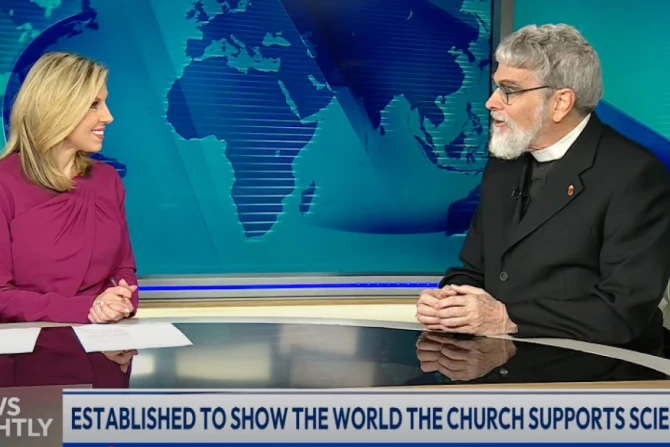
Irish historian Father Fergus O’Donoghue, SJ, told CNA that ”Pius XI was thinking about emerging ideologies of power and strong leadership.”
Yet although Quas Primas and the inauguration of the feast of Christ the King were undoubtedly influenced by the affairs of the early 20th century, they were not new ideas.
First Requests for the Feast
The origins of the establishment of Christ the King as a feast day lie with a request to the papacy in 1870 from a Jesuit, Father Jean-Marie Sanna-Solaro. The Congregation of Rites in the Vatican rejected it, and the Holy Father had just responded favorably to Maria Drostezu Vischering’s request to consecrate the world to the Sacred Heart of Jesus. This request for a feast day consecrating his kingship came at an inopportune time.
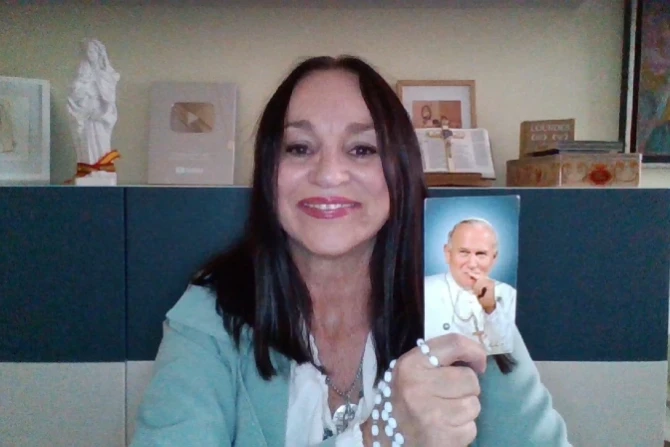
Father Bernard McGuckian, SJ, told CNA: “The cause of bringing the feast of Christ the King to the Church was taken up by a marvelous French woman, Marthe de Noaillat, who had taken over the running of the Hieron museum at Paray Le Monial from the very wealthy Baron Surruchaga. Marthe decided that the kingship of Christ should be highlighted properly, and she wrote to the pope, urging him to establish the feast day. She was told that rather than the decision be made merely by the pope, she must seek the support of the teaching Church, the bishops, and the listening Church, which is the faithful, so she set about contacting all the bishops in the world, all the big religious orders, all the apostolates.”
Remarkably, her efforts gathered momentum and attracted widespread support around the world. “It began to become obvious that there was a groundswell of opinion in favor of this,” McGuckian said, and this evidence was brought to the attention of the pope.
Convinced of the support from the faithful, Pope Pius XI let Marthe know of his intention to establish the feast in a Mass on the last day of the holy year of 1925, to which she and her husband were invited as guests of honor.
Biblical origins
The concept of the kingship of Christ is biblical and is rooted in the Old and New Testaments.
Father Dominic Holtz, OP, vice dean of the faculty of philosophy at the Angelicum in Rome, explains in the new EWTN Ireland series “The Kingship of Christ”: “In the Old Testament God uses the kings to be the place where his promises will be fulfilled. So even though the kings of Israel often fail them, God’s promises don’t fail. And he says, ‘I will give you a king, and through this Davidic line, I will give you one to come from that line, who will fulfil all of my promises.’ A king who is, of course, Jesus Christ.”
Jesuit Father Mark Lewis, rector of the Pontifical Gregorian University in Rome, explains in his contribution to the new “Kingship of Christ” series: “In the 16th and 17th centuries, you get the sense of the divine right of kings, and that there’s an absolute authority that comes directly from God and somehow covers imperfection. But in fact, we realized that they were just as imperfect as their predecessors.”
He added: “In the 20th century, you start getting governments that react against this idea of a single divine-right king in favor of a more scientific kind of government. There’s the liberal revolutions of the Enlightenment, where reason triumphs everything, and there’s no more strong man, or there is a strong man, but it’s not tied to God, not tied to being anointed. And what ends up happening is, is it goes from a sort of theism, it doesn’t matter whether you have religion or not, to atheism.”
Now a century later, many of the themes and concerns that prompted Quas Primas are still relevant. Lewis explains the relevance of the Kingship of Christ to our world now as it was then.
“The challenge of us celebrating the anniversary of the Christ the King is to not see kingship as something that’s just another defective form of government, but to see Christ the King as the embodiment of perfection that we can aspire to, that we aspire to become people who want to live our lives with integrity, with honesty,” he says, “in some ways, as people who are responsible citizens, we can be witnesses to what we we know are the characteristics of God’s reign, justice, peace, care for one another, care for the places, the place that we live. And I think a lot of the things that the Church talks about today, especially peace with justice, are calling us to witness to the reign of God that’s represented by Christ.”