Catholic AI leaders explored tech-forward solutions to Church projects as part of a larger initiative that will reach four U.S. dioceses in early 2027.
Inspired by Pope Leo XIV’s encyclical Magnifica Humanitas, tech leaders, clergy, and educators gathered in Rome for a hackathon to reimagine parish life in the age of artificial intelligence (AI).
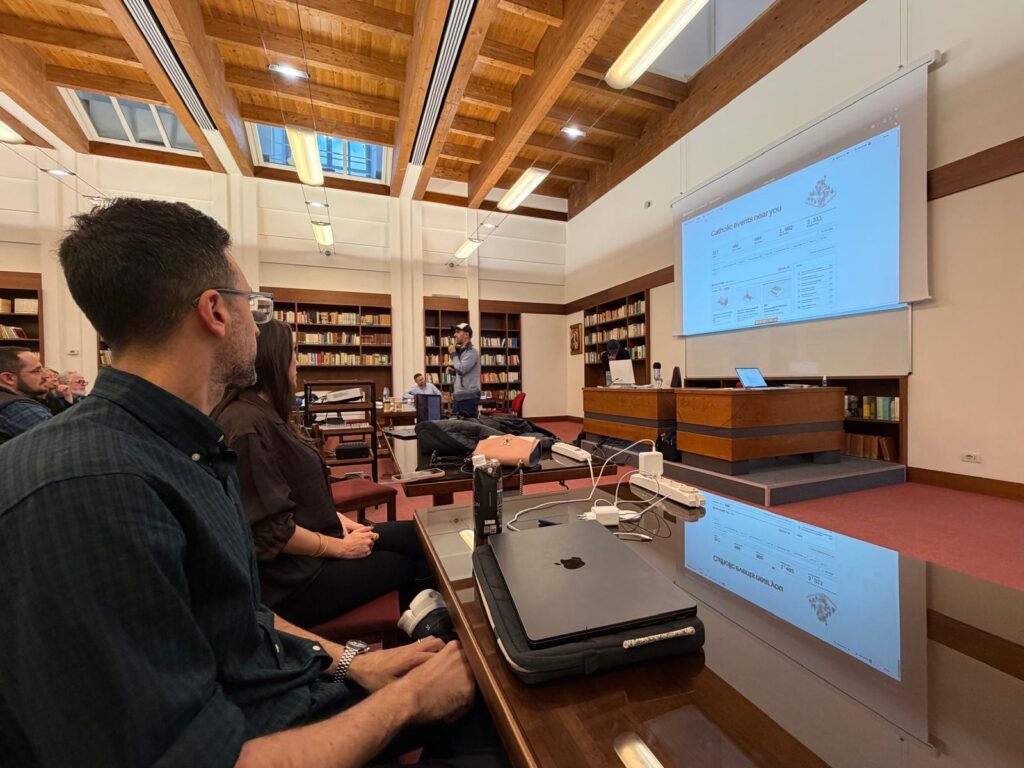
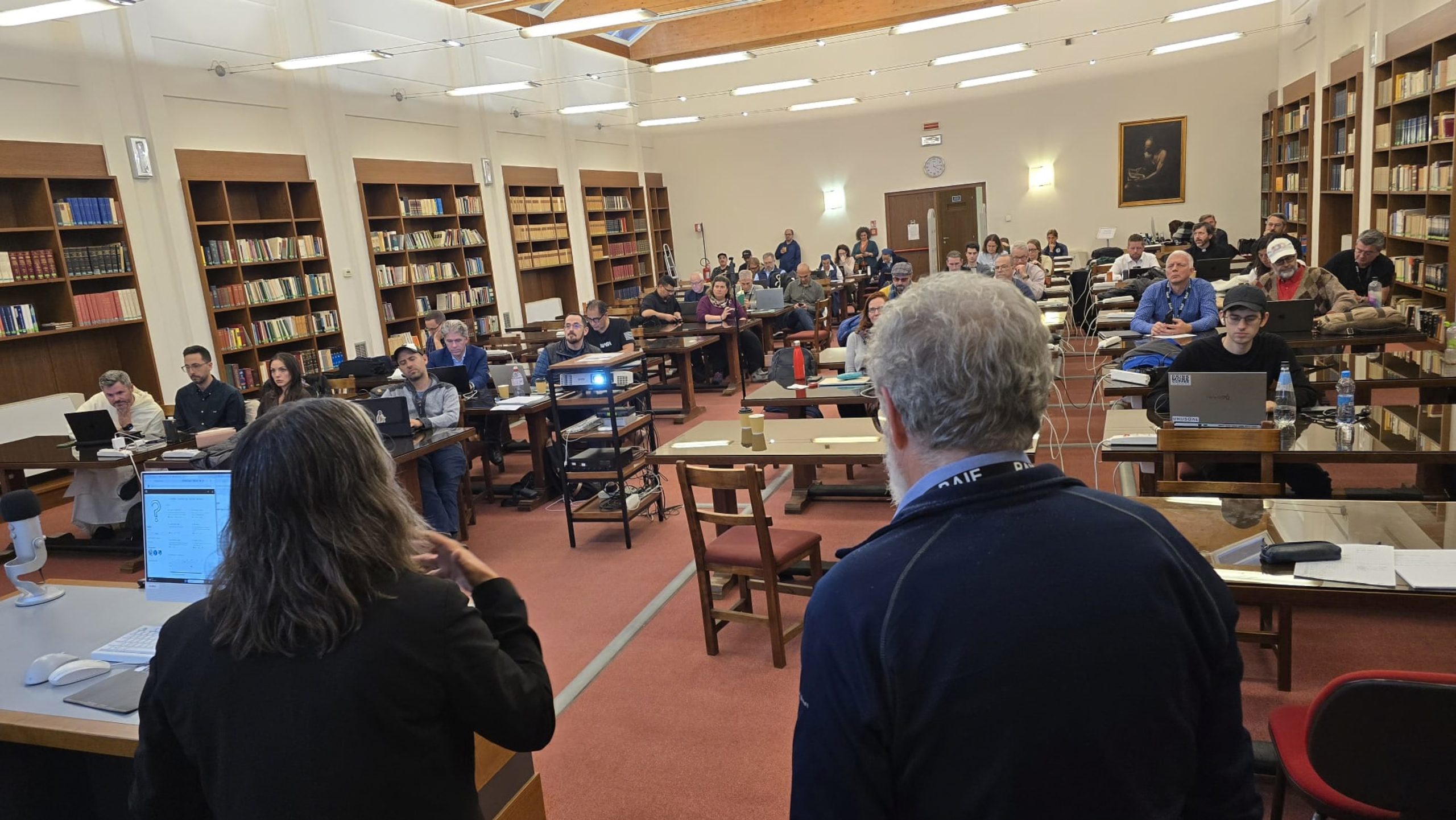
The event “From Roadmap to Practice” was held at the Pontifical University of the Holy Cross on Nov. 7. Following the annual Builders AI Forum that week, the hackathon focused on developing practical prototypes to address parish needs, including liturgical calendars, accessible Church teaching, and digital evangelization.
The hackathon is also set to expand to the United States. Organized by the Catholic Digital Commons Foundation (CDCF) and the Evangelization Lab, the Virtual-to-Sacramental (V2S) hackathon will be held in 4 U.S. dioceses in early 2027.
Where coding meets faith
According to a Nov. 9 press release, more than 60 people gathered for the hackathon, which focused on both building software and organizing ways to support Catholics in the AI era.
More than 15 digital projects were created during the conference, from a digitized Roman martyrology to a database for religious orders.
Father Patrick Mary Briscoe, OP, promoter general for Social Communication of the Order of Preachers, was part of a team that created a database that lets him access documents from his order dating back centuries.
“Typical PDF searches are complex, inefficient, and often incomplete,” Briscoe said. “I teamed up with a developer who, in a few hours, allowed me to tap into hundreds of years of documents to get access to our own resources for formation, content creation, and governance.”
Other projects built included AI-governance tools for parishes, a lunch sign-up sheet for a Roman seminary, and a digitized version of the Roman martyrology.
Keeping the human at the center of American parish life
A central focus of the hackathon was how to implement AI and other technologies into parish life, including in the U.S. in 2027.
Taylor Black, executive director of the Leonum Institute at The Catholic University of America, emphasized that the Church under Pope Leo XIV needed to embrace its vocation to build in the digital age.
“Pope Leo emphasizes the builder’s vocation in the Church, and it starts with sitting down with the people who do the work and creating something they can try together,” Black said.
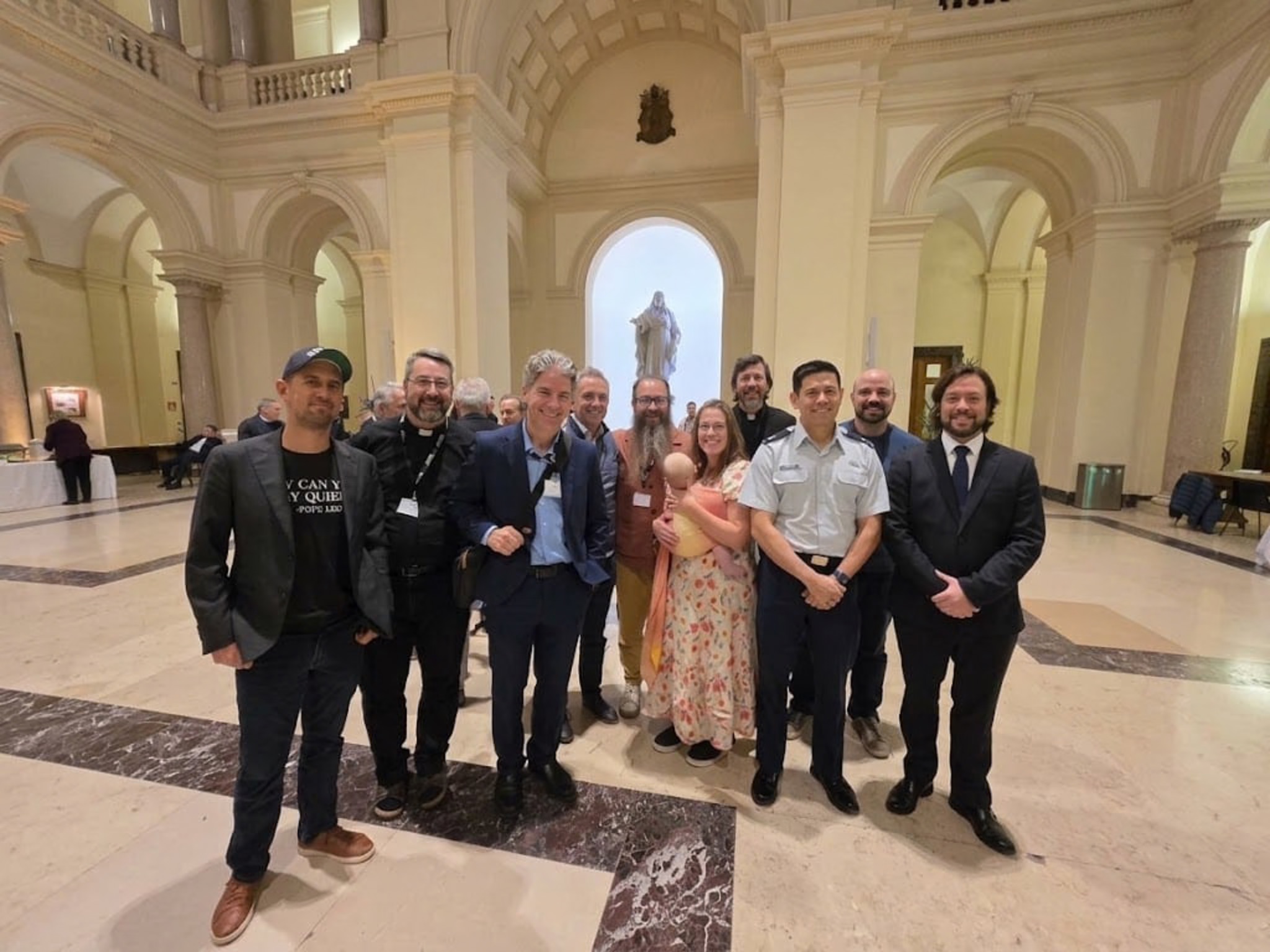
José Manuel De Urquidi, founder of the Evangelization Lab, expressed his hope that bishops in the U.S. would support the initiative, which he believes will address the challenge of encountering Christ online but not within Catholic communities.
“[The bishops] not only have to bless it but also support it, because the Church as an institution can be slow and risk-averse,” Urquidi said. “A hackathon brings a few involved Catholics and a coder to the same table for a whole day, and by evening they have something they can actually try in real life.”
Sister Nancy Usselmann, FSP, director of the Pauline Center for Media Studies, said the hackathon, her first ever, revealed the potential for collaboration between Church and tech leaders to spread the Gospel.
“This was my first hackathon — a phenomenal learning experience of profound collaboration between pastoral leaders and builders,” Usselmann told EWTN News. “It helped all of us to imagine possibilities, develop opportunities, and create collaborative relationships for the Gospel.”
This article was originally published by EWTN News English.