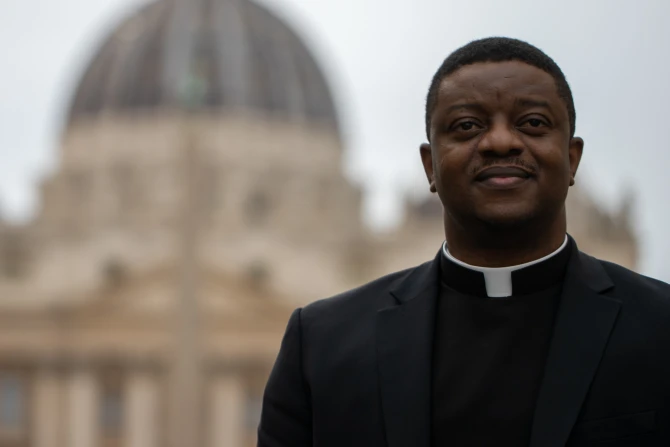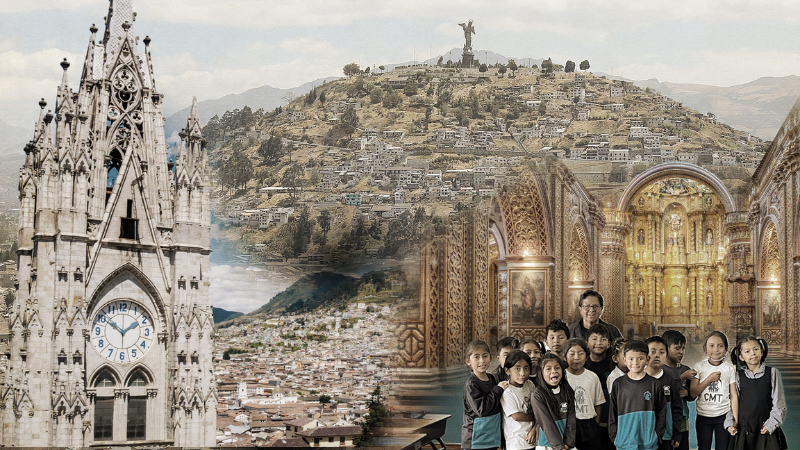
As the International Eucharistic Congress in Ecuador comes to a close, we look back at our interview with the new Ecuadorian Ambassador to the Holy See, Jorge Edmundo Uribe Pérez, conducted before the event. In this discussion, Ambassador Uribe reflects on the Congress’s significance for both the Church and his country.
Speaking with Paola Arriaza, a correspondent from the EWTN Vatican Bureau, Ambassador Uribe discussed the Congress’s potential to bring healing to a nation facing rising violence and instability. He also emphasized Ecuador’s deep Catholic heritage and shared his personal hopes for the event’s lasting impact.
150 Years of Ecuador’s Consecration to the Sacred Heart
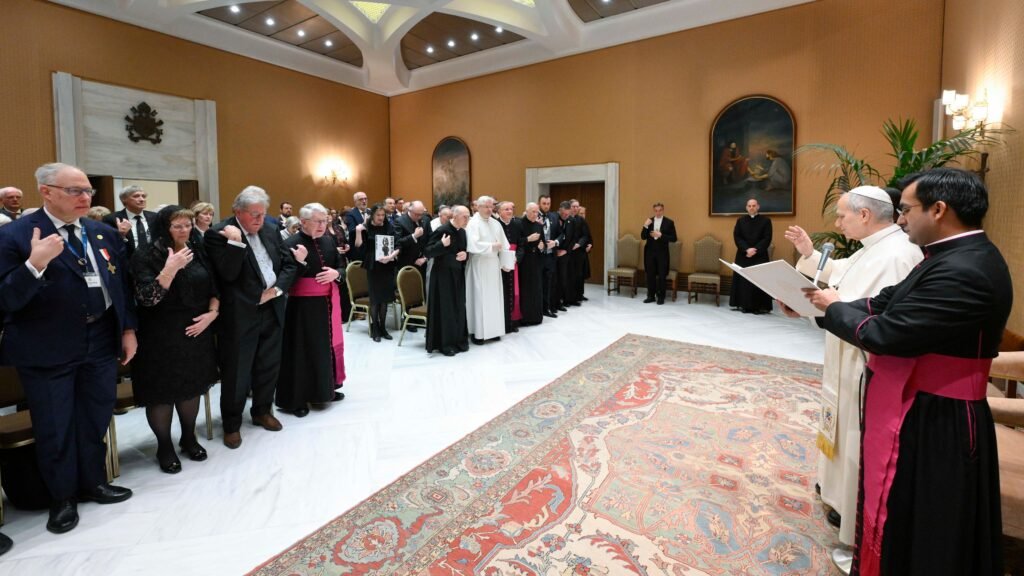
Paola Arriaza: Ambassador Uribe, thank you for granting us this interview. On August 26th, you presented your credentials to the Holy Father. How was that moment? How was the meeting?
Amb. Jorge Edmundo Uribe Pérez: Look, in reality, it’s a bit difficult to describe the number of impressions one has. You’re meeting with the pope, who is Pope Francis. He welcomed me with great kindness and a fatherly spirit. So, I felt very comfortable. I felt like I was with someone I had known for a long time. He gave me a blessing, led me to the door, and said something very beautiful to me. He said, “This door will always be open.”
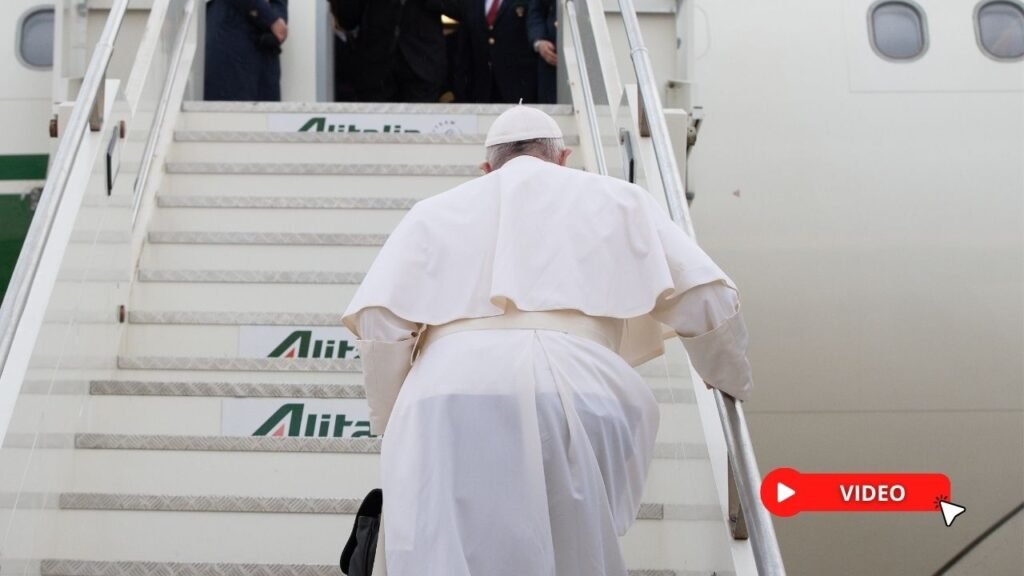
Paola Arriaza: How did you receive the news that the Pope will not be able to attend the International Eucharistic Congress in Ecuador?
Amb. Jorge Edmundo Uribe Pérez: He told me that, of course, he would have loved to be there, but he had these trips planned to Asia, which he has been postponing for a long time. They are very long trips. He shared a bit with me about what those nations are like. As for Ecuador, I believe that at this moment, the Eucharistic Congress is very important because Ecuador is going through difficult times as a country. Over time, the institutions have deteriorated. This deterioration of institutions has created a power vacuum that has been filled by criminal gangs. So, the Eucharistic Congress, given the current situation in Ecuador, is the best thing that could happen.
Paola Arriaza: How is Ecuador preparing for this moment?
Amb. Jorge Edmundo Uribe Pérez: It has just been 150 years since Ecuador was consecrated to the Sacred Heart. This consecration was made by a Catholic president, Dr. Gabriel García Moreno. He was truly Catholic, and, supported by certain priests, he decided to make the decision to consecrate Ecuador. García Moreno sealed this consecration with his martyrdom, as he was killed. So, it is a consecration made with the blood of the one who consecrated it; it is signed with his blood. This happened 150 years ago, coinciding perfectly with the Eucharistic Congress.
The Eucharistic Congress: A Moment of Grace for a Troubled Nation
Paola Arriaza: And is this the reason why the Holy Father selected Quito to be the host of this congress?
Amb. Jorge Edmundo Uribe Pérez: I believe so, and I’m very happy about it. I even feel like going, though I’m not sure if I’ll be able to. I wish them the best. The most important thing is for there to be grace, because grace is what moves everything. That there may be grace that touches hearts. Ecuador is a wounded country at the moment, very wounded and very troubled.
Paola Arriaza: What do you think will be the true impact of the congress on the country and the local Church?
Amb. Jorge Edmundo Uribe Pérez: I have the impression that the country, which has become violent, will lose that violence. I hope that is the case. Because if there is something that can truly transform a person, it’s not arguments. In the end, arguments don’t change people. What changes people is grace.
Ambassador Uribe’s Vision: Popular Devotion and Ecuador’s Catholic Heritage
Paola Arriaza: What is the Catholic Church like in Ecuador, and how is popular devotion? What is the Church like at the grassroots level?
Amb. Jorge Edmundo Uribe Pérez: The Holy Father actually brought up the topic, exactly what you’re asking me about—we talked about popular devotion. This popular devotion, which is characteristic of Latin America—Brazil, Ecuador, in fact, all the countries from Mexico to Patagonia—has an indigenous ingredient and component. But it needs to be understood. I remember once being in Quito, in a church called San Agustín. A very humble man came in, and he approached a Christ figure there, called the Christ of Good Hope, which has a beautiful story. It’s a Christ seated in the midst of the Passion. The man approached, knelt down, and began talking to Christ. But believe me, his faith was so profound. I thought, “My God, this man is speaking with Our Lord, he has Our Lord right before him.” With such respect, such reverence, and such certainty that he was conversing with Our Lord, it left me deeply moved. I love Ecuador. I feel very Ecuadorian myself. And when I see this popular devotion, I am deeply impressed.
Paola Arriaza: Ambassador, on a personal level, what do you expect from this congress?
Amb. Jorge Edmundo Uribe Pérez: As an Ecuadorian, I hope that this congress will help Ecuador begin to heal, to restore order. A soul in a state of grace is not dangerous, not a bandit, not a criminal. A soul in a state of grace contributes to society.
Paola Arriaza: Ambassador Uribe, thank you very much.
Adapted by Jacob Stein