While the secrecy surrounding the election of a new pope through a conclave is often emphasized, the rules governing every moment of this global event are, in fact, publicly available. These regulations are outlined in a document called an apostolic constitution, formally titled Universi Dominici Gregis—meaning “The Shepherd of the Lord’s Whole Flock.”
SIGN UP FOR OUR NEWSLETTER HERE
The current rules for the conclave build on centuries of tradition and previous election decrees. They were first issued in 1996 by Pope St. John Paul II, replacing the rules established in 1975 by Pope St. Paul VI. Since then, the constitution has remained largely intact, with only minor adjustments introduced by Pope Benedict XVI and Pope Francis.
Apostolic constitutions represent the most solemn form of legislation issued by a pope, reflecting the immense gravity of a papal election. In 2007, Pope Benedict XVI restored the requirement of a two-thirds majority for the valid election of a pope, while Pope Francis introduced some reforms simplifying the papal funeral rites and modifying the process for verifying the death of a pontiff.
The constitution is divided into two main parts: the first outlines protocols for administering the Holy See during the interregnum, the period between the death or resignation of a pope and the election of his successor; the second explains the rules of the conclave itself, as well as the ceremonies surrounding the pope’s inauguration.
To participate as an elector, a cardinal must be under the age of 80 at the time of the pope’s death or resignation. At the death of Pope Francis, for instance, 135 out of more than 250 cardinals would have been eligible to vote. However, with two cardinals excusing themselves due to health reasons, 133 cardinal electors would be present at the conclave. Cardinals over 80 have been excluded from voting since 1970.
On the appointed day—in this case, the afternoon of May 7th—the electors process solemnly from the Pauline Chapel in the Apostolic Palace into the Sistine Chapel. There, each cardinal takes an oath to follow the procedures and to maintain strict secrecy. According to their order of precedence, each cardinal approaches the Gospel book, places his hand upon it, and recites in Latin:
“I do so promise, pledge, and swear. So help me God and these Holy Gospels which I touch with my hand.”
With the solemn command “Extra omnes!”—“Everyone out!”—the papal master of ceremonies closes the doors. Only the cardinal electors remain inside. From that moment, they are “cum clave”—literally, “locked in with a key.” This tradition, in place since 1274, ensures that they are completely isolated from the outside world until a new pope is elected.
The voting process is highly structured. Cardinals are selected by lot to serve in three roles: scrutineers to oversee the ballots, infirmarii to collect votes from any sick electors unable to enter the chapel, and revisers to double-check the count. These roles are reselected for each voting session—morning and afternoon.
Each cardinal casts his vote by filling out a ballot inscribed at the top with the Latin words “Eligo in Summum Pontificem” (“I elect as Supreme Pontiff”). He writes the name of his chosen candidate, disguises his handwriting, folds the ballot, and approaches the altar beneath Michelangelo’s Last Judgment. Holding the ballot aloft, he pronounces:
“I call as my witness Christ the Lord who will be my judge, that my vote is given to the one who before God I think should be elected.”
He then places the ballot onto a gold plate, which is used to deposit it into the chalice or designated receptacle on the altar.
Once all votes have been cast, the ballots—including any brought in from absent electors by the infirmarii—are counted by the scrutineers. One reads each name aloud, another records it, and the third threads the ballots together with a needle through the word “Eligo.” After reading all names, the thread is tied, and the ballots are set aside. The revisers verify the count.
If no candidate achieves the required two-thirds majority, the ballots are burned, producing the famous black smoke signaling an inconclusive vote. If a second vote follows immediately, the ballots from both sessions are burned together. White smoke, however, signals that a pope has been elected.
On the first day, the cardinals may cast one vote; on the second and third days, two votes are taken in the morning and two in the afternoon. If no pope is elected after nine ballots, the electors pause for a day of prayer and reflection before resuming. If, after 30 ballots, no pope is chosen, voting proceeds between the two leading candidates—who are then barred from voting themselves—though the two-thirds majority remains necessary.
Once a cardinal receives the required number of votes—89 in the current scenario—the senior cardinal approaches him and asks whether he accepts the election. If he agrees, he is then asked by what name he wishes to be called. From that moment, he holds full and supreme authority over the Universal Church.
As the world awaits the outcome, all eyes turn to the chimney of the Sistine Chapel for the telltale plume of smoke. When white smoke appears, the bells of St. Peter’s Basilica ring out in celebration. Finally, the senior cardinal deacon steps onto the balcony to deliver the announcement:
“Habemus Papam”—“We have a pope.”
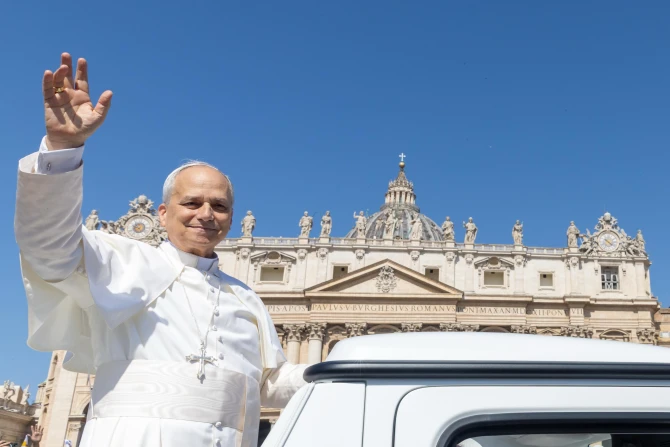
Moments later, the new pontiff emerges onto the Loggia of St. Peter’s Basilica, greeting the world and marking the beginning of his papal ministry.
Adapted by Jacob Stein