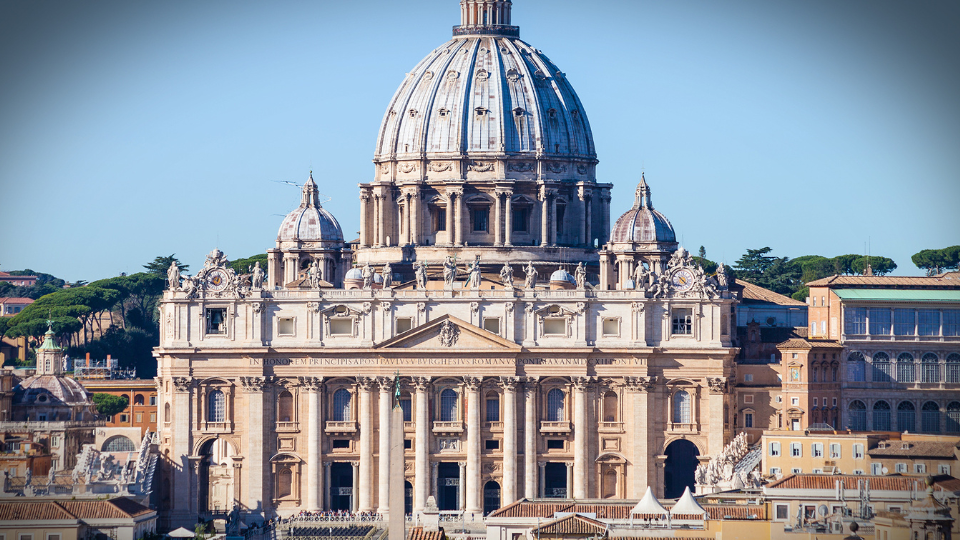
While many admire the breathtaking sight of St. Peter’s Basilica, few truly understand what the Holy See—often called “the Vatican”—actually is. Even fewer realize that the Holy See is distinct from Vatican City State, the tiny 44-hectare territory—the smallest country in the world—where the Holy See carries out its mission.
FIND THE POPE’S BIOGRAPHY HERE
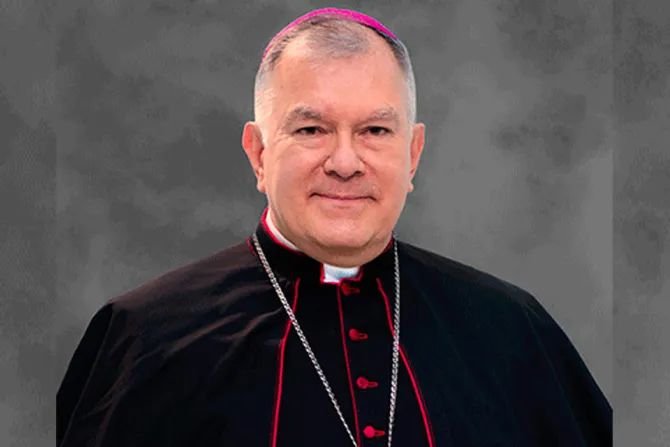
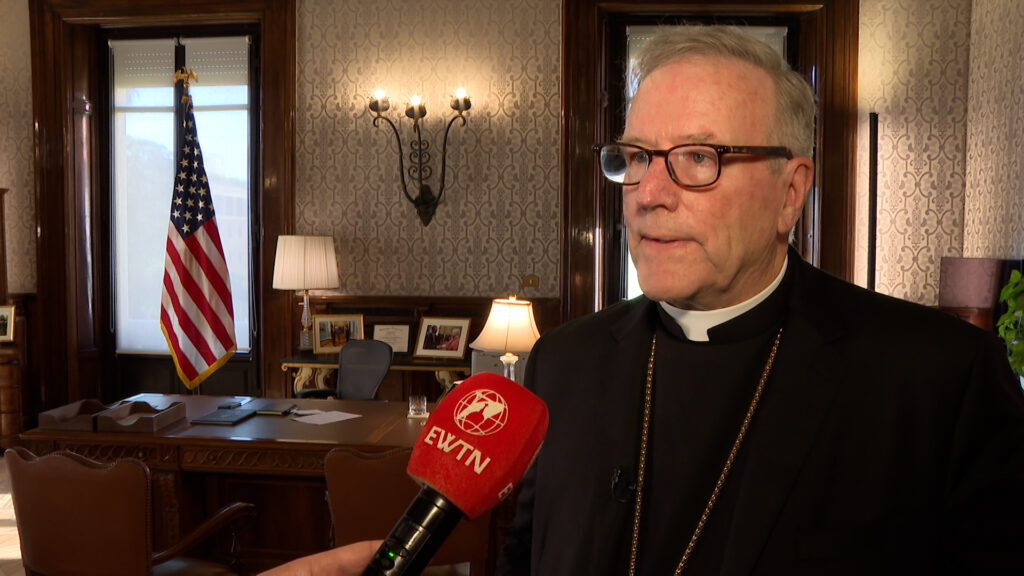
Bishop Juan Ignacio Arrieta, Secretary of the Dicastery for Legislative Texts, noted:
“The Pope, in order not to be subordinate to or dependent on any political power—and to be able to engage with the entire world, with its various political realities without issue, and above all to defend the faith without external influence—has always needed, throughout history, a certain autonomy from political authority.”
His Excellency, one of today’s foremost experts on Canon and Vatican State Law, explained that such an independence is guaranteed by the microscopic territory of the Vatican City, hidden behind the high walls and protected by the ancient military corps of the pope, the Pontifical Swiss Guard alongside with the Vatican Police, called the Gendarmerie.
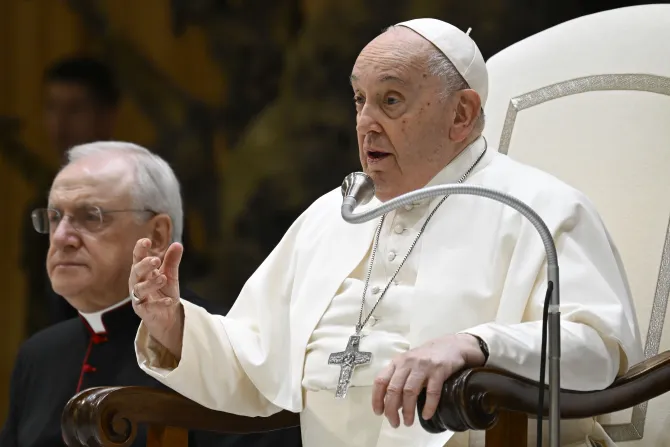
The Holy See or the “Santa Sede,” instead, is the central governing authority of the Catholic Church headed by the Pope, the only absolute sovereign in Europe. The mission of the Holy See is to exercise the supreme authority and jurisdiction over the Church, serving as a spiritual and administrative center for the worldwide Catholic community.
Bishop Arrieta added, “It is called the Holy See because it is the See of Peter—the chair of Peter, so to speak, in the strict sense—and the Pope is the successor of Peter. Over time, the Holy See has developed in a broader sense, and today it refers to the set of institutions that assist the Pope in governing the Church.”
The primary structure that assists the Pope in governing the Church is the Roman Curia—a special body that helps him administer the Church worldwide. It consists of the administrative institutions of the Holy See through which the affairs of the Catholic Church are managed.
The Curia is made up of sixteen Dicasteries, with the Dicastery for the Doctrine of the Faith holding a key role. Especially significant during this Jubilee Year is the Dicastery for Evangelization, which is responsible for organizing the celebrations.
Other institutions within the Roman Curia include the judicial bodies—the Apostolic Penitentiary, the Roman Rota, and the Apostolic Signatura—as well as economic offices led by the Secretariat for the Economy. There are also various other offices, such as the Office for the Liturgical Celebrations of the Supreme Pontiff.
“The most important is the Secretariat of State,” Prof. Cristián Mendoza, Pontifical University of the Holy Cross, noted. “That, as you know, has three sections, mainly one for the internal affairs of the Church and one for the external relationships between the Holy See and other nations. And it also has a third part that is to judge the problems of the diplomatic offices.”
Working in close cooperation with the Secretariat of State are sixteen Dicasteries, each headed by a Prefect—assisted by a Secretary and an Undersecretary.
Bishop Arrieta compared the Holy See to the organization of other nation states, “The Dicasteries are like various departments or ministries in a state, serving the Pope in the governance of the universal Church. They are distinguished by their area of responsibility or the groups of people they deal with—for example, the Dicastery for Bishops, the Dicastery for the Clergy, the Dicastery for the Causes of Saints, and so on.”
Bishop Arrieta is not only a professor of Canon Law, but since 2007 he has also served as the Secretary of the Dicastery for Legislative Texts, which EWTN had the unique opportunity to visit recently. Located just off St. Peter’s Square, this Dicastery handles matters of canon law from across the globe.
“It is a legal system,” His Excellency explained, “that is present and in force across all five continents and in every culture, and it must interact with very different state legal systems—such as those of the United States, the Philippines, and India.”
And, “This is the distinctive feature of this Church law, which is very flexible and serves to engage with different realities while remaining consistently effective across very diverse cultures.”
The Holy See’s influence reaches far beyond the Vatican and Rome. Recognized as a sovereign entity under international law, it maintains representatives at the United Nations offices in New York and Geneva, as well as permanent observers at UNESCO in Paris and the World Food Program in Rome. It is also empowered to establish diplomatic relations with states worldwide.
“The Holy See was the first to have what are now called ambassadors—a permanent diplomatic representative in a country. At the end of the 15th century, the Holy See had representatives accredited to the King of Spain and to the Doge of Venice,” His Excellency highlighted.
Today, the Holy See maintains diplomatic relations with over 180 states and has nuncios stationed around the world.
“The difference between a nuncio and an ambassador: although the name is the same—one is German, the other Latin—the key difference is that the nuncio represents the Holy See not only to the government and culture of a country but also, importantly, to the local bishops and churches. In other words, the nuncio has two roles: one in diplomacy and one within the Church.”
Archbishop Georg Gänswein, Apostolic Nuncio to Lithuania, Estonia & Latvia and former private secretary to Pope Benedict XVI, has now served as nuncio to the Baltic States for six months. As he emphasizes, the Holy See’s centuries of diplomatic experience are an invaluable asset:
“There are so many information channels from very different perspectives. This is something that is very important for decisions taken by the Pope or by the Holy See and there is not just information, but also a ‘valutazione,’ as we say in Italian, which means an assessment or evaluation of the facts.”
The Holy See, operating within Vatican City State, is one of the most influential entities in the world. It is headed by the Roman Pontiff, who, although no longer wields the temporal power once held by the Papal States, remains immensely powerful due to the vast authority and respect he commands worldwide.
SIGN UP FOR OUR NEWSLETTER HERE
Adapted by Jacob Stein
Produced by Alexey Gotovosky; Camera by Sergio Natoli; Video Edited by Ilaria Chimenti; Special thanks & Credits to Vatican Media