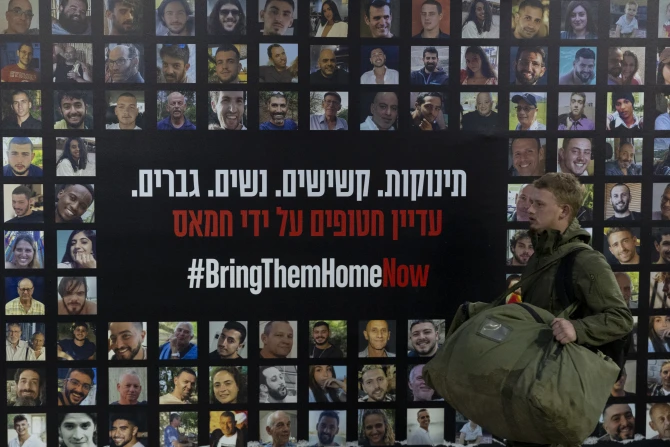
Israel and Hamas forces have agreed to a ceasefire deal that will pause fighting in Gaza and facilitate a hostage exchange, according to several news reports on Wednesday afternoon.
Brokered by the United States, Qatar, and Egypt after 15 months of war, the agreement could be implemented as early as Sunday, according to CNN. It is awaiting approval from Prime Minister Benjamin Netanyahu’s Cabinet, which released a statement saying that although “several unresolved points in the framework remain,” it plans to finalize the deal Wednesday night.
Under the first 42-day phase of the deal, Hamas forces are expected to release 33 women, children, elderly, and wounded Israeli hostages in exchange for hundreds of Palestinian women and children, according to AP News.
Five Israeli female soldiers are among those to be released and will be exchanged for 50 Palestinian prisoners each. Among these, AP reported, 30 are Palestinian militants serving life sentences. Additional soldiers and other male hostages are expected to be released in the second phase of the deal.
The Israeli government believes there to be 98 hostages, including several American citizens, remaining in Gaza and estimates about 60 of them are still alive.
In addition to a pause in fighting and hostage exchange, the agreement also includes provisions for a major influx of humanitarian aid from Egypt and Jordan into the Gaza Strip and mandates a limited withdrawal of Israeli troops from the region.
President-elect Donald Trump took to social media at 12:01 p.m. ET to announce the deal, writing: “WE HAVE A DEAL FOR THE HOSTAGES IN THE MIDDLE EAST. THEY WILL BE RELEASED SHORTLY. THANK YOU!”
U.S. Secretary of State Antony Blinken told CNN senior correspondent Christiane Amanpour on Wednesday shortly before the deal was announced that he expects the total ceasefire, hostage exchange, and humanitarian aid surge to occur in the first six days of the agreement.
“The ceasefire itself hopefully will concentrate minds and get people to agree on what’s necessary to get that day after, post-conflict plan in place,” he added.
This article was originally published on Catholic News Agency.