Pope Leo XIV’s journey to Turkey and Lebanon carries significant historical and diplomatic symbolism. His decision to make the mausoleum of Mustafa Kemal Atatürk his first stop immediately recalls the legacy of his predecessor, St. John XXIII, who became a cultural and spiritual bridge between East and West, very much like Istanbul (formerly called Constantinople), the city he arrived in 90 years ago.
In January 1935, only weeks after being appointed apostolic delegate to both Turkey and Greece, Archbishop Angelo Roncalli — the future St. John XXIII — arrived at Istanbul’s Haydar Pasha train station from Bulgaria. He began his mission in a country that at the time had no formal diplomatic relations with the Vatican.
Immediately after his arrival, he began assessing the situation of the Catholic churches and communities across the country — Jesuits, Capuchins, Maronites, Melkites, Syriacs, and others. In an unprecedented gesture, he later met with the ecumenical patriarch.
Roncalli also played an important humanitarian role in relation to other minority groups, particularly helping Jewish refugees from Poland flee their homeland during World War II.
He carried out his mission in Turkey for 10 years, during which he lived through the final years of Atatürk’s life. With rare diplomatic instinct, he understood the political and social transformation underway in modern Turkey. He respected the nation’s secular laws, including the law banning religious clothing outside places of worship, and made sure to abide by them.
The future pope faced significant challenges at first, since relations between the Turkish authorities and the Catholic Church were strained prior to his arrival. Yet he quickly and skillfully built bridges of trust with the young republic, earning the respect of its officials. He developed friendly relations with many Turkish figures, among them the diplomat Numan Menemencioğlu, who later became foreign minister.
Roncalli was also the first bishop to use the Turkish language in the celebration of the Mass, reading a passage from the Gospel in Turkish during the 1935 Christmas liturgy. He believed ignoring the local language would be a sign of disrespect toward the people.
When Pope Pius XII died in 1958, Turkish newspapers highlighted Roncalli as one of the leading candidates to succeed him and followed the conclave closely. Upon his election as Pope John XXIII, Turkey was among the first countries to congratulate him, acknowledging the positive impact he had left behind.
In 1959, Turkish President Celâl Bayar visited the Vatican and met the pope, who expressed his longing for Istanbul and the Bosphorus. He praised Turkish Catholics as faithful citizens. During that visit, the two sides agreed to establish formal diplomatic relations, which officially began the following year and paved the way for future papal trips to Istanbul, with the sole exception of John Paul I, whose papacy lasted only 33 days.
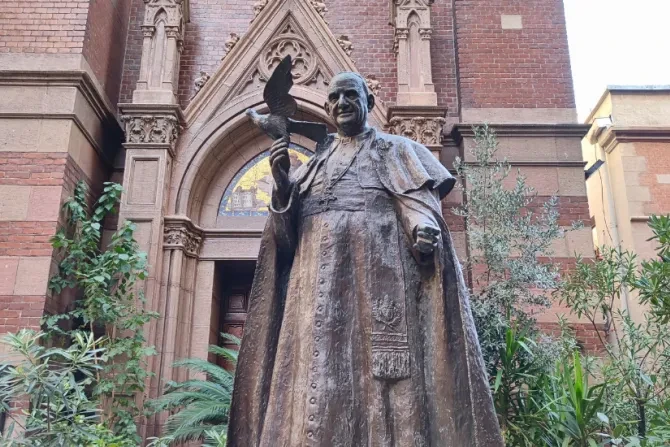
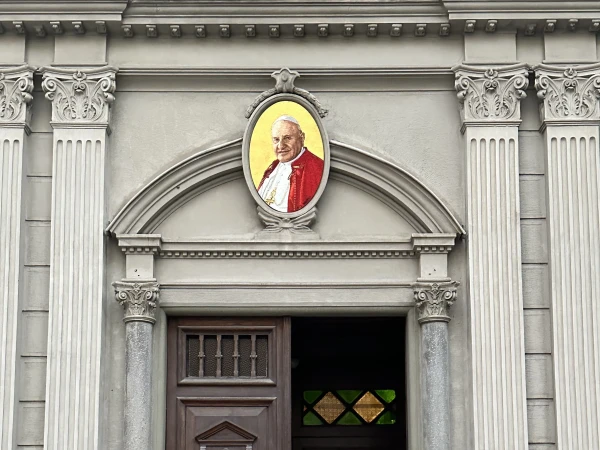
When Pope Benedict XVI visited Istanbul in 2006, a statue of St. John XXIII was unveiled. Originally installed in the courtyard of the Cathedral of the Holy Spirit, whose entrance today is adorned with an image of the saintly pope, the statue was later moved to the courtyard of St. Anthony of Padua Church.
Beneath the statue is an inscription reading: “Pope John XXIII, a Friend of the Turkish People.” The inscription reflects his many expressions of affection toward them, including his well-known phrase: “I love the Turkish people.” The Turkish public returned this affection, famously giving him the nickname “the Turkish Pope.”
This story was first published by ACI MENA, CNA’s Arabic-language news partner, and has been translated for and adapted by CNA.