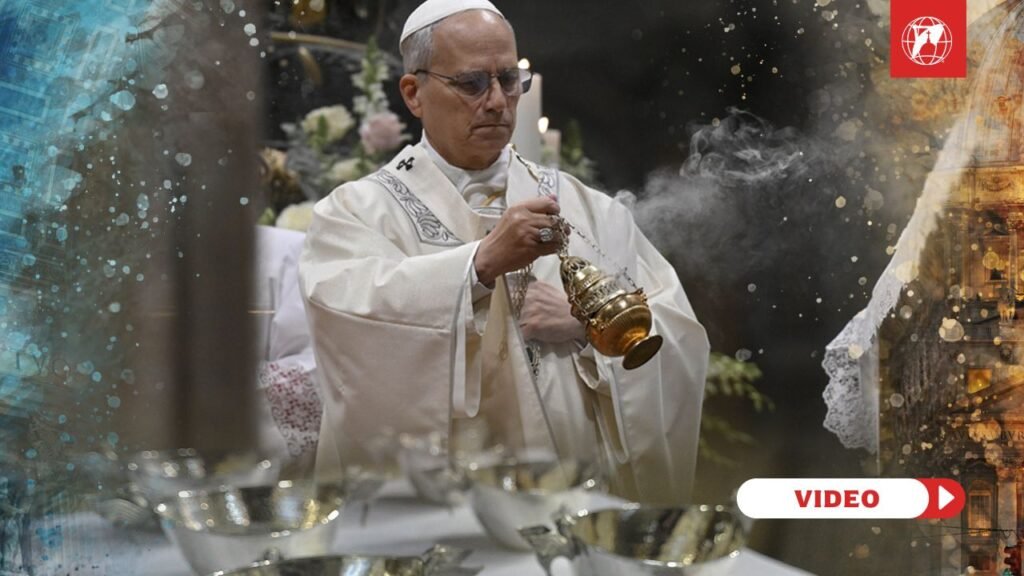
Purple vestments, stripped altars, and the scent of incense mark the Church’s entrance into Lent. Inside the Vatican, the season brings a noticeable change in rhythm: the pace slows, public activity eases, and attention turns inward.
As Fr. Wojciech Giertych, Theologian of the Papal Household, explains, Lent is reflected even in the Holy Father’s schedule. “The work load then is reduced because this is a special time for prayer,” he says. “The Pope has less audiences, less meetings with people, because this is a time specially given to God… that we need, in a very concrete way, a sign of time for God.”
The Pope’s Spiritual Exercises: A Week Set Apart
At the heart of the Vatican’s Lenten observance are the Pope’s annual Spiritual Exercises—a retreat not focused on diplomacy or governance, but on prayer, silence, and listening.
Fr. Giertych describes it as a Vatican version of what many Catholics experience in their own parishes during Lent. “Parishes often arrange a retreat during Lent… and so the same thing happens here in the Vatican,” he says. “The Holy Father invites a preacher to preach to the members of the Roman Curia who are invited to listen to these conferences.”
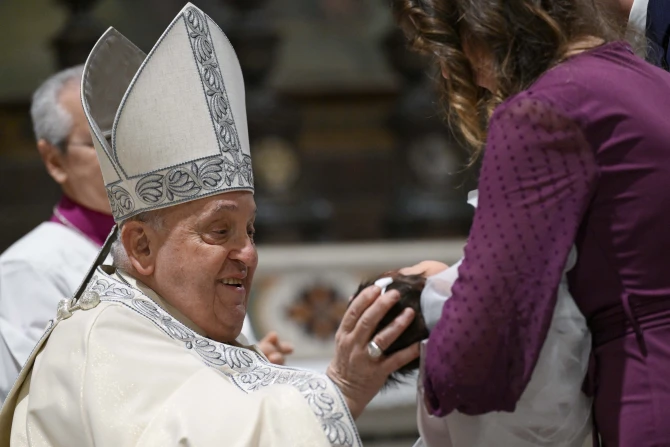
This year’s retreat will take place once again inside the Apostolic Palace, marking Pope Leo XIV’s first Lent as pontiff. In recent years, Pope Francis had chosen to hold the exercises outside the Vatican, at the Casa Divin Maestro retreat house in Ariccia, overlooking Castel Gandolfo—a setting more in line with the Jesuit tradition of making the Spiritual Exercises away from one’s daily place of work.
A Trappist Bishop Chosen to Preach
Contrary to expectations, the retreat will not be preached by the official Preacher of the Papal Household, Fr. Roberto Pasolini. Instead, as Fr. Giertych confirms, “And now this Lenten retreat will be preached by Bishop Erik Varden from Norway.”
The theme of the 2026 Spiritual Exercises will be “Illuminated by a Hidden Glory. The Lenten Itinerary,” and the retreat will run from February 22 to February 27.
Bishop Erik Varden, Bishop of Trondheim since 2020, is a 51-year-old Cistercian monk of Strict Observance—commonly known as a Trappist—widely recognized for his spiritual writing and emphasis on interior life. Baptized Lutheran and raised by non-practicing parents, he studied philosophy and theology at Cambridge before converting to Catholicism. After further theological studies in Rome, he entered the Trappist monastery in 2002 and later became Abbot of Mount St. Bernard in 2015.
His approach is shaped deeply by monastic tradition, especially the Desert Fathers—whose writings he believes still speak powerfully to modern life. In one reflection, Bishop Varden describes how those early monastic texts first struck him personally:
“I’d read about the Desert Fathers, and I’d read a short collection of sayings before I joined the monastery. But it was when I was in the novitiate that I realized just how important this body of literature is… a young monk coming to an older monk, having a problem… and asking, ‘Father, how can I live with this? What can I do about this?’ And I found the answers to be so penetrating and so true and so timeless… that I found them tremendously helpful. I still find them helpful, and I think they’ll be helpful to others.”
Varden is currently leading a related initiative titled “Desert Fathers in a Year,” in collaboration with EWTN and Exodus 90, aimed at applying early Christian monastic wisdom to what he calls today’s “desert” of distraction.
The Spiritual Exercises in the Vatican will follow a monastic rhythm, with twice-daily conferences, Eucharistic adoration, and the Liturgy of the Hours. The first meditation is scheduled for Sunday, February 22 at 5 p.m. Each day will begin at 9 a.m. with the Liturgy of the Hours, followed by a second meditation at 5 p.m. The retreat will conclude on Friday, February 27 with afternoon Eucharistic adoration.
Adapted by Jacob Stein. Produced by Alexey Gotovskiy; Video Edited by Alessio Di Cintio.