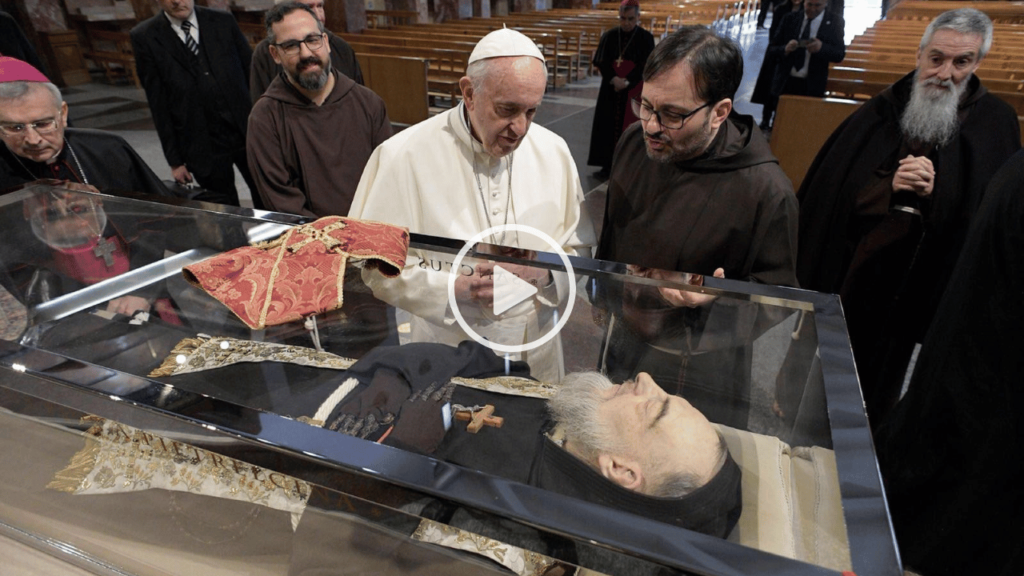
San Giovanni Rotondo, a picturesque town located in the Apulia region of southern Italy, is renowned for its association with Saint Padre Pio, one of the most popular contemporary saints. The town today hosts the shrine dedicated to the image of “Our Lady of Graces”, and the repaired and preserved body of Padre Pio is on display in the crypt of the Church, Santa Maria Delle Grazie.
Padre Pio arrived in San Giovanni Rotondo as a young novice in 1916, and he spent his years at the convent established in 1538 and dedicated to Our Lady of Graces. Here, he lived, prayed, suffered, and confessed his spiritual children. His mystical experience of Transverberation, where lans appeared in his side in August 1918, followed by stigmata, was the preparation of young Padre Pio for a long life mission: which was to suffer together with Christ until the end.
Padre Pio’s moral sufferings were even greater than his physical ones, as during his life, there were all sorts of accusations and allegations against him. The local clergy reported to the Vatican that Padre Pio was a greedy and wicked monk, and that his influence was harmful for people. However, after two years of obedience, Padre Pio was allowed to return to his public priestly service.
The Chapel in San Giovanni Rotondo was a well of Padre Pio’s spiritual strength and a source of allmiracles and graces. Even today, there is an never-ending flow of pilgrims that pray before the Blessed Sacrament and leave prayer petitions at Padre Pio’s confessional. The last friar who lived with Padre Pio, Father Marciano Morra, recalls how Padre Pio took sins onto his own shoulders during confession, and it was a moment of deep union with the sufferings of Christ through which we are saved.
The Lord chose to give Padre Pio the stigmata for the sake of the body of the Church. They were signs for others of his credibility as a confessor and a man who could read souls, and people drew to Padre Pio because of the stigmata. The Lord used them to lead souls from sinful ways and difficult situations towards the resurrection.
Padre Pio bore the stigmata for over 50 years, but they disappeared immediately after his death. They were a ministry given to him for his life to bring other souls to Christ, not for himself or for sensationalism. Padre Pio’s legacy lives on, and his life is an inspiration for people around the world to seek union with Christ and to embrace suffering as a means of drawing closer to the Divine.