Skip to content

Pontifical Yearbook goes digital: What is it and what does it contain?

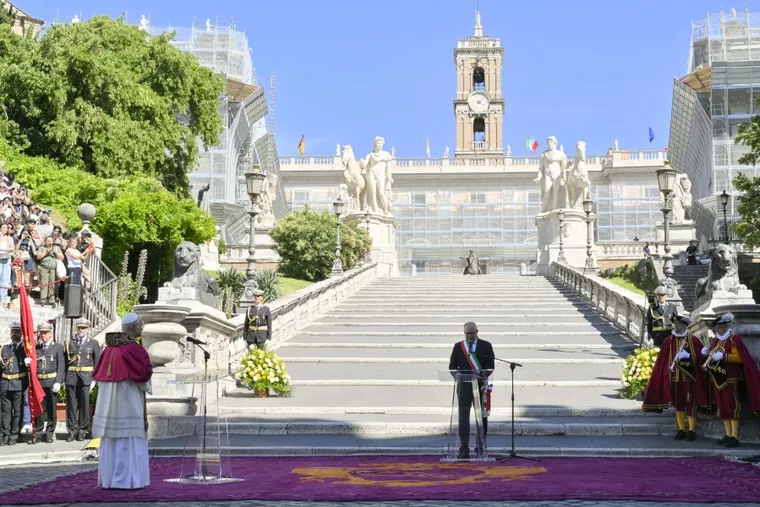
Pope Leo XIV uses a tablet to navigate the website of the new digital version of the Vatican's Pontifical Yearbook, known as the "Annuario Pontificio" in Italian. | Credit: Vatican Media.

The Vatican this week launched the first-ever digital version of its annual directory, creating an easier way to find reliable and up-to-date information about the Church’s structures and members all around the world.

The red-covered Pontifical Yearbook — known in Italian as the “Annuario Pontificio” — is an important reference updated every year with Church statistics, the names and contacts of bishops, information about the departments of the Holy See, and more.

The Pontifical Yearbook, in its current form, started in the early 20th century, though other versions of a book with information about the Catholic hierarchy and the Roman Curia can be traced to the 18th century or earlier.
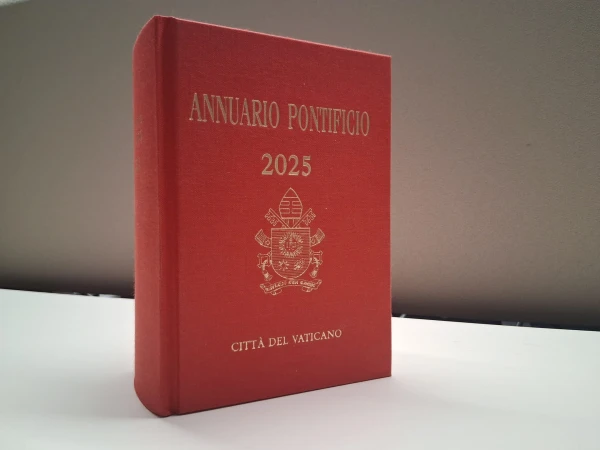
The 2025 edition of the Annuario Pontificio, also called the Pontifical Yearbook. Credit: EWTN News.

The biggest benefits to users are the ability to easily search for information and the possibility for updates to be reflected in real time.

Before now, to keep the directory current, one would have to cut out and glue periodic updates from the Vatican into the hardback book.

The directory includes global data that is frequently changing, including statistics about Catholic dioceses and missions, and information about bishops, the members of the Church, the number of priests and religious, and the Holy See’s diplomatic representation.

It also contains information about the pope and cardinals, and lists the people who lead the many different entities that make up the Roman Curia and the Vatican.
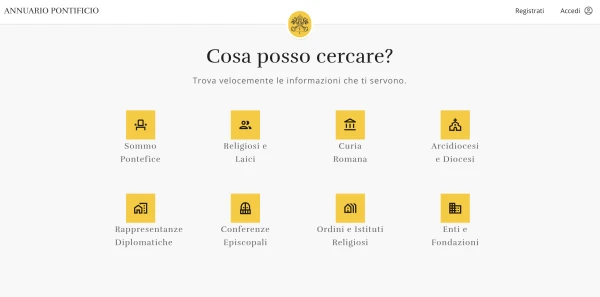
Screenshot of the homepage of the digital version of the Pontifical Yearbook.

On Dec. 8, the Vatican’s Secretariat of State, which is responsible for publishing the Pontifical Yearbook, unveiled the digital version, available in both web and app versions for an annual subscription of 68,10 euros ($79.20), around the same price as a printed version, which is still being published.

The Vatican said in time it intends to offer the directory in languages other than Italian, “making it more accessible to a growing number of users around the world.”

At a presentation of the project, Pope Leo XIV had a chance to receive a first lesson in how the digital yearbook works. He thanked those involved, calling it “a wonderful service which will be of great help.”

This article was originally published by CNA.  

Receive the most important news from EWTN Vatican via WhatsApp. It has become increasingly difficult to see Catholic news on social media. Subscribe to our free channel today

Share

Would you like to receive the latest updates on the Pope and the Vatican

Receive articles and updates from our EWTN Newsletter.

More news related to this article

The Origins of Silent Night

Uncover the origins of "Silent Night," the world's most beloved Christmas carol, first performed in 1818 in Oberndorf, Austria.

Vatican Court president under investigation for alleged complicity with Sicilian Mafia

The president of the Vatican Court, Giuseppe Pignatone, is under investigation by the Italian judiciary for allegedly collaborating with the Mafia in the early 1990s.

Pope urges immediate ceasefire after deadly attack on Catholic parish in Gaza

Following a strike against the Holy Family Church, the only Catholic Church in Gaza, which left at least two dead on Thursday, Pope Leo XIV issued an urgent call for an immediate ceasefire.

Amsterdam Guide Discovering the Clandestine Churches

Looking for a hidden gem in Amsterdam? Look no further than the city’s hidden churches! These beautiful places

Discover the project that encourages spiritual adoption of young people with depression

Krzysztof Gawrysiak with his wife Aneta Gawrysiak and other members of "Palnik".

Pope Leo XIV urges Eastern Catholics not to abandon war-torn lands

Pope Leo XIV urged thousands of Eastern Catholics from around the world, many of whom come from places experiencing violence, not to abandon their ancestral lands and assured them that he will do everything he can to bring peace there.

LIVE
FROM THE VATICAN

Be present live on EWTNVatican.com