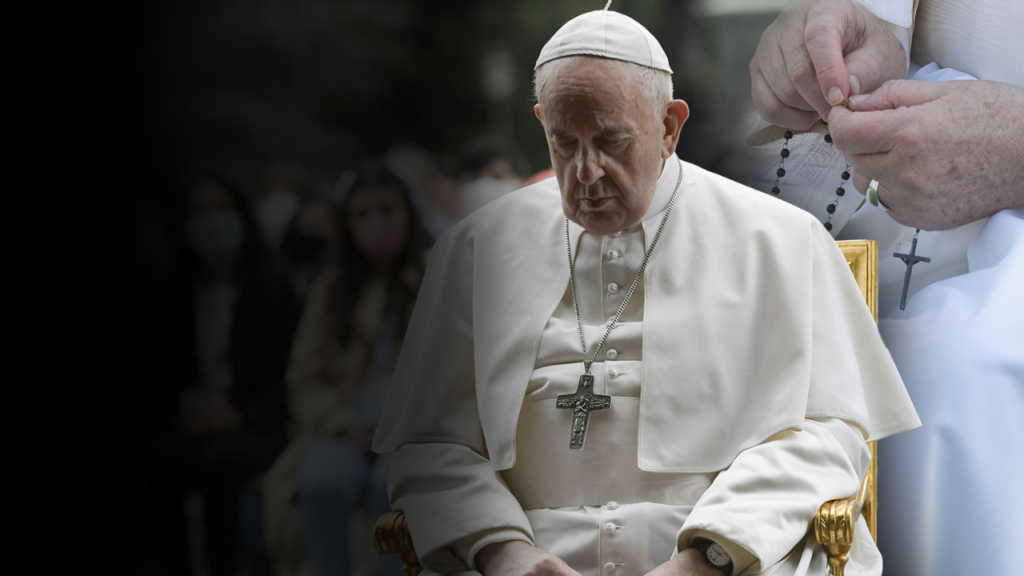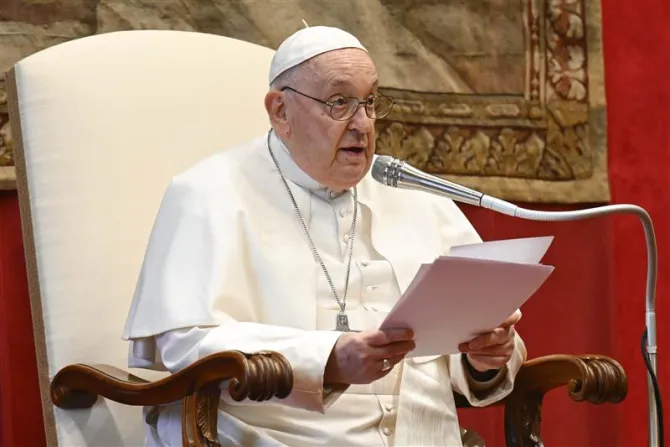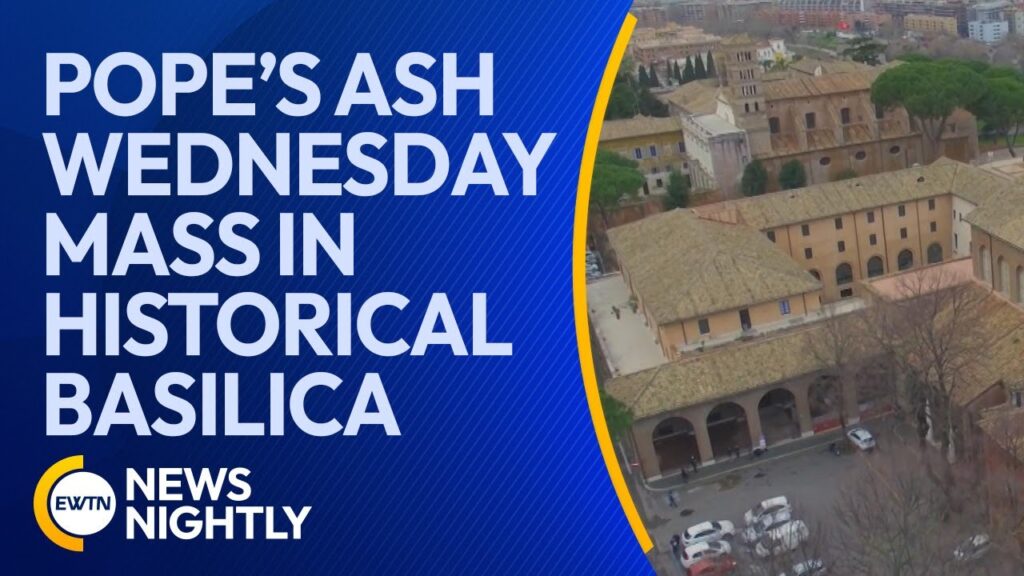
Following a custom of over 60 years, Pope Francis again visited the Church of Saint Anselm on the Aventine Hill for Ash Wednesday. From Saint Anselm, the penitential procession proceeded to the Basilica of Saint Sabina, where Pope Francis celebrated Mass with the blessing and imposition of ashes.
The pope returned to Saint Sabina after three years. His last time was in 2020, just before the COVID-19 pandemic.
In 2021, the Ash Wednesday Mass was celebrated by Pope Francis in St. Peter’s Basilica. Last year, due to the Pope’s knee problem, for which the doctor had prescribed a period of rest, Pope Francis was unable to say the Ash Wednesday Mass.
Mass was instead celebrated in the Basilica of Saint Sabina by the Secretary of State, Cardinal Pietro Parolin, who read the homily prepared by the Holy Father.
The Basilica of Saint Sabina is the oldest existing Basilica in Rome that has preserved its original architectural style.
The site was entrusted to the Dominicans in 1219 by Pope Honorius III.
About thirty Dominican friars now reside at the convent of Santa Sabina. Most of them work for the General Curia of the Order of Preachers and accompany the Master of the Order during his nine-year term, and some of them stay here during their studies in Rome.
Celebrating Ash Wednesday at Saint Sabina is a way to connect with the two-thousand-year-old history of the Catholic Church, physically visible within the basilica’s walls and columns.
Entering the church, there is a great feeling of space. Light floods in through the windows, and reflects on the walls. The simple church is adorned with a starred ceiling, sacred art, and chapels.
The rows of ancient columns point to the Eucharistic altar.
These superb colonnaded arcades create the perspective of the pathway to the Holy of Holies, the Eucharistic altar.
The Corinthian columns, decorated with representations of the Eucharist, were once pillars in a 2nd-century pagan temple… The apse of the Church is crowned by a fresco that depicts the Glorified Christ above the River of Life. He is surrounded by saints, including the apostles Saints Peter and Paul. St. Sabina and St. Seraphia are also represented.
The basilica was built in the 5th century on the site of early Imperial houses, on the property of the Christian martyr Saint Sabina.
The large wooden door is particularly important, as it has what is believed to be the earliest depiction of the crucifixion of Jesus Christ in Western art. The door itself is a reminder that no one can arrive to Easter without entering first through the door of the death of Jesus Christ on the Cross.