In a surprising move at the conclusion of the Synod on Synodality on Saturday evening, Pope Francis ratified the final report, approved its immediate publication, and said he will not publish a separate postsynodal document.
The pope is permitted in canon law to ratify the final document of a Synod of Bishops, giving more power to the assembly’s “guidelines” — something that has never been done before.
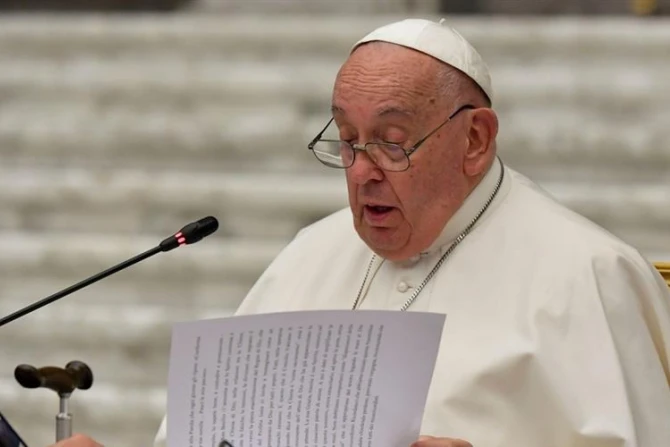
“I want, in this way, to recognize the value of the completed synodal journey, which through this document I hand over to the holy faithful people of God,” the pope said in a livestreamed address to synod participants in the Vatican’s Paul VI Hall on Oct. 26.
“That is why I do not intend to publish an apostolic exhortation; what we have approved is enough,” he said. “There are already very concrete indications in the document that can be a guide for the mission of the Churches, on the different continents, in the different contexts: that is why I am making it immediately available to everyone, that is why I said it should be published.”
In 2018, Pope Francis decreed in the apostolic constitution Episcopalis Communio that reformed the Synod of Bishops that the pope has the authority to approve and promulgate the final document, at which time it participates “in the ordinary magisterium.” The authority is also stipulated in Canon 343 of the Code of Canon Law.
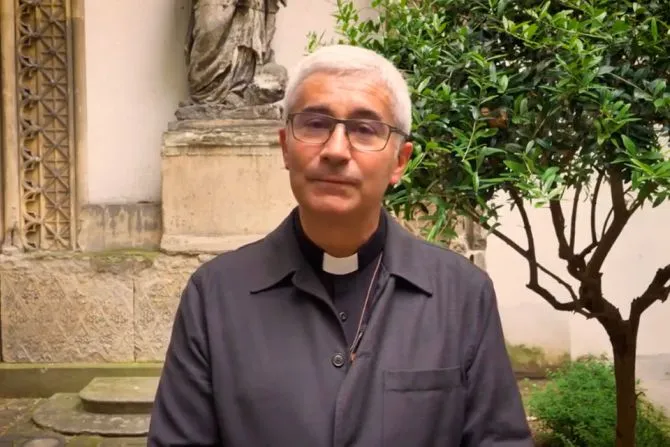
“What Pope Francis said after approving the document is in compliance with what is provided by Episcopalis Communio,” Father Riccardo Battocchio, the synod’s special secretary, affirmed at a press conference presenting the final document Oct. 26.
The Synod of Bishops was founded in 1965 by Pope Paul VI as a way to bring bishops from around the world together to discuss important issues for the Church and to give advice to the pope.
A novelty of the 2023 and 2024 sessions of the Synod on Synodality was the inclusion of laymen and laywomen not only as “auditors,” as formerly done, but also as delegates with full participation alongside bishops, including the right to vote on synod matters and on the assembly’s final document.
The Synod on Synodality is the fifth synod of Pope Francis’ pontificate. It marks the first time he has chosen to forgo writing a postsynodal apostolic exhortation in favor of adopting the text drafted by the synod participants.
“There are and there will be decisions to be made,” Francis said in his final speech on Saturday, shortly before the assembly prayed the Te Deum to mark the end of the Synod on Synodality’s discussions.
The monthlong gathering will formally close with a Mass in St. Peter’s Basilica on Oct. 27.
The pope said for some of the document’s indications — and the topics being examined by the 10 study groups, “which must work with freedom to offer me proposals” — “time is needed to arrive at choices that involve the whole Church.”
“I, then, will continue to listen to the bishops and the Churches entrusted to them,” he continued. “This is not the classic way of postponing decisions indefinitely. It is what corresponds to the synodal style with which even the Petrine ministry is to be exercised: listening, convening, discerning, deciding, and evaluating.”
The pontiff added that the general secretariat of the synod and the Vatican’s dicasteries will assist him in this task.
The synodal Church “now needs shared words to be accompanied by deeds,” he said.
This article was originally published by Catholic News Agency.