Pope Leo XIV addressed some of the most pressing challenges facing the world today, from Europe’s demographic decline and the rise of artificial intelligence to ongoing conflicts in Gaza and Ukraine.
The Holy Father’s remarks underscored a recurring theme of his pontificate: the defense of human dignity amid social, technological, and geopolitical upheaval.
A Warning on Europe’s Demographic Future
Speaking to members of the European Parliament, Pope Leo XIV expressed deep concern over what he described as Europe’s demographic crisis, warning that the continent is living through a period of “drastic sterility.”
The pope argued that declining birth rates are not merely demographic indicators but signs of deeper cultural and social difficulties. According to the Holy Father, Europe’s population decline reflects broader challenges affecting family life, social cohesion, and the ability of communities to sustain themselves across generations.
He pointed to what he described as a weakening of family life and a growing “pandemic of loneliness,” urging political leaders to recognize the essential role played by families founded on marriage.
The pope also called for renewed solidarity between generations, emphasizing that the elderly, parents, and young people must not be viewed as competing interests but as members of a single social fabric.
Support for parents, particularly mothers, remains central to this vision. Pope Leo stressed that respect for human dignity and concrete assistance for families are indispensable if Europe hopes to reverse its demographic decline and secure its future.
Artificial Intelligence and the Defense of Human Dignity
The Holy Father also marked a major milestone in his pontificate with the presentation of his first encyclical, Magnifica Humanitas (“The Dignity of the Human Person”), dedicated to the opportunities and challenges posed by artificial intelligence.
In presenting the document, Pope Leo compared the current AI revolution to the Industrial Revolution, while suggesting that its consequences could prove even more far-reaching.
The encyclical calls for cooperation among governments, technology leaders, civil society, and religious institutions to ensure that technological innovation remains at the service of humanity.
During the Vatican presentation, the pope emphasized that artificial intelligence must be guided by ethical principles and a clear commitment to human dignity.
Technology leaders were among those participating in the event, reflecting the Vatican’s effort to engage directly with those shaping the future of AI. The central message was clear: technological progress must always be accompanied by responsibility, transparency, and concern for the common good.
Renewed Appeals for Peace in Gaza and Ukraine
In an impromptu conversation with journalists in Castel Gandolfo, Pope Leo renewed his appeal for humanitarian assistance to reach the people of Gaza.
The Holy Father noted the continuing suffering of civilians and insisted that fundamental human rights must be respected for all people affected by the conflict.
He urged authorities to allow humanitarian aid to enter the region, support reconstruction efforts, and return to meaningful dialogue. The pope warned that continued violence risks deepening divisions and perpetuating cycles of hatred.
The Holy Father also addressed the ongoing war in Ukraine, where violence has intensified in recent months.
Speaking during his weekly Wednesday audience, Pope Leo reiterated his conviction that war cannot resolve conflicts but instead worsens them.
Reflecting on the human cost of armed conflict, he reminded the faithful that “Wherever missiles and drones fall, hopes also collapse.”
Entrusting all those suffering because of war to the protection of the Blessed Virgin Mary, Queen of Peace, the pope once again called for prayer and renewed efforts toward reconciliation.
Bringing the Sistine Chapel to Australia
Beyond global politics and technological concerns, the Vatican also highlighted a new cultural initiative aimed at evangelization through art.
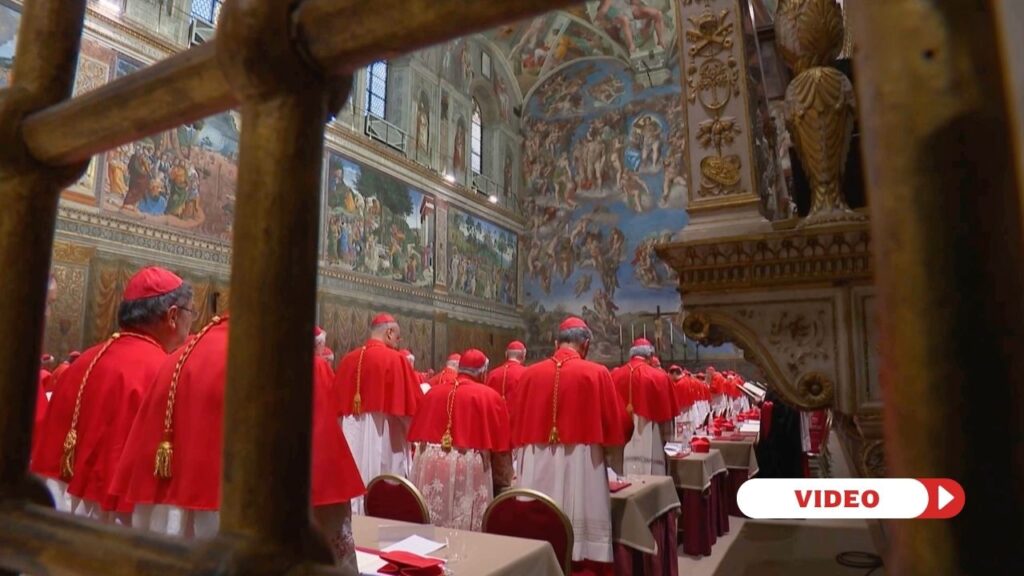
A major immersive exhibition dedicated to the Sistine Chapel has opened in Sydney, Australia, allowing visitors to experience Michelangelo’s masterpieces in a new and accessible way.
The exhibition comes ahead of the 2028 International Eucharistic Congress and seeks to make one of the world’s most celebrated artistic treasures available to audiences who may never have the opportunity to travel to Rome.
Church leaders involved in the project view the initiative not only as a cultural event but also as an opportunity for evangelization. By bringing the beauty of the Sistine Chapel to a wider audience, they hope to inspire deeper engagement with the Christian faith and the artistic heritage of the Church.