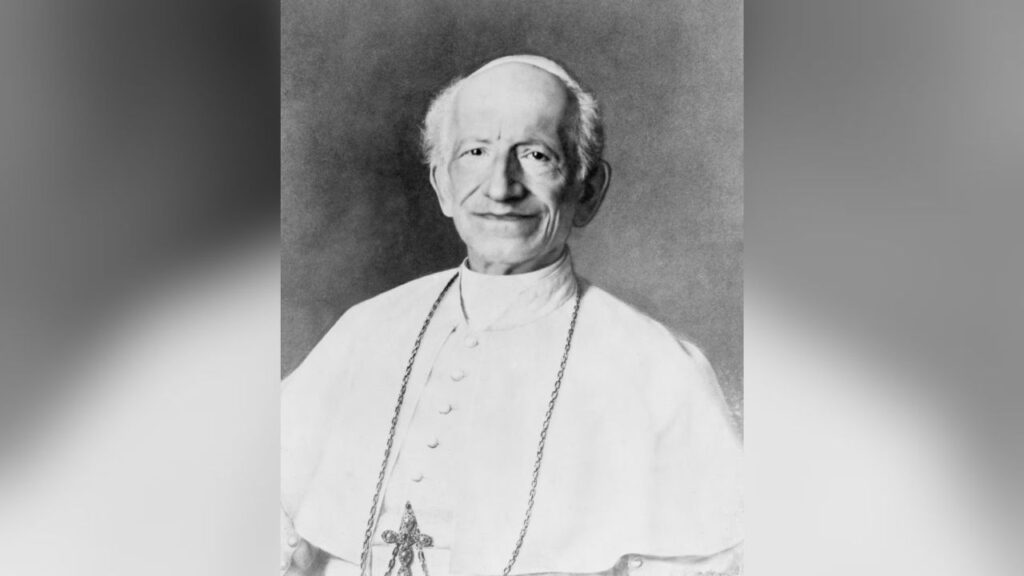
The Vatican Observatory has named four asteroids after key figures in its history, including the pope who refounded the observatory in 1891.
The Vatican Observatory has named four asteroids after key figures in its history. Among them is Pope Leo XIII, who refounded the institution in 1891.
The newly named asteroids were discovered by the telescope the Vatican operates in Arizona.
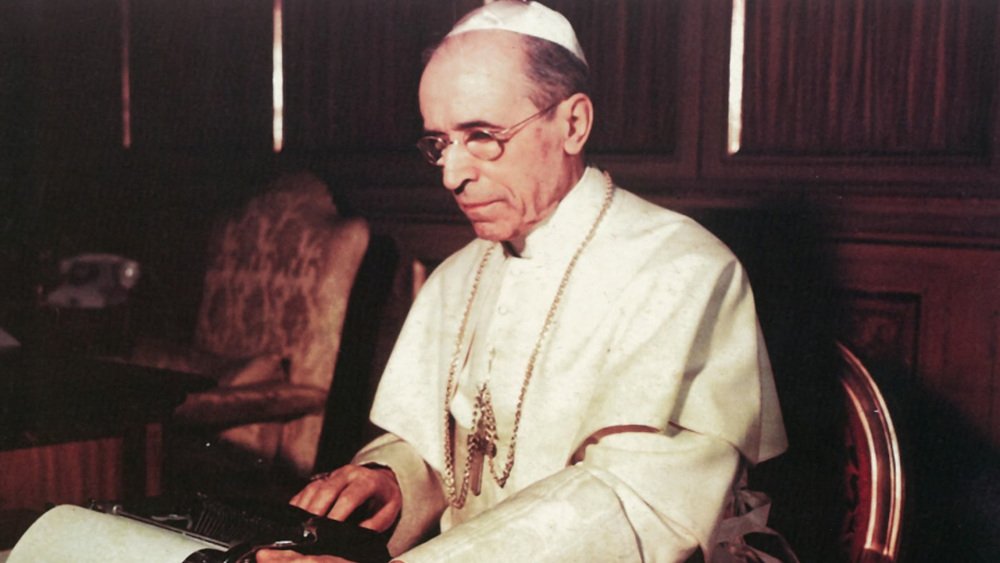
The asteroid “Gioacchinopecci” honors Pope Leo XIII, born Gioacchino Vincenzo Raffaele Luigi Pecci, whose legacy is closely tied to the pontificate of Pope Leo XIV.
According to the observatory, Leo XIII reestablished the Vatican Observatory after the loss of the Papal States and of important astronomical facilities, particularly the observatory of Father Angelo Secchi located above the Church of St. Ignatius in Rome.
Photographs of the Vatican from the early 20th century show the domes of the observatory’s telescopes above the Vatican walls and the Tower of the Winds.
In the 1930s, because electric lighting made Rome’s night sky brighter, the telescopes were moved to the Apostolic Palace of Castel Gandolfo, south of Rome, whose domes can still be seen today from miles away.
The later increase in light pollution from Rome led to the construction of the Vatican Advanced Technology Telescope, or VATT, on Mount Graham in Arizona in the 1990s.
Through the 1891 motu proprio Ut Mysticam, Leo XIII established the Vatican Observatory, stating that it would help show the world that the Church’s present and historic attitude toward “true and solid science” was to “embrace it, encourage it, and promote it with the greatest possible dedication,” contrary to what its critics claimed.
In particular, he emphasized that the observatory would help promote “a most noble science that, more than any other human discipline, raises the spirit of mortals to the contemplation of heavenly events.”
Leo XIII is the third pope to have an asteroid named after him. Gregory XIII has one in recognition of his role in the reform of the calendar, as does Benedict XVI, to whom “(8661) Ratzinger” is dedicated.
In addition to Pope Leo XIII, another asteroid has been named “Lais” in honor of Giuseppe Lais, an Italian priest and astronomer who served as deputy director of the Vatican Observatory for 30 years. Asteroids were also named for Pietro Maffi, an Italian cardinal, archbishop of Pisa, and astronomer, and André Bertiau, a Belgian Jesuit priest, astronomer, and former director of the Vatican Observatory.
Asteroids receive a provisional designation at the time of discovery based on the date of observation and managed by the Working Group for Small Body Nomenclature of the International Astronomical Union.
When an asteroid’s orbit is determined with sufficient precision and its future path can be reliably predicted, it is assigned a permanent number. Currently, about 850,000 of the roughly 1.3 million known asteroids have received a permanent number.
Only after receiving this number, the observatory noted, can discoverers propose a definitive name to replace the provisional designation.
The proposed name is then examined by the working group and must comply with specific guidelines. Once approved, the asteroid is known by its official name, written as “(number) Name.”
This story was first published by ACI Prensa, the Spanish-language sister service of EWTN News. It has been translated and adapted by EWTN News English.