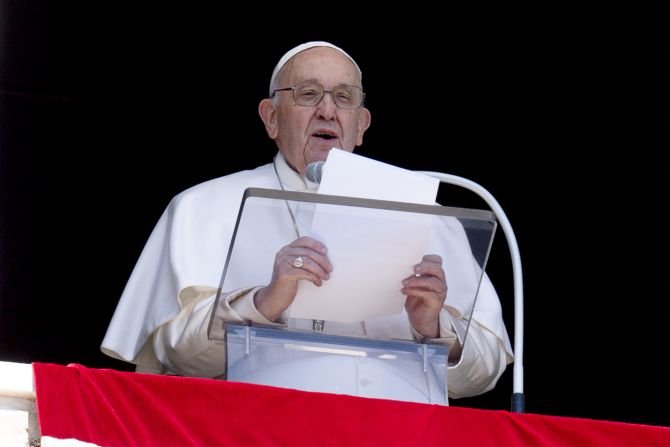
Pope Leo XIV urges Catholics to listen more closely to God and others — and to “disarm” their language by fasting from words that wound — in his message for Lent 2026.
In his message for Lent 2026, Pope Leo XIV urges Catholics to listen more closely to God and others — and to “disarm” their language by fasting from words that wound.
The Lenten season begins Feb. 18 with Ash Wednesday.
In the message, released Feb. 13, the pope offers a simple definition of Lent as a time when the Church “invites us to place the mystery of God back in the center of our lives, in order to find renewal in our faith and keep our hearts from being consumed by the anxieties and distractions of daily life.”
He encourages Catholics to allow the word of God to touch their hearts with docility so that Lent may become “a welcome opportunity to heed the voice of the Lord and renew our commitment to following Christ.”
Listening to God and the cry of the poor
The Holy Father first highlights the importance of listening.
“The willingness to listen is the first way we demonstrate our desire to enter into relationship with someone,” he writes.
Listening to sacred Scripture, he says, teaches believers to recognize and respond to suffering in the world.
Quoting his own apostolic exhortation Dilexi Te, he adds that Catholics must recognize that “the condition of the poor is a cry that, throughout human history, constantly challenges our lives, societies, political and economic systems, and, not least, the Church.”
Entering into this interior openness means allowing God to teach us to listen as he does, he writes, so that faith shapes both personal conversion and social responsibility.
Fasting, including from harmful speech
Turning to the traditional Lenten practice of fasting, the pope describes abstaining from food as “an ancient ascetic practice that is essential on the path of conversion.”
“Precisely because it involves the body, fasting makes it easier to recognize what we ‘hunger’ for and what we deem necessary for our sustenance,” he writes. It helps believers to “identify and order our ‘appetites,’ keeping our hunger and thirst for justice alive and freeing us from complacency.”
Quoting St. Augustine, he notes that the human heart expands through desire for God. “Understood in this way, fasting not only permits us to govern our desire, purifying it and making it freer, but also to expand it, so that it is directed towards God and doing good.”
However, he stresses that fasting must be lived “in faith and humility” and grounded in communion with the Lord.
In this context, the pope proposes a specific Lenten resolution: “a very practical and frequently unappreciated form of abstinence: that of refraining from words that offend and hurt our neighbor.”
“Let us begin by disarming our language, avoiding harsh words and rash judgment, refraining from slander and speaking ill of those who are not present and cannot defend themselves,” he writes. “Instead, let us strive to measure our words and cultivate kindness and respect in our families, among our friends, at work, on social media, in political debates, in the media and in Christian communities.”
“In this way, words of hatred will give way to words of hope and peace,” he adds.
A shared journey toward conversion
Finally, Pope Leo XIV emphasizes the communal dimension of Lent, recalling that Scripture frequently presents fasting and listening to the word of God as shared acts of repentance and renewal.
“Our parishes, families, ecclesial groups, and religious communities are called to undertake a shared journey during Lent,” he writes, where listening to the word of God and to “the cry of the poor and of the earth” becomes part of community life.
He underscores that conversion concerns not only individual conscience but also relationships and dialogue. It means “allowing ourselves to be challenged by reality and recognizing what truly guides our desires — both within our ecclesial communities and as regards humanity’s thirst for justice and reconciliation.”
Concluding, the pope invites the faithful to ask for grace and strength during the penitential season.
“Let us ask for the grace of a Lent that leads us to greater attentiveness to God and to the least among us,” he writes. “Let us ask for the strength that comes from the type of fasting that also extends to our use of language, so that hurtful words may diminish and give way to a greater space for the voice of others.”
“Let us strive to make our communities places where the cry of those who suffer finds welcome, and listening opens paths towards liberation, making us ready and eager to contribute to building a civilization of love.”
This story was first published by ACI Prensa, the Spanish-language sister service of EWTN News. It has been translated and adapted by EWTN News English.