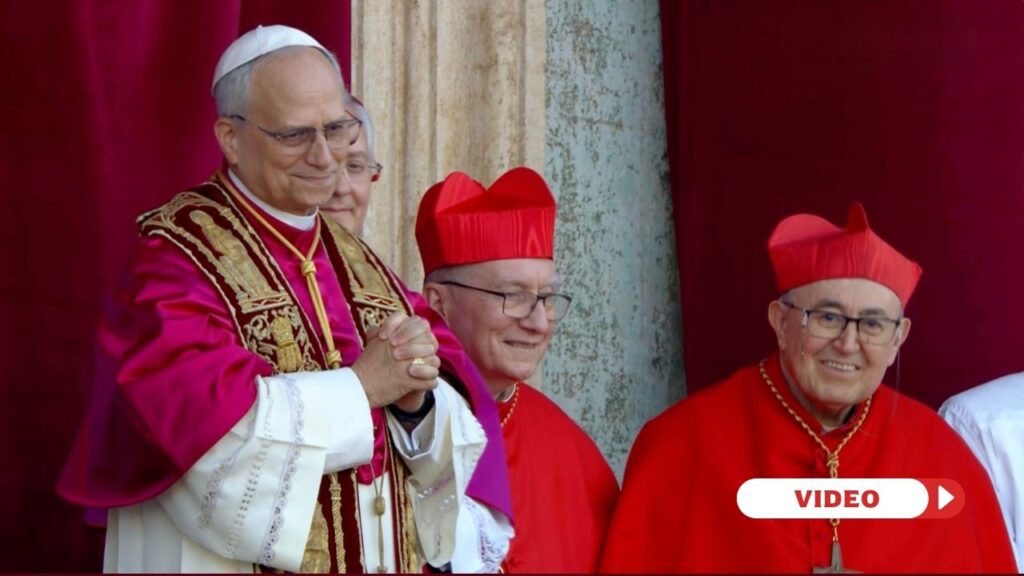
From the very first moments of his pontificate, Pope Leo XIV made clear that peace would stand at the heart of his mission as Successor of Peter. Speaking to the world from the balcony of Saint Peter’s Basilica following his election, the Holy Father immediately placed the theme of peace before the faithful and the nations of the world.
“To all people wherever they may be, to all nations, to the whole earth: peace be with you.”
For many Catholics listening across the globe, those first words resonated deeply at a moment marked by war, instability, and growing international tensions. Throughout the first year of his pontificate, Pope Leo has consistently returned to the theme of peace, making it one of the defining characteristics of his papacy.
Peace as the Leitmotif of Pope Leo’s Pontificate
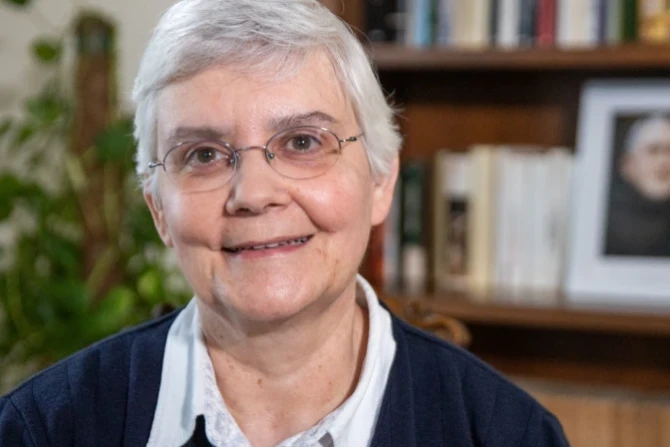
According to Prof. Giulio Alfano, deputy director of the Peace Sciences program at the Pontifical Lateran University, the pope’s message has become a guiding thread throughout his pastoral ministry and international outreach.
“That phrase, ‘peace be with you,’ has become something of the leitmotif of this journey, of these visits. He is a Pope who wants to bring not only the message of peace, but also the path that the Church offers for making peace a reality, at an extraordinarily difficult moment, because we are living through a time of profound crisis. Peace seems almost impossible to recover.”
The Pontifical Lateran University, the only pontifical university offering a specialized degree in Peace Sciences, has become one of the intellectual centers reflecting the Church’s commitment to promoting peace in the modern world. Established by Pope Francis in 2018 through the letter The Desire for Peace, the program reflects the Holy See’s longstanding diplomatic and pastoral mission to encourage justice, reconciliation, and dialogue among nations.
Prof. Alfano explained that the Church occupies a unique place on the global stage because the Holy Father not only proclaims peace spiritually, but also advances it through the social doctrine of the Catholic Church and the Holy See’s diplomatic engagement.
“The Church has a great mission and at the same time a great challenge, because in today’s world the Holy Father is the only one who not only carries the message of peace, but does so on the basis of a social doctrine, the social doctrine of the Catholic Church, rooted in the principle of subsidiarity, and through the relationships the Holy See maintains with all different nations, even in the most delicate, fragile, and difficult contexts.”
The Holy See’s Mission of Dialogue and Reconciliation
Pope Leo XIV emphasized from the beginning of his pontificate that the Holy See remains committed to serving as a bridge between peoples and nations in conflict. During his earliest audiences and diplomatic meetings, the pope repeatedly stressed the Vatican’s willingness to facilitate dialogue and reconciliation.
“I will make every effort so that this peace may prevail. The Holy See is always ready to help bring enemies together, face to face, to talk to one another, so that peoples everywhere may once more find hope and recover the dignity they deserve, the dignity of peace.”
The word “peace” has appeared more than 400 times in the Holy Father’s addresses during the first year of his pontificate, underscoring how central the theme has become to his ministry.
That message has also shaped Pope Leo’s apostolic journeys abroad, including visits to Turkey, Lebanon, and Africa, where appeals for reconciliation, justice, and fraternity consistently emerged as the defining focus of his speeches and encounters with the faithful.
“I am here to proclaim peace!”
Pope Leo’s Easter Appeal to the World
The pope also made peace the centerpiece of his first Easter message, issuing a powerful appeal to world leaders and nations engaged in war and violence.
“Let those who have weapons lay them down! Let those who have the power to unleash wars choose peace!”
Throughout the past year, Pope Leo has met with numerous international leaders, including U.S. Vice President JD Vance, Israeli President Isaac Herzog, and Ukrainian President Volodymyr Zelensky, using these encounters to encourage ceasefires, dialogue, and humanitarian solutions to ongoing conflicts.
At the same time, the pope has repeatedly emphasized that peace is not simply the absence of war, but rather something that must be intentionally built through solidarity, cooperation, and mutual understanding.
An “Unarmed and Disarming” Peace
In his message for the 59th World Day of Peace, Pope Leo XIV presented his vision for what he described as an “unarmed and disarming” peace — an approach rooted not in political ideology, but in the Gospel itself.
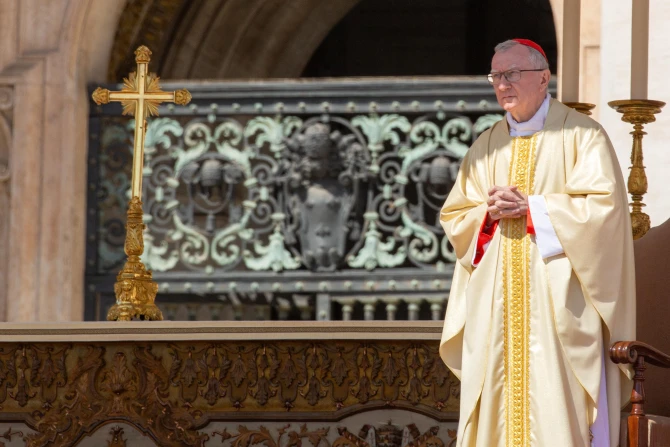
Prof. Vincenzo Buonomo, scientific director of the Pontifical Ecclesiastical Academy, said the pope has already articulated a distinct “method for peace” during the early months of his pontificate.
“From Pope Leo, we have, so to speak, identified a method for peace: on the one hand, the humanization of politics – an expression he himself uses – and on the other, what he calls a ‘diplomacy of fraternity.’ When he said, from the very beginning of his pontificate, the famous phrase ‘a disarmed and disarming peace,’ he made us understand that there are two poles that must be placed around the theme of peace: cooperation on the one hand, and openness or availability on the other.”
As rector of the Pontifical Urban University and head of the institution responsible for training Vatican diplomats, Buonomo emphasized that the Church’s pursuit of peace is fundamentally evangelical rather than political.
“The Church is the bearer of a message that is foundational: on the one hand, through grace and the sacraments, it is directed toward the salvation of souls; on the other, it is rooted in a particular commandment – one not found in the Decalogue – when Christ says: ‘Go into all the world and proclaim the Good News to all peoples,’ I believe this is precisely the idea of peace: the Good News itself as peace.”
A Call for Every Christian to Build Peace
Beyond diplomatic initiatives and appeals to world leaders, Pope Leo XIV has consistently reminded Catholics that the responsibility for peace belongs to every person.
“We wish to tell the whole world that it is possible to build peace, a new peace; that it is possible to live together with all peoples of every religion and every race; that we wish to be disciples of Jesus Christ, united as brothers and sisters, all united in a world of peace.”
As Pope Leo XIV continues the first year of his pontificate, his repeated appeals for reconciliation, fraternity, and dialogue are increasingly shaping the identity of his papacy — a pontificate rooted in the conviction that the Gospel of Jesus Christ remains the world’s truest path to peace.
Adapted by Jacob Stein