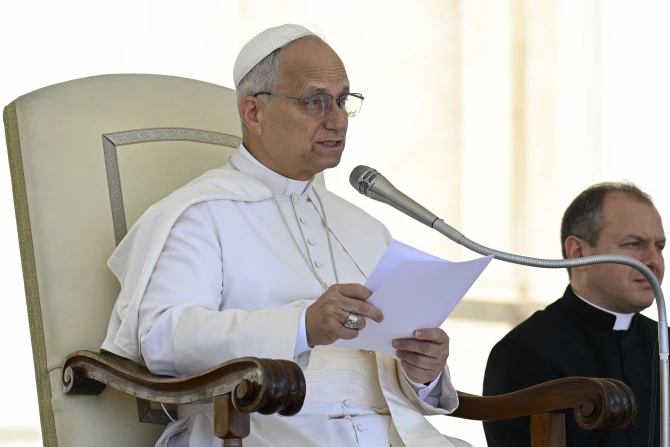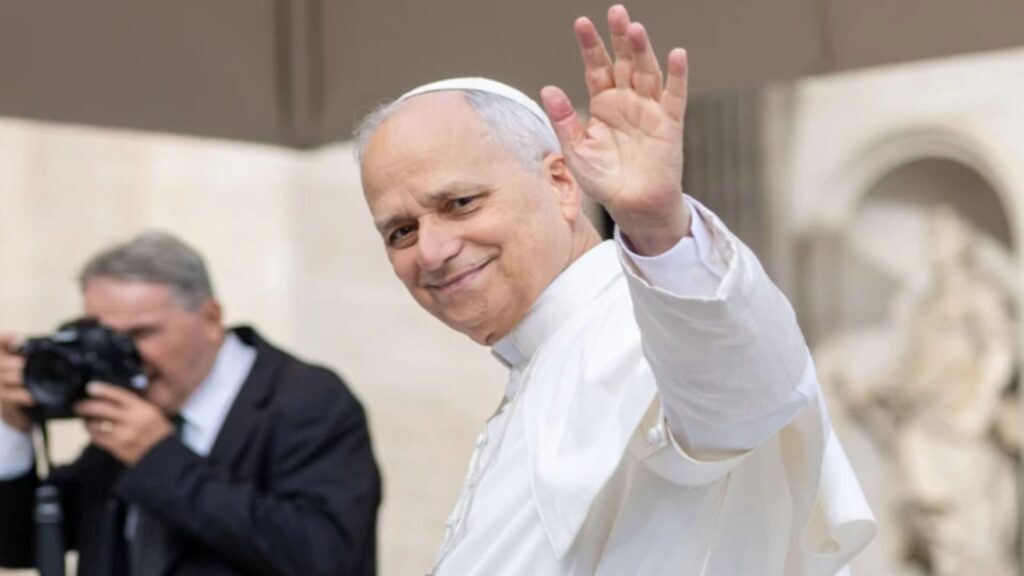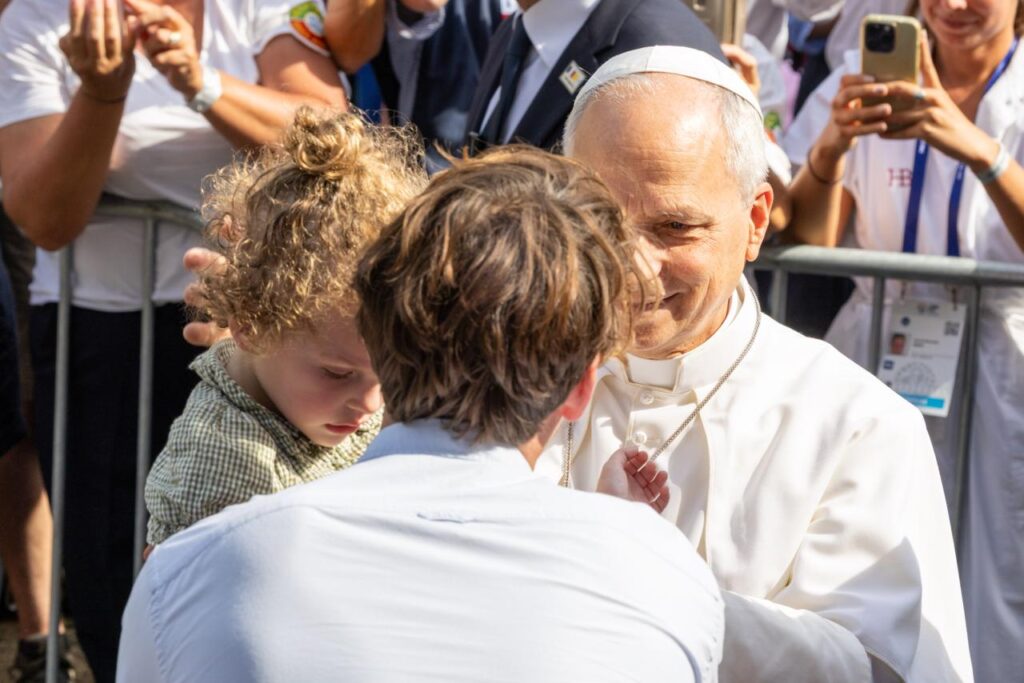
Pope Leo XIV blessed Olivia Hamelin, a 3-year-old with a rare genetic condition, during his visit to Lourdes, France.
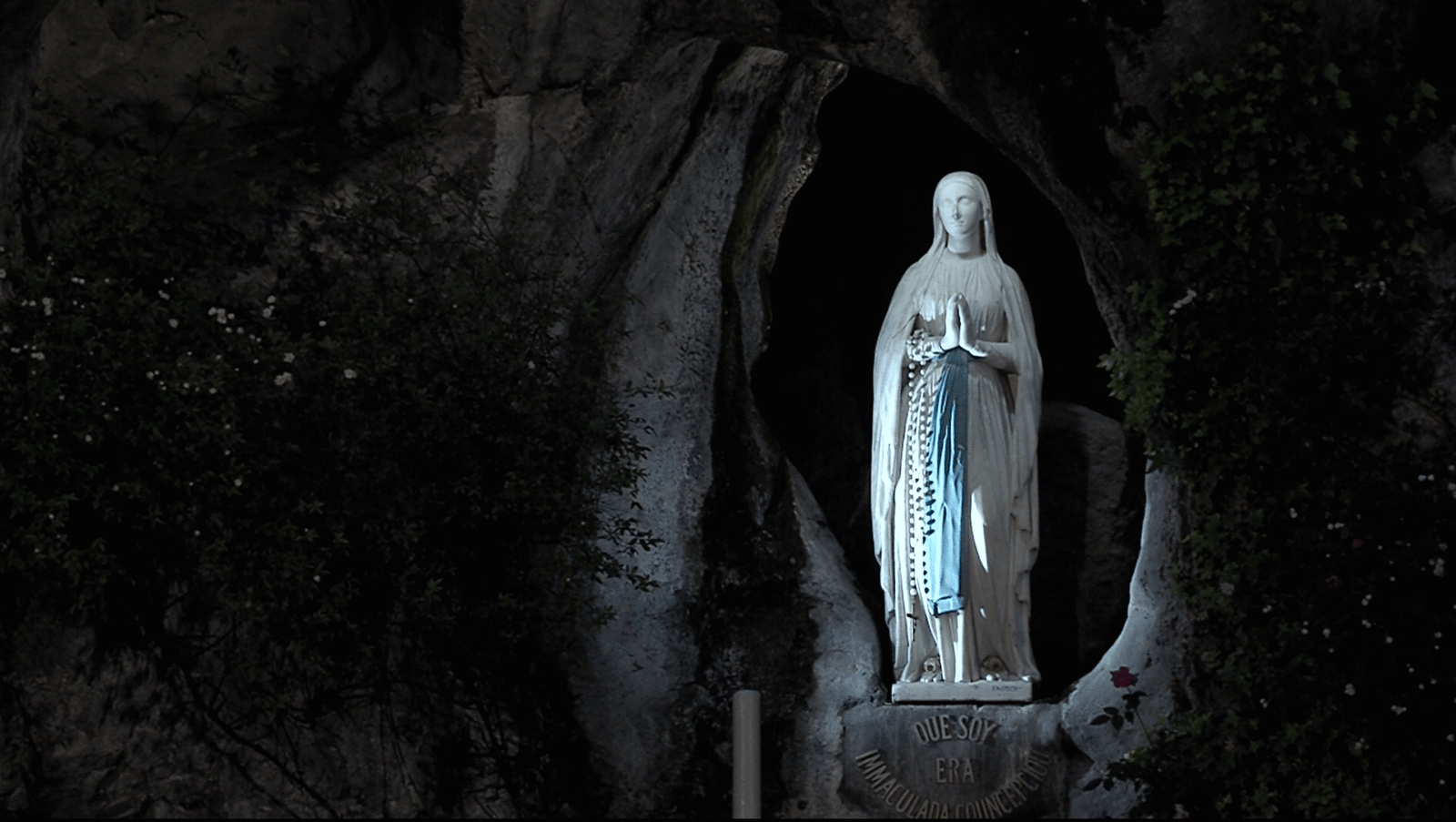
LOURDES, France — One of the most moving moments of Pope Leo XIV’s visit to France was his meeting Sept. 27 with 5,000 sick people and their caregivers at the Sanctuary of Our Lady of Lourdes.
There, after defending the inalienable dignity of those who are suffering from illness or infirmity, he strongly criticized a trend toward the legalization of euthanasia and assisted suicide under the guise of “false compassion.”
“It is impossible to regard causing death as something normal. What is legal is not necessarily moral,” he said to loud applause from those listening.
Immediately following his speech, Leo broke from his schedule to go into the crowd and greet the sick and disabled, many of whom had waited hours in the hot sun to take part in the meeting.
He also took time to bless a few people as he approached the Accueil Notre-Dame (Notre-Dame Home), a residential accommodation classified as a healthcare facility that hosts sick, disabled, and frail pilgrims to Lourdes.
Olivia Hamelin, a girl with the rare genetic neurological condition CDKL5 deficiency disorder, was among those Leo blessed.
“Seeing the pope bless Olivia was truly a moment of grace,” Olivia’s father, Alexandre Hamelin, told EWTN News afterward.
After Leo blessed Olivia, her father embraced her with a look of pure joy and happiness.
“The fact that he blessed Olivia, in a special way gives us so much strength and hope for her future. This pope radiates kindness and grace. I am certain he will leave a lasting mark on the history of the Church,” Hamelin said.
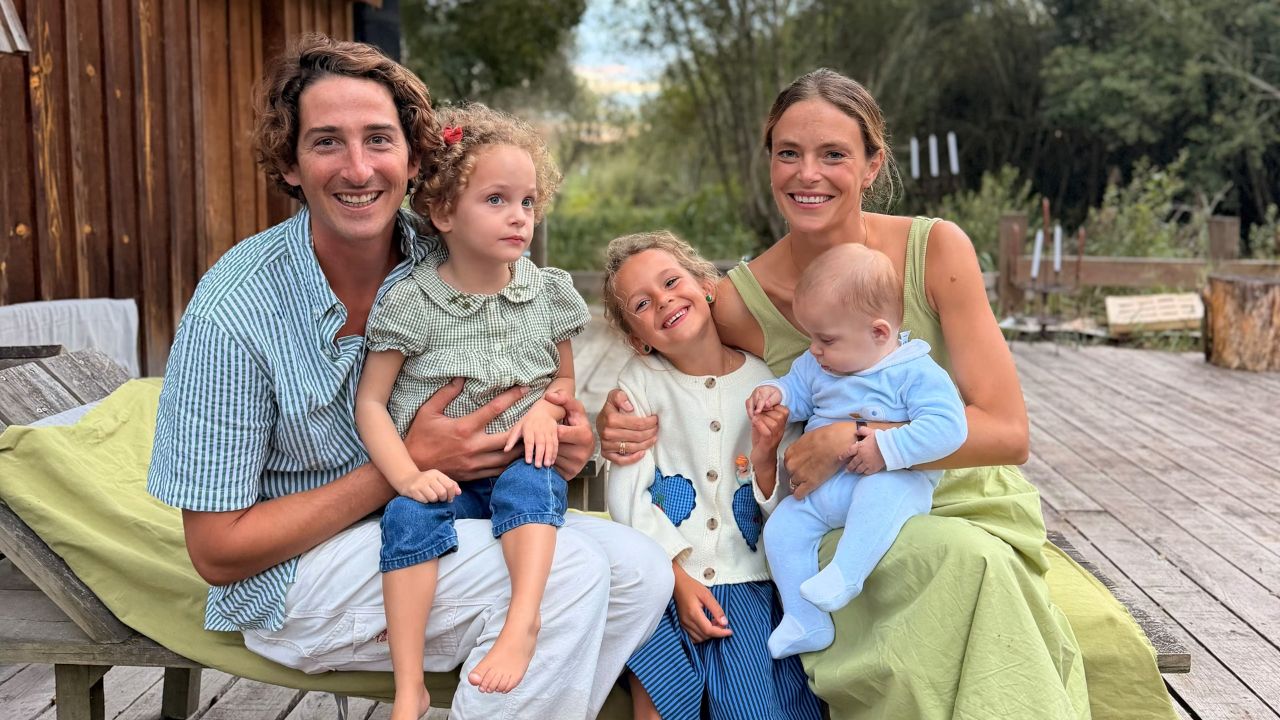
It was 3-year-old Olivia’s first time in Lourdes, alongside her parents, Alexandre and Bérénice, and her siblings, 5-year-old Alba and 6-month-old Raphaël.
Raphaël was also blessed by Pope Leo in Lourdes.
The family traveled almost four hours by car from their home in Périgueux, a town in southwestern France, to Lourdes for Leo’s visit.
“For us, it was important to come to Lourdes to see the pope and hear his message of peace. It is a true sign of hope for our children,” Hamelin said.
CDKL5 deficiency disorder affects brain development and causes severe epilepsy. Those with this condition can have difficulty with movement and speech, alongside other challenges.
Hamelin said when they learned Olivia’s condition is not degenerative, it brought him and his family “enormous relief.”
“Since then, our sole goal has been for Olivia to have the most beautiful and happiest life possible. Of course, we live with her disability, but we try not to let it limit us, especially in everything we do as a family,” he said.
While his family had faith before the trial of Olivia’s illness, now, he said, it has “an even more important place in our lives.”
“It helps us keep moving forward, maintain trust, and not lose hope, even in the more difficult moments,” he said. “Above all, we are convinced that Olivia is a blessing in our lives. We believe that the Lord entrusted her to us and that, through her, he also brings us an abundance of beautiful gifts.”
The father noted how Olivia is teaching many people around her, even beyond their family.
For their oldest daughter, Alba, growing up with Olivia teaches her consideration for others, patience, kindness, and acceptance of differences, he said.
“These are beautiful values that Olivia passes on to her simply through her presence,” Hamelin noted.
“Olivia profoundly touches the people around her. She creates deep connections and brings a very special joy wherever she goes,” he said. “In the end, where some might see only the difficulties associated with her disability, we also see all the beauty she brings into our lives and into the lives of others. That, too, is what nourishes our hope and our faith.”
This article was originally published by EWTN News English.