Age-old questions about life, death and the mystery that unites both are considered.
Can the boundary between this life and the afterlife ever blur in ways the Church has not fully defined? Each year, All Souls’ Day and the Month of All Souls renew age-old questions about life, death and the mystery that unites both.
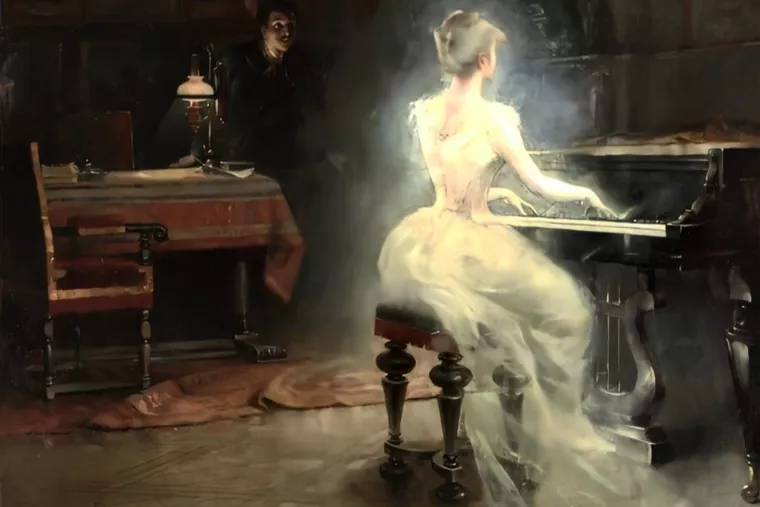
In popular culture, ghosts are often imagined as spirits trapped between two worlds, wandering among the living. This image differs significantly from the concept of “wandering souls,” who — according to theologians and exorcists — are not condemned to roam indefinitely, but may instead be souls in purgatory temporarily permitted by God to seek prayers or express repentance.
The topic of wandering souls, which fascinates many online, has become a source of discomfort within the Church, revealing divergent perspectives among exorcists, theologians and bishops. In the field, several exorcists report encountering what they interpret as wandering souls — entities that appear humble, penitent and pleading for prayer, rather than demonic.
Could departed souls, by divine permission, linger for a time on earth during their purification in purgatory? Or does such a claim challenge the immediacy of particular judgment after death?
The discussion was reignited in recent months when the International Association of Exorcists (AIE) issued an internal note condemning the theory of “wandering souls,” citing in particular the Spanish exorcist Father Javier Luzón Peña and his work Las seis puertas del Enemigo: Experiencias de un exorcista (2017). Leaked to the press in April 2025, the document warned against views deemed incompatible with Catholic doctrine.
The Spanish Flashpoint
The debate intensified in Spain with the addition of Father José Antonio Fortea’s Tratado sobre las almas errantes (2021). Both authors — experienced exorcists — suggested that some souls, saved but not fully purified, might temporarily remain near earthly reality to request prayers. Initially welcomed in some Catholic circles, their works later raised serious concern among bishops and theologians, who feared confusion between legitimate intercession prayer for the dead and forbidden forms of spiritism.
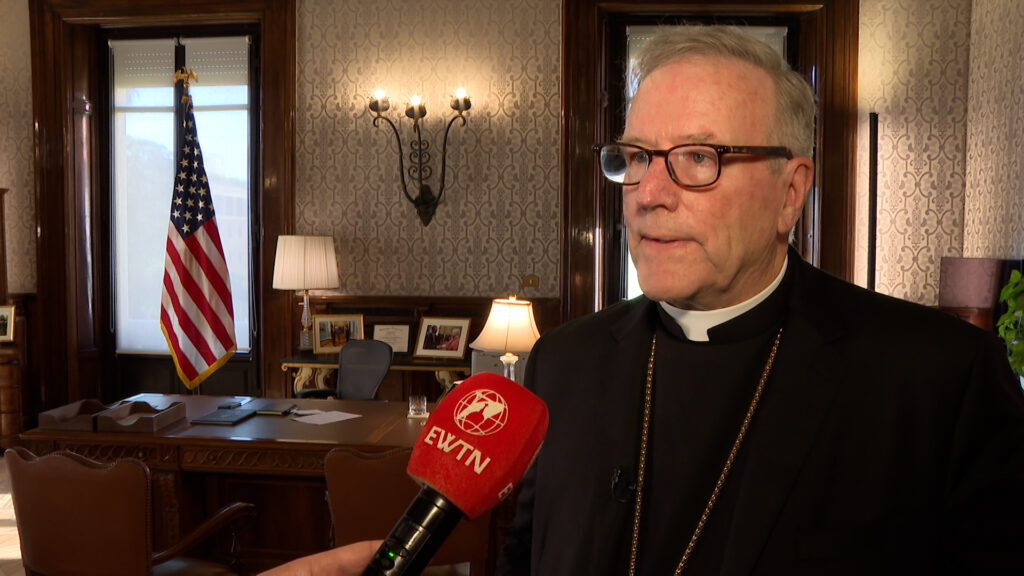
This so-called wandering-souls theory has been denounced by leading theologians and exorcists — including Msgr. Rubens Miraglia Zani, a member of the AIE, in Rome — as theologically untenable. In an interview with the Register, Msgr. Zani recalled that the 1979 “Letter on Some Questions of Eschatology” from the Congregation for the Doctrine of the Faith explicitly rejected the idea of an intermediate condition in which the soul’s destiny remains undecided. He also cited the Praenotanda of the Rite of Exorcism, which instructs exorcists not to believe any possessing spirit claiming to be a deceased person. Echoing St. Thomas Aquinas, he emphasized that demons can imitate the souls of the dead to sow confusion and error and that the Church’s position on this matter rests on Scripture, Tradition and magisterial teaching. “Whoever disagrees on this point,” he insisted, “stands outside the Catholic faith.” Drawing on his experience, Msgr. Zani affirmed that genuine liberation always occurs through Christ’s authority in the sacraments and prayer, never through supposed communication with the dead.
In a public response to the AIE, Father Luzón Peña firmly rejected these claims, insisting that they overlooked the Church’s broader Tradition, ignored the diocesan imprimatur his book had originally received — later withdrawn by the Spanish bishops in April 2025 in the wake of the AIE note — and confused theological hypothesis with heresy. Citing the late Father Gabriele Amorth, co-founder of the AIE, and his book Memoirs of an Exorcist: My Life Fighting Satan, he noted that many veteran exorcists reported encounters with deceased souls whose humility and repentance clearly differed from demonic deception. Father Luzón Peña called for the now-Dicastery for the Doctrine of the Faith to issue an official clarification on this specific matter to prevent confusion within the Church.
Two Understandings of Death
On the theological side, this thesis of wandering souls is also supported by the Belgian Arnaud Dumouch, founder of the online portal Docteur Angélique, whose YouTube channel gathers more than 100,000 subscribers. In his book Les âmes du Shéol, he argues that the notion of wandering souls can harmonize with classical theology when properly understood.
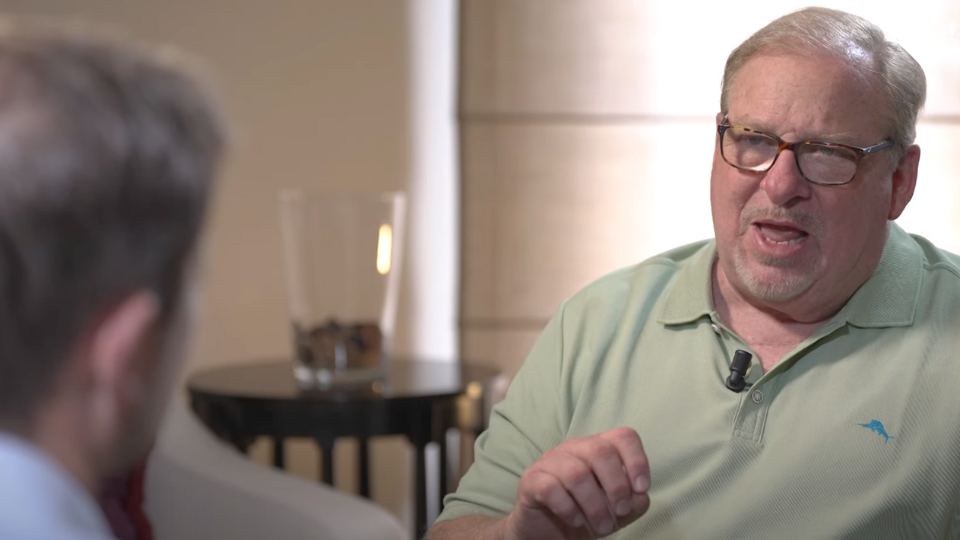
“These souls are not ghosts in the pagan sense,” he told the Register, “but souls who, because not yet ready for individual judgment, remain between this world and the next in the passage that is death. They may manifest themselves to ask for prayers to help them rise.” He added that the Church has never given a definitive teaching on this matter, adding that while scholastic theology (with St. Augustine and St. Thomas Aquinas) generally excludes such a possibility, “it remains only a school of thought in eschatology, not a dogma.”
Quoting Benedict XVI’s Spe Salvi (44-45), Dumouch pointed to the late Pope’s reference to an “intermediate state between death and resurrection,” in which the final sentence is not yet pronounced. In those paragraphs, the Pontiff explains that some souls “are already being punished or are experiencing a provisional form of bliss” and that this condition “can involve purification and healing which mature the soul for communion with God.” Dumouch interprets these lines as leaving legitimate theological room for transitional dimension of purification close to earthly reality, consistent with purgatory understood as a passage rather than a place.
Contrary to scholasticism, Dumouch distinguishes between medical and theological death, seeing death as a process rather than an instantaneous event. Judgment follows — immediately and definitively, in accordance with Catholic dogma — but the passage leading to it may take different experiential forms. He invokes the analogy of the Exodus to illustrate this passage: What was supposed to be a short journey through the desert became a long, purifying journey of 40 years for the Hebrew people before they reached the Promised Land.
A Pastoral Risk
From France, Father Guy-Emmanuel Cariot, exorcist and rector of the Basilica of Argenteuil (which houses the Holy Tunic), adopts a more cautious stance.
Drawing on his own field experience, he told the Register that many people who believe to have received manifestations of deceased relatives are in fact victims of demonic deception. While open to theological debates, he warned that such theories can also be pastorally dangerous. For him, the risk lies in the ambiguity this idea can convey — implicitly suggesting that one might live far from God throughout life yet still have a chance afterward. “It is important to recall that it is in this life that we choose God,” he said. “Building one’s life on the idea that some kind of postmortem conversion might be possible can be spiritually very risky. If it’s not true — and Tradition gives no sign that it is — then it’s lost forever.” The Christian path of communion with the dead, he concluded, lies not in dialogue but through prayer and the Eucharist.
This ongoing debate reflects the tension between human longing to better understand the invisible world and the Church’s legitimate prudence in guarding the truth about salvation. After decades of de-Christianization and the resulting loss in catechetical formation, however, many seek meaning in uncertain places, which makes it appropriate for the Church to speak clearly on these mysteries and to provide keys for discernment between genuine mystical experience and forms of spiritual deception.
Beyond controversies, the Church firmly teaches that Christian hope rests not on speculation but on communion. Purgatory is not a realm distinct from heaven and hell but a state of purification for souls destined for heaven (Catechism of the Catholic Church, 1030). The living pray for the dead, and the dead, purified in love, pray for the living. Together, they belong to the one Communion of Saints — a single bond of grace and charity that defeats even death.
This article was originally published by NCRegister.