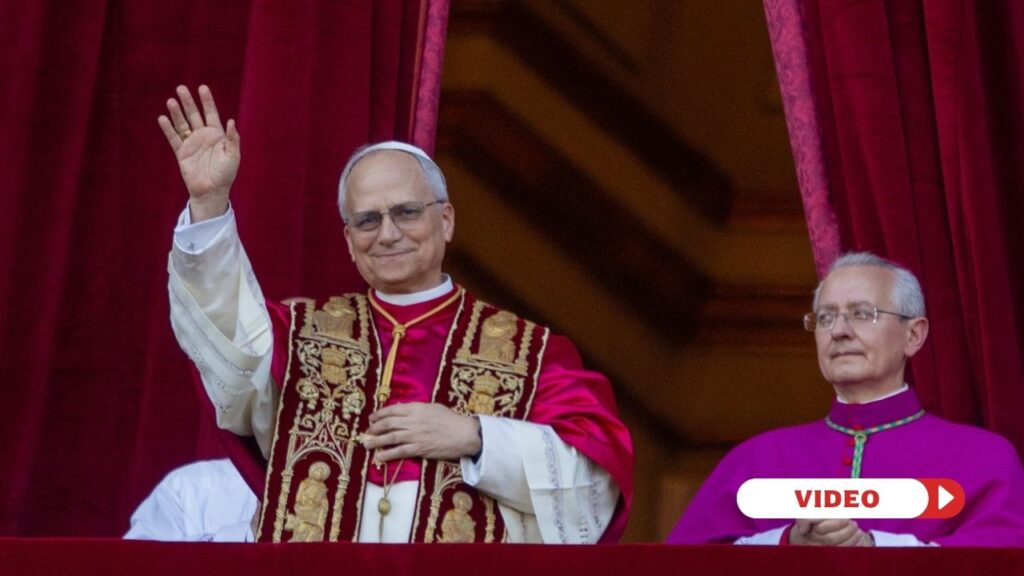
“Annuntio vobis gaudium magnum… Habemus Papam!”
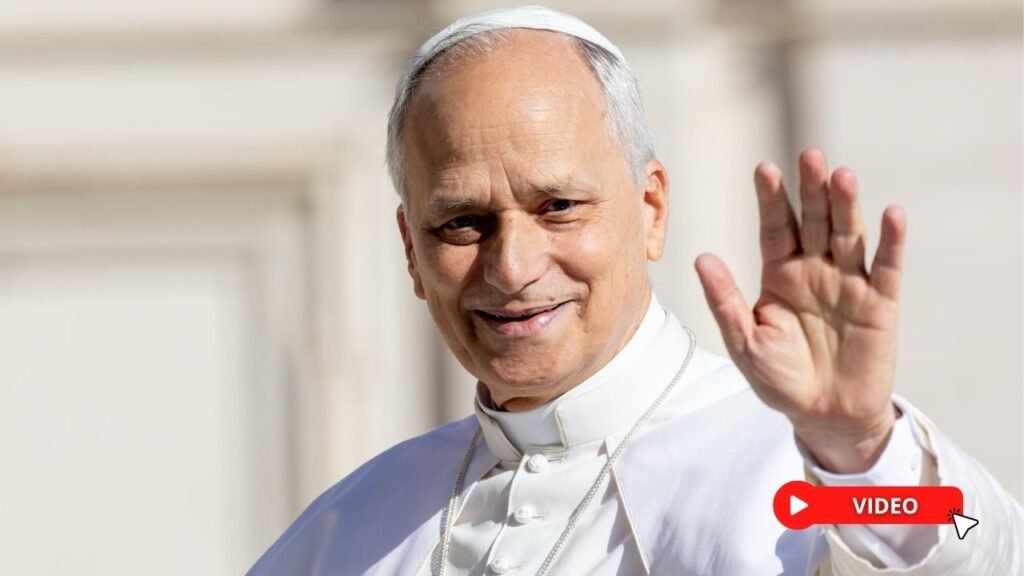
The announcement echoed across Saint Peter’s Square and throughout the world on May 8, 2025, ushering in a historic moment for the Catholic Church. The election of Cardinal Robert Prevost as Pope Leo XIV stunned many inside and outside the Vatican, while filling countless faithful with joy and hope for the future of the Church.
For those who knew the future pope personally, the moment was deeply emotional. Fr. Ludovico Maria Centra, rector of the Sanctuary of Our Lady of Good Counsel in Genazzano, recalled the overwhelming reaction shared by many close to the new pontiff. “My heart practically burst out of my chest — it didn’t just beat for me, but for all of us, because it’s obvious, Robert, then Prevost, and so, well, we wanted to jump out the window from that overwhelming joy!”
Vittorino Grossi, professor emeritus of patrology and patristics at the Augustinianum, said his immediate prayer was simple yet profound: “I prayed that God may give him much energy and strength for the expectations of the people of God.”
The First American Pope and the First Augustinian Pontiff
As thousands gathered beneath the balcony of Saint Peter’s Basilica awaiting the new Successor of Peter, Pope Leo XIV stepped onto the central loggia to greet the universal Church for the first time. His election marked several historic firsts.
Father Robert Prevost became the first pope born in the United States and the first Augustinian ever elected to the Chair of Saint Peter. While many pontiffs throughout history have emerged from religious orders, Pope Leo immediately highlighted the spiritual identity that shaped his vocation and ministry.
On the evening of his election, Pope Leo declared: “I am a son of Saint Augustine, an Augustinian, who said, ‘With you I am a Christian, and for you I am a bishop.’”
For many theologians and religious, that Augustinian heritage has become a defining hallmark of the pontificate. Fr. Roberto Pasolini, preacher of the Papal Household, reflected on the significance of a religious becoming pope, noting that religious life itself points toward the deepest identity of the Church. “When a religious becomes pontiff, something unusual happens, because religious are not, in themselves, part of the Church’s hierarchy. The documents say they belong to the holiness of the Church… through their way of life they express what is the most important characteristic of the Christian Church. It is a striving toward love—free, selfless love.”
A Pope Formed by Missionary Life and Deep Faith
Long before his election to the papacy, Pope Leo XIV served as a missionary in Peru, Prior General of the Augustinian Order, and later Prefect of the Dicastery for Bishops in the Roman Curia. Those who worked closely with him describe a man marked not only by administrative experience, but by humility, attentiveness, and pastoral charity.
Fr. James Wambugu, OSA, assistant general responsible for Africa, remembered the personal care Pope Leo showed even to priests serving in remote missions. “He was a very kind man, very gentle but firm. A good listener. The first time I encountered him, I was newly ordained. And he was the one that posted me to a parish in a remote part of Kenya. And so, even when he pays visits to this community, he still remembers us by name.”
That pastoral sensitivity has remained visible throughout the first year of his pontificate.
Continuing the Jubilee of Hope
One of Pope Leo XIV’s first major responsibilities was continuing the Jubilee of Hope inaugurated by Pope Francis. From the beginning, the new pontiff embraced the Jubilee celebrations with renewed energy, presiding over liturgies, audiences, and encounters that have helped define the early character of his papacy.
Throughout the Jubilee, Pope Leo repeatedly emphasized the Christian call to witness courageously to the Gospel in the modern world. “Jesus tell us: You are the light of the world, you are the salt of the earth.”
Among the most memorable moments of the Jubilee year was the Jubilee of Youth, which drew approximately one million young people from nearly 150 nations to Tor Vergata outside Rome for prayer, praise, and encounter with the Holy Father.
Reviving Tradition in the Life of the Church
Many Catholics throughout the world have also welcomed Pope Leo’s visible embrace of longstanding papal traditions and public expressions of faith.
During the Feast of Corpus Christi, the pope revived the historic Eucharistic procession stretching nearly a mile from the Basilica of Saint John Lateran to Saint Mary Major. He also restored the custom of spending part of the summer in Castel Gandolfo, the papal residence outside Rome.
These gestures have resonated strongly among Catholics seeking continuity with the Church’s liturgical and devotional heritage while remaining attentive to the pastoral needs of the present moment.
Apostolic Journeys Centered on Peace
After the close of the Jubilee on January 6, Pope Leo continued an intense schedule of ceremonies, audiences, and international travel. His first apostolic journey took him to Turkey, where he commemorated the 1,700th anniversary of the Council of Nicaea, the First Ecumenical Council held in 325 AD and foundational to the formulation of the Nicene Creed.
From there, he traveled to Lebanon, meeting faithful living amid conflict and instability while offering particular encouragement to young people longing for peace and spiritual consolation.
His second apostolic visit brought him to Monaco, the second-smallest country in the world and Europe’s last Catholic principality where Catholicism remains the state religion.
Pope Leo’s longest international journey so far followed soon afterward: an 11-day visit across four African nations — Algeria, Cameroon, Angola, and Equatorial Guinea — a trip long desired by Pope Francis before his death.
Andrea Gagliarducci, Vatican expert for ACI Stampa, observed that the destinations reflected both continuity and urgent pastoral priorities. “Popes go where there is a need for God. In some way, Leo XIV inherited trips that had already been planned for some time, such as the one to Lebanon, but also a journey to Africa that Pope Francis had even considered for the Jubilee, even though he was already quite ill.”
Throughout Africa, from the ancient homeland of Saint Augustine in Hippo to communities suffering from poverty, violence, and instability, Pope Leo repeatedly called for reconciliation and peace. “In this place, let us remember that God desires peace for every nation.”
Peace at the Heart of Pope Leo XIV’s Pontificate
From Saint Peter’s Square to Africa and the Middle East, a single theme has emerged consistently throughout Pope Leo XIV’s first year as Successor of Peter: peace.
Whether addressing world leaders, encouraging young Catholics, reviving public devotions, or visiting nations scarred by conflict, the pope’s words and actions have reflected a pontificate rooted in faith, missionary charity, and the Augustinian pursuit of truth and love.
Adapted by Jacob Stein