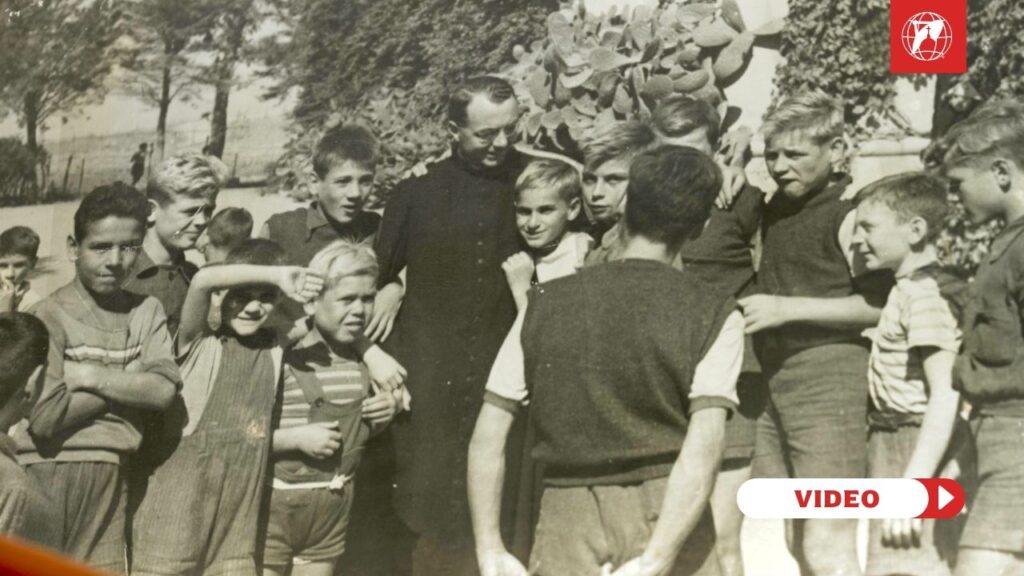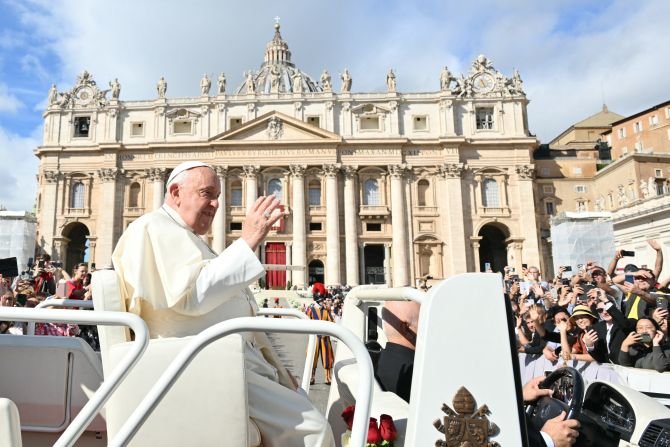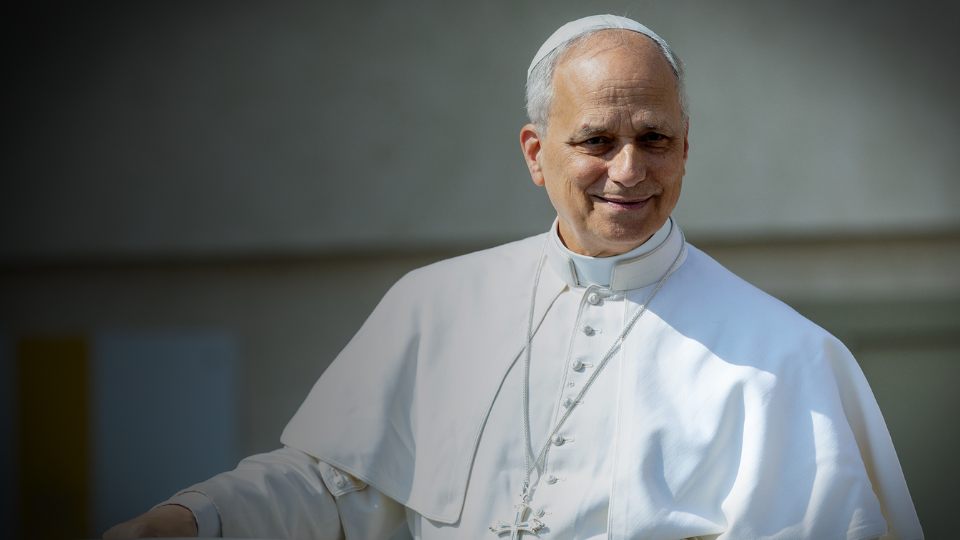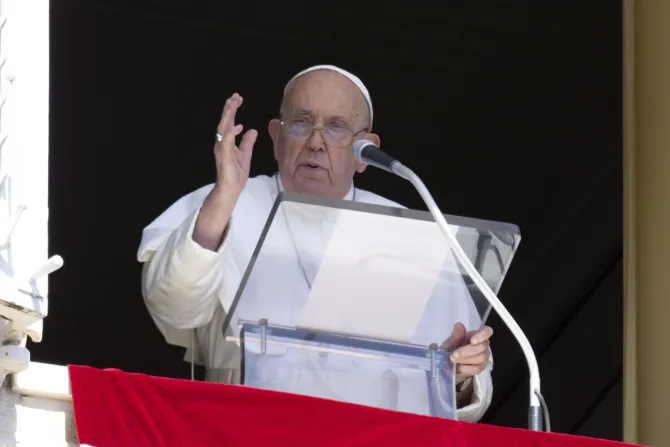
VATICAN CITY — The Catholic Church’s defense of the dignity of every human life has remained a defining priority across modern pontificates. Few popes, however, made the protection of life as central to their teaching as Pope St. John Paul II.
Throughout his nearly 27-year pontificate, the Polish pope consistently proclaimed the sanctity of human life from conception until natural death, authoring some of the Church’s most influential documents on human dignity, including Evangelium Vitae (“The Gospel of Life”) and his catechetical series known as the Theology of the Body.
More than three decades after the publication of Evangelium Vitae, those who worked alongside John Paul II say its message remains as relevant as ever.
“Life is a gift from God”
Fr. Paweł Ptasznik, rector of Rome’s Polish Church of St. Stanislaus and a former official in the Polish Section of the Vatican Secretariat of State, collaborated closely with St. John Paul II during his pontificate.
Looking back on the pope’s teaching, he says concern for human life stood at the heart of John Paul II’s vision.
“Concern for life was one of the central themes of St. John Paul II’s thought.”
According to Fr. Ptasznik, the central message of Evangelium Vitae is that every human life belongs first to God.
“The most important message of the encyclical is the truth that life is a gift from God; He is the giver of life, and He takes care of human life throughout its entire existence.”
He noted that the pope grounded this teaching in the biblical account of Cain and Abel.
“Moreover, in this document, the Holy Father, referring to the story of Cain and Abel, shows that God calls human beings to account for human life. In the Book of Genesis there is this sentence: ‘I will demand an accounting from man for the life of man.'”
“The Holy Father refers to this in the document and seeks to show that God is the guardian of life, even when life is marked by suffering.”
Carrying forward a pro-life legacy
Today, Fr. Ptasznik serves in the leadership of the John Paul II Vatican Foundation, where he continues promoting the late pope’s legacy through educational and pro-life initiatives.
Among those efforts is Poland’s annual Week of Prayer for the Unborn, observed each March in the days leading up to the Solemnity of St. Joseph.
For Fr. Ptasznik, prayer remains an essential part of defending human life.
“Prayer is important for mothers who carry a child in their womb, and it is also important for ourselves and for society as a whole, so that we remain mindful that this life, which we consider to be a great value, also requires our care.”
“Here I clearly see the value of the prayer we undertake—not only during the week of prayer for life, but throughout the entire year on various occasions—trying to bring this very issue before God in prayer.”
A mission that continues
John Paul II’s commitment to life extended beyond his writings.
In February 1994, he established the Pontifical Academy for Life, entrusting the Vatican institution with promoting the protection of human life and human dignity through scientific research, ethical reflection, and interdisciplinary dialogue.
Today, the Academy continues to examine some of the most complex bioethical questions facing modern society.
Its president, Archbishop Renzo Pegoraro, said the institution brings together experts from numerous disciplines to address emerging challenges.
“There is an important dialogue, interdisciplinary dialogue, so involving biologists, doctors, but also philosophers, theologians, lawyers, all people that could help to analyze the new questions, the new problems, sometimes very urgent and very complicated issue coming from the development of medicine, the development of science or biology.”
Responding to today’s ethical challenges
As more countries debate or adopt legislation permitting euthanasia and assisted suicide, Archbishop Pegoraro says the Academy is increasingly asked to support the development of palliative care.
Rather than focusing solely on treating disease, he explained, palliative care seeks to care for the whole person.
“We need to relieve the pain. We need to control the pain. But we need also to support the psychological and spiritual aspects of the person.”
“So palliative care is an approach to the whole person, including all dimensions, all aspects, to offer a good care also when the treatments are not working or there are other difficulties because the disease, the illness is very severe and probably there is no chance to resolve the problem of the disease, but always we take care of the person.”
Alongside questions surrounding end-of-life care, the Academy is also studying emerging technologies that raise new ethical concerns.
“We have now also a project about neuro ethics, neurotechnology, neuroscience,” Archbishop Pegoraro explained. “What is the meaning, which kind of problems, risk of enhancement or manipulation of the human being.”
The Academy is also investing in research focused on neonatal medicine and the care of premature infants.
“There is also an interesting project about neonatal care. So before the delivery and immediately after the delivery, particularly for premature children, how to guarantee good care of the baby, a good care for the mother, and to offer a very important support to all these persons.”
Continuing the Gospel of Life
More than 30 years after St. John Paul II founded the Pontifical Academy for Life and more than three decades after the publication of Evangelium Vitae, the Church continues to confront new scientific, medical, and ethical questions surrounding the dignity of the human person.
While the challenges have evolved, the Academy’s mission remains rooted in the vision of the Polish pope: to defend every human life—from conception until natural death—and to affirm that every person possesses an inviolable dignity that must be protected, especially in moments of vulnerability.