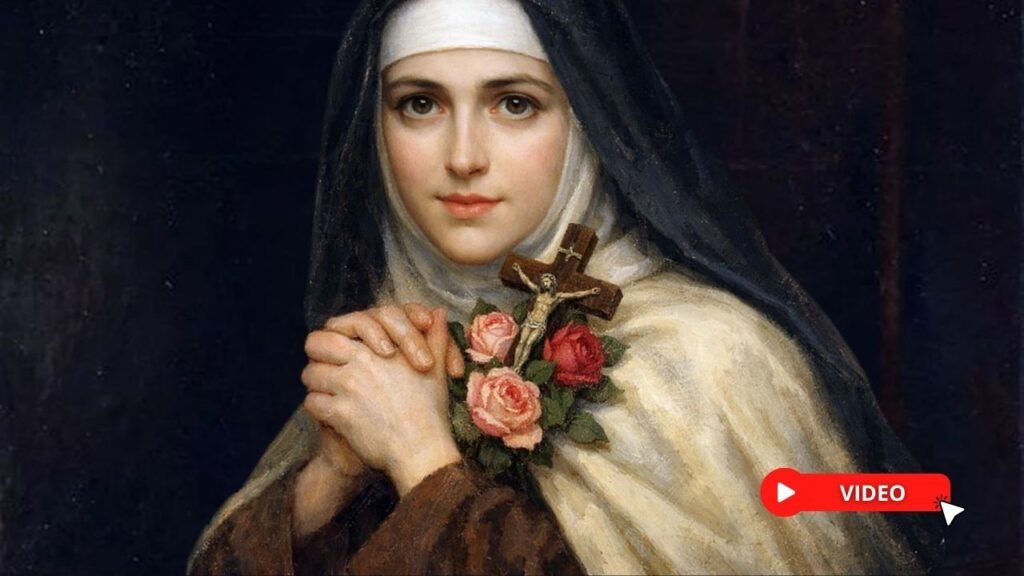
LISIEUX, FRANCE / ROME, ITALY — In the quiet heart of Normandy, in 1873, a child was born who would become one of the most beloved saints in the Catholic Church: Thérèse Martin. Though her life lasted only twenty-four years, her spiritual legacy continues to inspire millions with her “Little Way” — the path of love and simplicity in everyday life.
Thérèse was raised in a profoundly Christian home by her parents, Louis and Zélie Martin, who were themselves canonized saints. Her childhood, however, was marked by both tenderness and trial. When she was only four, she lost her mother and soon after fell ill with a mysterious condition.
Fr. François Lethel, Theologian and Expert on St. Thérèse of Lisieux acknowledged:
“She shows a truly splendid interior journey. At the age of 10 she had a very serious illness, psychological and psychosomatic, and she was healed by the smile of the Virgin Mary—that is, by the experience of Mary’s maternal love. And especially at 14, what she calls her ‘Christmas conversion.’ She describes it beautifully: she was freed from her hypersensitivity, from a certain childishness, and begins what she calls a ‘giant’s race’ toward God.”
Even as a child, Thérèse felt an overwhelming desire to give her entire life to God. At just 14, she made her one and only pilgrimage to Rome, where her relics are now displayed at the Church of Trinità dei Monti for the 2025 Jubilee Year.
Fr. Fabrice Du-Hays, Rector of Trinità dei Monti, noted that “she came to Rome with her father to ask the Pope for permission to enter the convent. During her stay in Rome she was living just 300 meters from here in a small hotel. If you walk down the street, you can still see that St. Thérèse stayed there when she was in Rome. And she came frequently at the Chapel Mater Admirabilis to pray. And seeing this picture of the Virgin Mary, painted as teenager, was probably a great help for her to pray.”
When she met Pope Leo XIII, Thérèse courageously knelt before him, pleading for permission to join the Carmelite convent despite her young age. The Holy Father did not grant it, urging her instead to trust in divine timing. Sr. Antonella Piccirilli, Professor of Theology and Specialist in Thérèsian Spirituality, explains Thérèse’s reaction. “When she recounts that the Pope did not give her explicit permission, she writes: ‘I had already offered myself to Jesus, to be His joy, His little toy, His ball.’ And on that day, she says, ‘Jesus pierced the ball.’ This image seems playful, but it expresses a deep pain: a punctured ball is thrown away, is useless. Thérèse felt useless in the hands of God, yet she made even this her joy—because her joy was to delight God.”
Upon her return to Lisieux, Thérèse received permission from Bishop Flavien Hugonin to enter the Carmelite convent at age fifteen. By 1897, Thérèse’s health had deteriorated due to tuberculosis. In her final 18 months, she endured what she called the “night of faith”—a spiritual darkness that she faced with serenity.
Sr. Antonella Piccirilli:
“Her last 18 months were complete darkness. She says: ‘For me, faith has become a wall reaching to the sky.’ Yet her greatness is in her unwavering trust. Suffering can distance or embitter, but for Thérèse it became a privileged path to encounter God.”
On September 30, 1897, Thérèse died peacefully at the age of 24. Yet her promise echoed through time: “After my death, I will let fall a shower of roses,” meaning the graces and miracles she would receive in Heaven.
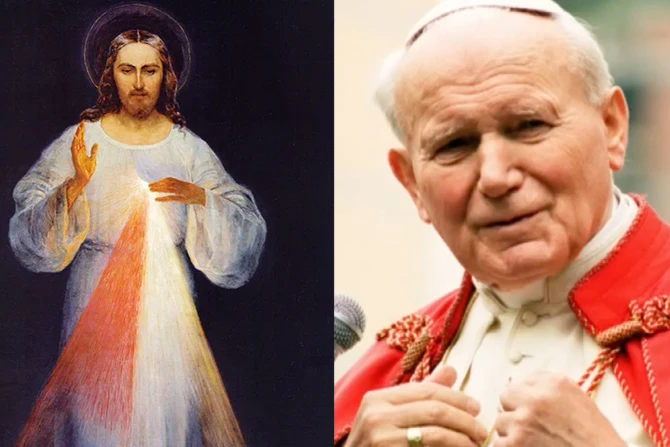
In 1925, Pope Pius XI canonized her, and in 1997, exactly a century after her death, Pope John Paul II declared her a Doctor of the Church, recognizing her profound spiritual wisdom. Fr. François Lethel discusses Pope Francis’s nickname for Thérèse, ‘“the ‘Doctor of Synthesis.’ In her writings, she expresses all the truths of the Catholic faith—Jesus, the Trinity, Mary, the Church, the Eucharist—clearly and beautifully.”In a modern world driven by efficiency, visibility, and measurable results, St. Thérèse of Lisieux offers a countercultural message: that holiness is within reach of all, reserved not for heroes or extraordinary mystics, but in small acts of love, done with great love.
This article was originally published on November 17, 2025, and has been updated.
Adapted by Jacob Stein. Produced by Alexey Gotovskiy; Camera by Alberto Basile and Fabio Gonnella; Video Edited by Giada D’Ottavi