Natural disasters, extreme poverty, water scarcity, hunger and environmental degradation may appear to be separate challenges. But for the Sovereign Order of Malta, responding to them requires recognizing the connection between care for people and care for creation.
This approach reflects the concept of integral ecology promoted by Pope Francis: environmental, economic and humanitarian challenges cannot be considered in isolation, particularly because their consequences often fall most heavily on the poor and vulnerable.
For the Order of Malta, it also means looking beyond immediate relief to solutions capable of supporting communities over the long term.
“If you don’t ensure a certain level of sustainability in what you do, it becomes something occasional,” said H.E. Riccardo Paternò di Montecupo, Grand Chancellor of the Sovereign Military Order of Malta.
“A person who is hungry is hungry every day; a person who is lonely is lonely every day,” he explained. “Someone living in a situation of human, economic, or security-related hardship faces it every day, and perhaps for a very long time. We cannot ignore that.”
More Than 1,000 Years of Service
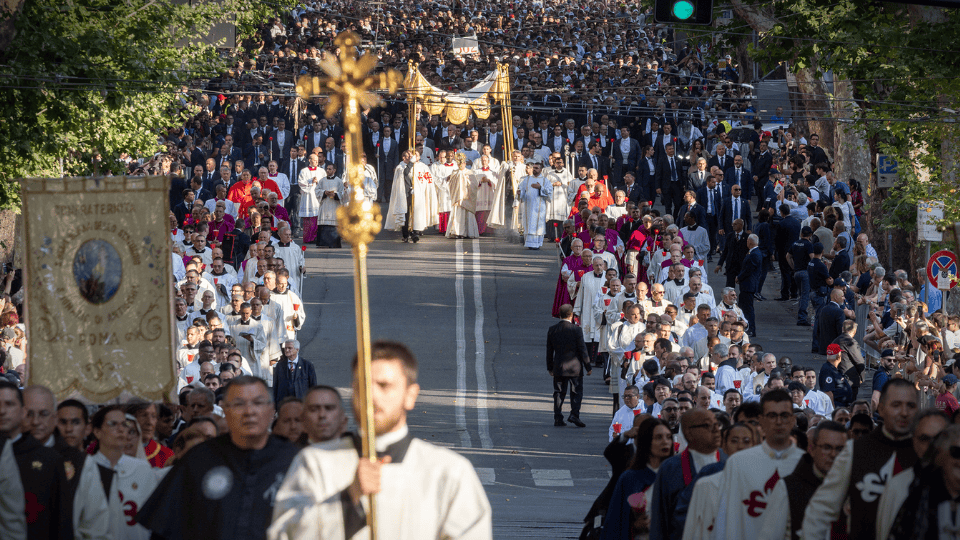
The Order of Malta traces its origins to a hospice established in Jerusalem at the end of the 11th century to care for pilgrims and the sick.
More than a millennium later, its mission continues through humanitarian, medical and social assistance around the world, guided by its historic motto, Tuitio Fidei et Obsequium Pauperum — “Defence of the Faith and Service to the Poor.”
Today, the Order is active in 130 countries across six continents, supported by 133 diplomatic missions, 60,000 professionals and almost 100,000 volunteers.
While the circumstances have changed dramatically over the centuries, Paternò di Montecupo said the fundamental needs confronting the Order remain familiar.
“Human needs are always the same, because there is physical suffering, moral suffering, refugees, wars, hunger, and everything that comes with them,” he said. “Unfortunately, what changes is the scale.”
Building Resilience in Lebanon
The Order of Malta has maintained a presence in Lebanon for more than 70 years, providing primary healthcare and social assistance amid the country’s economic and humanitarian challenges.
In 2020, it launched the agro-humanitarian program “Harvesting Hope, Growing Resilience,” designed not simply to distribute food but to strengthen local agricultural production.
The initiative helps farmers produce compost and seeds locally, allowing them to exchange essential agricultural resources at local rather than international prices.
According to the Grand Chancellor, the program’s reach extends across a significant share of Lebanon’s agricultural sector.
The project represents the Order’s broader emphasis on sustainability: meeting immediate needs while helping communities develop the resources necessary to support themselves over time.
Serving Refugees in Kenya
In Kenya, the Order has spent two decades working to strengthen basic healthcare services, train medical personnel and improve access to care.
Its activities include assistance at the Kakuma refugee camp in northern Kenya, where Paternò di Montecupo witnessed the difficult conditions faced by people who have spent years displaced from their homes.
Providing food, shelter and protection, he said, is essential — but humanitarian assistance must also consider the whole person.
“It is not simply about protecting someone from death or giving them food,” he said. “What is their situation? What is their life like? What is their future?”
For the Order, these questions reflect a vision of humanitarian service centered not only on survival but also on human dignity and hope.
Responding to War and Natural Disasters
Emergency assistance remains another central part of the Order of Malta’s international mission.
Its teams provide medical care, food, essential supplies and social assistance to people affected by conflicts and natural disasters, often working alongside local authorities and humanitarian organizations.
That work is strengthened by the Order’s unusual diplomatic network.
“It is not a diplomacy of power; it is a diplomacy of service,” Paternò di Montecupo explained. “Through our diplomacy, we seek to support humanitarian activities and make them more effective, including by establishing agreements with states.”
The Order provides its assistance regardless of nationality, religion or political affiliation.
Offering More Than Immediate Relief
Across its international activities, the Order of Malta seeks to unite its ancient Catholic identity with responses to contemporary humanitarian challenges.
Healthcare, education, sustainable agriculture, emergency relief and diplomatic engagement become different expressions of the same mission: defending the faith by serving people in need.
“We try to give those in need a sense of hope and a vision that goes beyond their immediate needs,” Paternò di Montecupo said, “whether that is hunger, injury, loneliness, mental distress, or whatever else they may be facing.”
More than 1,000 years after its beginnings in Jerusalem, the Order continues that mission by seeking not only to alleviate immediate suffering, but to help vulnerable communities build a more sustainable future filled with hope.
Adapted by Jacob Stein