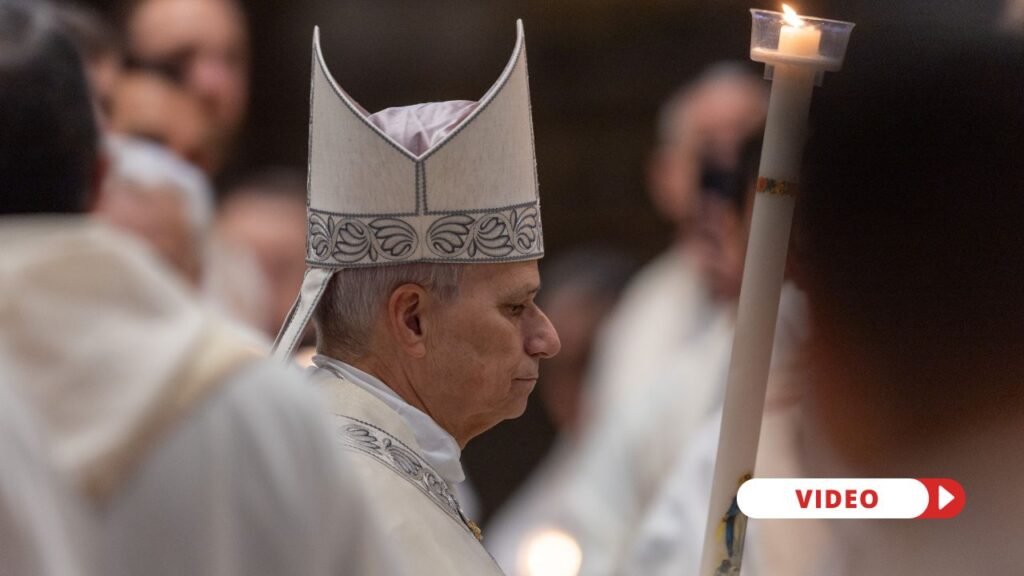
Thousands of small flames flicker in the air, dancing beneath the vaulted ceilings of St. Peter’s Basilica. One of the most beautiful liturgical ceremonies of the year is being celebrated — a ritual rich in memory and symbolism.
It is the Feast of the Presentation of the Lord, known to the faithful as Candlemas.
Since the 6th century, on February 2, the Church has commemorated the event described in the Gospel of Luke: forty days after Jesus’ birth, Mary and Joseph bring Him to the Temple in Jerusalem to present Him to God, as prescribed by Jewish law. There, the elderly Simeon recognizes the infant as “a light for revelation to the nations.”
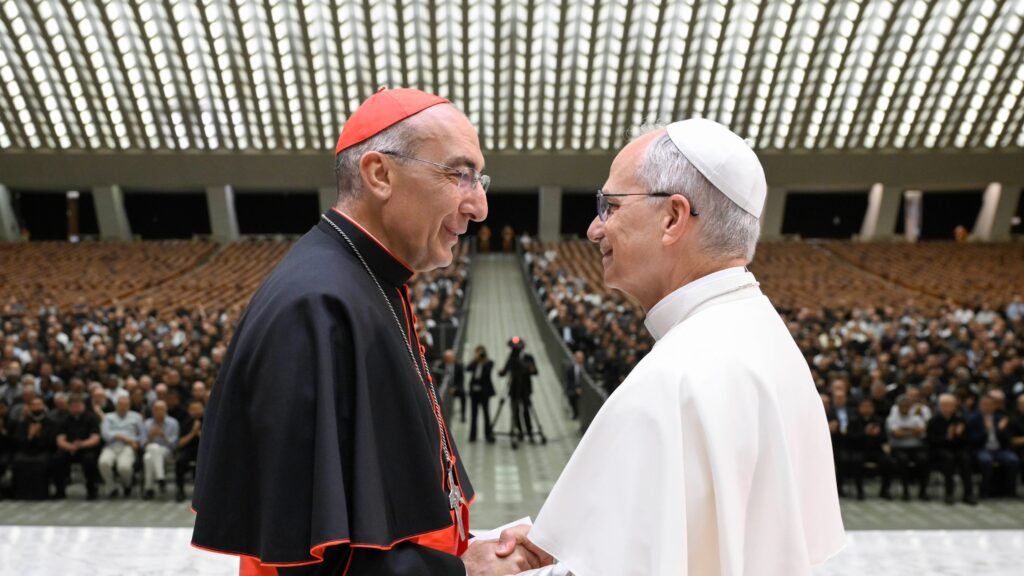
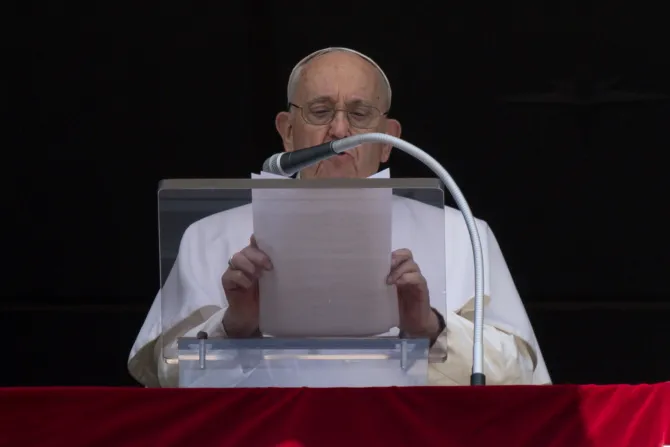
In his homily, Pope Leo reflected on the deeper spiritual meaning of this moment in salvation history, saying:
“This moment represents the climax of a long history of salvation that stretches from the Garden of Eden to the courtyards of the Temple — a history marked by light and shadow, failure and renewal, yet always driven by a single, vital desire: to restore full communion between the Creator and his creatures.”
Candlemas and the Light of Consecrated Life
Countless members of religious orders have gathered in St. Peter’s Basilica to pray together with Pope Leo. They celebrate the World Day of Consecrated Life, established by Pope John Paul II in 1997. He wished, through this observance, to honor religious men and women who dedicate their lives to Christ.
Through their total belonging to the Lord, they become a powerful sign of God’s presence in the world — a “light” and witnesses of Christ for humanity.
Among those present is Sr. Renata Antecka, a Missionary Sister of Christ the King, who shared the joy and certainty that has shaped decades of her vocation. Reflecting on her years in religious life, she said:
“I am 57 years old, and I have spent 30 years in religious life, so that is already quite a long time. And I must say that this time has passed like a single day since the moment I set out on this path of life — the path of the evangelical counsels of chastity, poverty, and obedience. It truly is a beautiful life, a beautiful vocation, and throughout all these 30 years I have never had any doubts. I am truly happy. Jesus Christ is everything.”
Candlemas has been associated with members of religious orders since the Middle Ages, when the Church and confraternities began to link the light of Christ to the consecrated life, with the blessing of candles and the renewal of religious service.
A Roman Tradition Rooted in the Tiber
For one Roman confraternity, the feast goes beyond the liturgical observance, and its celebration is deeply rooted in the confraternity’s own history—one born of popular devotion and illuminated by the symbolism of light and hope.
Today, in the Church of Santa Maria dell’Orto in the Roman district of Trastevere, the local confraternity keeps the tradition of Candlemas alive.
Domenico Rotella, Camerlengo of the Archconfraternity of Santa Maria dell’Orto, explained how the feast is still celebrated in a solemn and communal way.
“On the first suitable Sunday, this ceremony is held — a solemn Mass with choirs, the organ, an internal procession, and so on. At the end, these blessed candles are given to representatives of all the institutions that work along the Tiber.”
Founded in Rome in the 16th century in the Trastevere district, the Archconfraternity of Santa Maria dell’Orto experiences the Feast of Candlemas as one of the most intense moments of its spiritual life. Its origins are closely tied to the working people of the Eternal City: market gardeners, winemakers, fruit merchants, all connected to the land and the Tiber river.
Rotella recalled how, for centuries, the blessed candles carried a special meaning for those whose lives depended on the river.
“Since the 1500s, crews disembarking at the port of Ripagrande—located just across the street from what is now about 50 meters away and no longer exists—would come here on Candlemas to receive a blessed candle. They believed it would protect them in times of danger, such as storms or shipwrecks, and serve as a good omen.
“This took place on Candlemas, forty days after Christmas, because the feast marked a turning point: the end of winter’s darkness and the coming of the light of spring.”
A Day of Prayer for Those Who Serve in Danger
The Feast of Consecrated Persons is also an occasion to commemorate those religious who have given their life defending the faith, usually in dangerous regions of the world.
According to information collected by the Fides Agency, the official news agency of the Vatican dedicated to missionary activity founded a hundred years ago, 17 Catholic missionaries were killed worldwide in 2025, most of them members of various religious orders.
But despite the danger, they do not lose heart and would never give up their mission, as they draw their strength from God.
Sr. Renata Antecka spoke of this inner strength, rooted not in comfort but in closeness to Christ.
“What matters is learning to try to follow in the footsteps of the Lord Jesus. Carrying the cross with Jesus is filled with peace and joy, even when something is difficult. It gives a sense of security — His presence — the certainty that sooner or later everything will turn out well, that Jesus helps, and that this is something you truly feel.”
Candlemas is a special moment of prayer for them. It stands at the crossroads of Christmas joy and the approaching shadow of the Passion, reminding believers that light shines brightest in the midst of darkness.
Adapted by Jacob Stein. Produced by Magdalena Wolinska-Riedi; Camera by Sergio Natoli.